
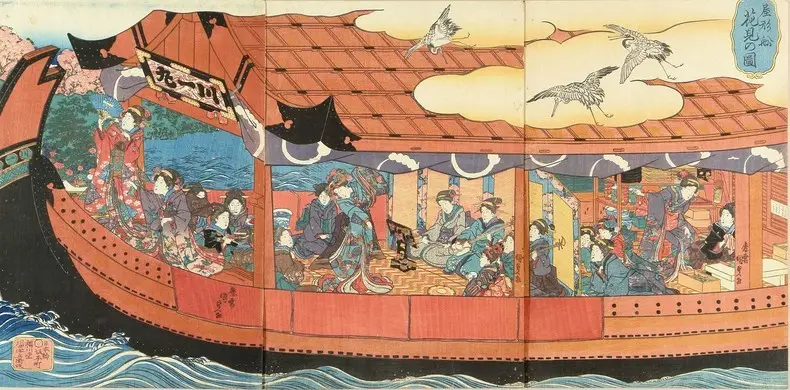
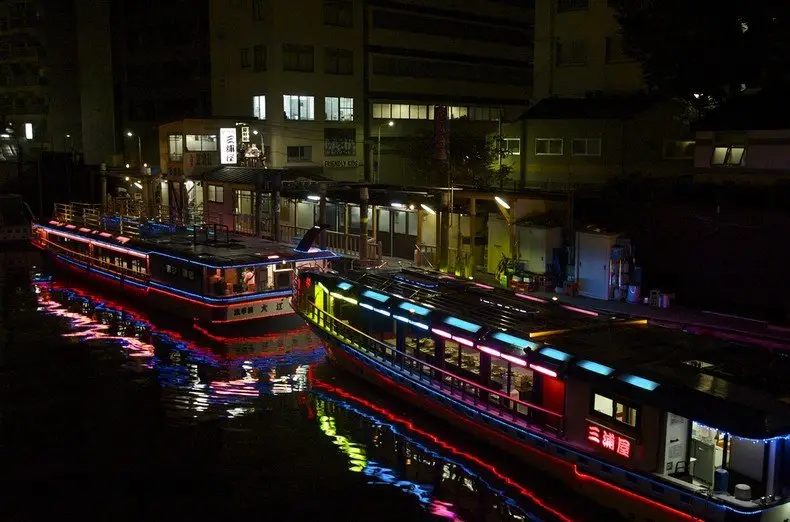
A yakatabune is a Japanese pleasure boat whose cabin is built like a traditional tatami room. Guests leave their shoes at the entrance, sit at low tables and eat while it moves past the city. The name explains the design: 屋形 (yakata) is a roofed structure and 船 (fune) is a boat, so the vessel becomes a small house on the water, with lanterns outside and mats underfoot.
Contents 6
What a yakatabune is
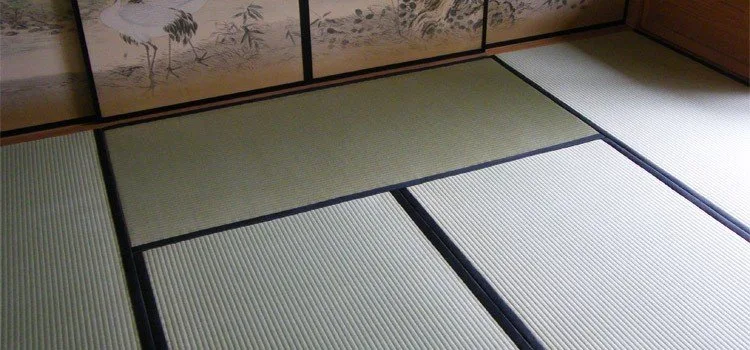
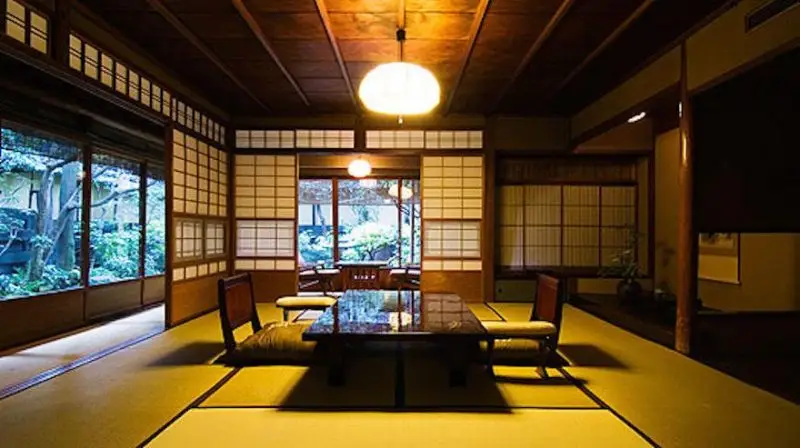
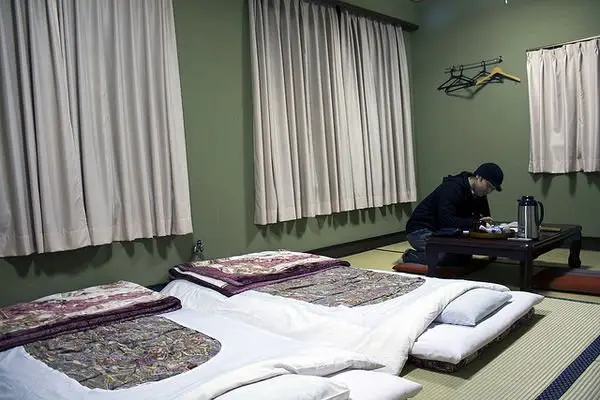
The interior defines the experience. Tatami covers the floor, wide windows open onto the river and paper lanterns hang above the tables. Most boats carry between 15 and 80 guests, while the largest take more than 100. Modern vessels often add sunken seating (hori-kotatsu), air conditioning and a small stage for speeches or karaoke, so a long dinner stays comfortable for people who rarely sit on the floor.
The layout keeps food, scenery and entertainment in one room, a pattern that goes back to the Edo-period pleasure boats. The tatami flooring sets the tone. The tables sit close to the mats, and the whole space feels like a Japanese inn that happens to be moving.
Where the yakatabune comes from
The first boats of this kind appeared in the Heian period (794-1185), when aristocrats went out on the water to play music, recite poetry and watch the moon. In the Edo period, feudal lords and wealthy merchants turned the yakatabune into a mark of status, with vessels used for cherry-blossom viewing, tea ceremonies and fireworks over the Sumida River. Edo-period accounts describe boatmen standing on the roof and steering with a long pole.
The private boats faded with modernization, but shipyards kept the form alive and group cruises returned in the second half of the 20th century. Today most hulls are steel or fiberglass. The cabin still follows tradition: a curved roof, dark wood, red lanterns and tatami under the tables.
Routes and seasons
More than 100 traditional yakatabune operate in the Tokyo Bay area. Boats depart from Asakusa on the Sumida River and from Odaiba on Tokyo Bay, passing the Skytree, Ryogoku and the lit bridges of the waterfront. A dinner cruise usually lasts two to three hours. Osaka has its own yakatabune on the Okawa River, with two-hour cruises past riverside parks and office towers.
Spring and summer are the peak seasons. When the cherry trees open along the Sumida, scheduled cruises run through the day and seats disappear early. In summer, the Sumida River Fireworks and other hanabi festivals create the busiest nights of the year, and boats are often reserved months ahead. Outside those peaks, evening cruises are easier to book.
Food and service on board
A typical course opens with sashimi and seasonal appetizers, followed by tempura fried in the boat's kitchen and served hot. Sushi, nabe and small side dishes change with the operator and the season. Many plans include unlimited drinks, and the staff practice omotenashi, the Japanese approach to hospitality that anticipates a guest's needs before a request is made. Ask about vegetarian and allergy options when you book.
Entertainment varies. Some boats offer karaoke, and operators can arrange a geisha performance for an extra fee. Children can join on most vessels, though policies vary by boat. The upper deck is the place to step out for photographs as the city lights come on.
Practical advice before you book
Reservations are required, and the most popular dates sell out weeks or months in advance. Arrive at the pier early, because the boat leaves on schedule. Wear shoes that are easy to remove. If you are sensitive to motion, choose a river route instead of an open-bay cruise, and ask about heating or air conditioning in extreme weather. If your dates are flexible, read about the best season to visit Japan before you choose: spring brings flowers, summer brings fireworks and autumn brings clear air.
Yakatabune are not UNESCO World Heritage sites. They are working boats with a crew, a kitchen and a route through the city, and their value comes from that daily use.
An evening on the water
An evening on a yakatabune turns dinner into a short journey. The boat moves slowly, the skyline slides past and the meal arrives in courses. For a first trip to Tokyo, the cruise offers a view that few restaurants can match. For a return visit, the ritual is the draw: shoes at the door, a seat on the tatami and hot tempura while the Sumida drifts by.


Community
Comments
0 comments
There are no published comments in this language yet.
Send comment