

If you have stood on a platform in Japan, you know the moment: just before the doors close, there is no harsh buzzer—only a short melody. Some sound like a stream; others quote anime openings or old commercials. They are not a random soundtrack. They are a deliberate signal in everyday rail life.
These train melodies—in Japanese especially as hassha merodii (発車メロディー, “departure melody”)—play for millions of passengers every day. They warn without panic, mark the departure moment, and give many stations a sound of their own. Anyone who rides trains in Japan hears them long before the cars start rolling.
Contents 11
What is a Japanese train melody?
Under hassha merodii, people mean the tune that says a train already at the platform is about to leave. Beside it sits sekkin merodī (接近メロディ): the approach melody that signals a train is coming into the station. Both work with sound; neither replaces displays or announcements—they complete them.
Typical pieces last about five to ten seconds. They need to cut through noise without feeling as sharp as the old metallic departure bells. Many riders link that short phrase with “still time to board”—and with the brief pause when the city’s rush holds still for a beat.
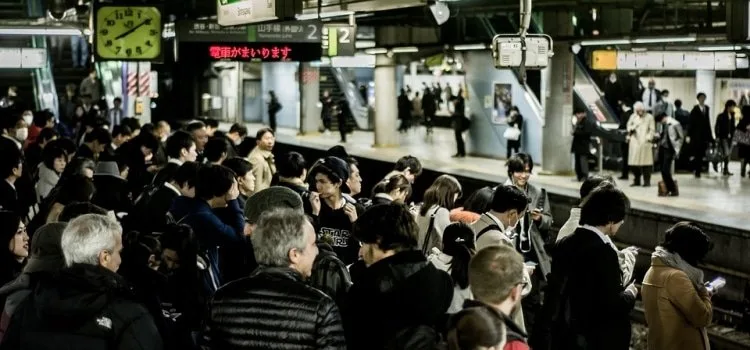
Origins and the spread of departure melodies
Early cases go further back than today’s JR networks. Bungo-Taketa Station in Ōita Prefecture, with the piece Kōjō no Tsuki (荒城の月, “The Moon over the Ruined Castle”) from 1951, is often cited as one of the first stations to play a song for departures—a local link, because composer Rentarō Taki was tied to the region.
Among private railways, Keihan Electric Railway introduced a departure melody in 1971 and moved away from the plain bell. After Japanese National Railways (JNR) was privatized in the late 1980s, stations gained more room to shape their sound. On JR East, departure melodies spread from the late 1980s: in 1989, for example, new Yamaha-developed tunes arrived at huge Tokyo stations such as Shinjuku and Shibuya—as a calmer answer to unpopular shrill bells that made people sprint for the doors.
The goal stayed double: alert passengers without flooding the platform with anxiety, and give stations a recognizable voice. Instead of one shared alarm, a mesh of standard pieces and local themes grew across lines.
Why does every station sound different?
On many lines—especially in Greater Tokyo—each station has its own melody or a clear variant. That helps orientation: you can hear where you are when the crowd blocks the signs. Many pieces also echo the neighborhood—anime, brands, folk songs, landscape motifs.
Two names show up again and again in this system. Studios and makers such as Switch and Uni-Pex supplied many standard pieces for JR East. Keyboardist and composer Minoru Mukaiya (Casiopea) wrote countless station and rail melodies; he is one of the best-known figures behind the sound of Japanese platforms.
Famous stations and their melodies
Not every stop has a “hit song,” but some melodies stick so tightly to a place that travelers place them at once:
Yamanote Line: Seseragi and daily life on the loop
On the Yamanote Line, commuters hear familiar standard pieces at several stations—classics such as Seseragi (“stream” or “brook”). The short MIDI-like tones often feel like an old game console, yet they lodge in the ear. Ride the loop long enough and you learn platforms by timbre as much as by name.
Maihama and the Disney cue
Maihama Station sits next to Tokyo Disney Resort. There, a melody in the spirit of “It’s a Small World” greets riders—a clear cue that the park trip is starting before you even see the exit.
Takadanobaba and Astro Boy
At Takadanobaba Station, departure often brings the opening theme of Astro Boy (鉄腕アトム, Tetsuwan Atomu) by Osamu Tezuka. The link is local: Tezuka Productions and the area’s pop-culture history sit nearby. Instead of a neutral chime, the platform hands you a slice of Japanese pop culture.
Bungo-Taketa: Kōjō no Tsuki
In Bungo-Taketa, Kōjō no Tsuki plays—composed in 1901 by Rentarō Taki. He spent part of his youth in Taketa; the melody nods to the ruins of Oka Castle and to the idea of gotōchi hassha merodī, the local departure melody. The piece was adopted at the station in 1951 and remains an early landmark of the practice.
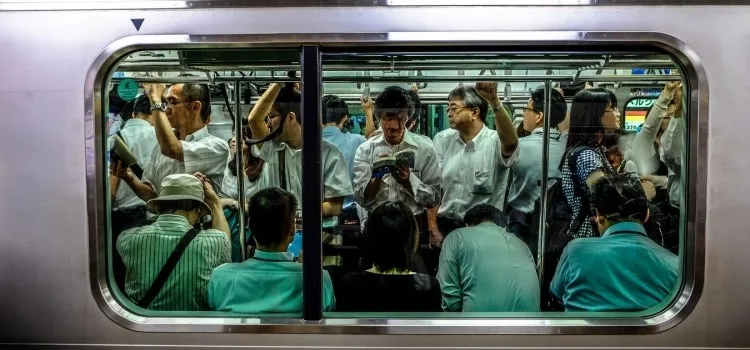
Ebisu and the Yebisu connection
Ebisu Station leans on associations with Yebisu beer and the area’s brand history—an example of how advertising, neighborhood identity, and platform sound can meet. Melodies do change from time to time; what you hear today is not carved in stone forever.
Minoru Mukaiya and the craft of a few seconds
Minoru Mukaiya, former keyboardist of the jazz-fusion band Casiopea, has written hundreds of short pieces for railways and stations—often only a few seconds long, yet heard millions of times. His work ties music to a practical job: signal departure, soften rush, make the place feel specific. Beyond station melodies he is also linked to railway simulation and other rail projects; many passengers know his sounds without knowing his name.
If you want more of the spoken and sonic everyday of platforms, our piece on what you hear at Japanese stations and trains adds context—from announcements to the small rituals of boarding and alighting.
How travelers actually hear them
In big cities and on many JR East lines, departure melodies are common. At smaller stations or under some operators, simple bells or short signal tones still do the job. Operational changes—one-person crews, new speakers, platform doors—can also unify local pieces or shift them to the train itself. The system lives on, but it moves with operations.
Practically: pause for a second on the platform and listen. The melody often says “we’re about to go”—and sometimes “you are here,” whether that is Takadanobaba, Maihama, or a stop on the Yamanote. If you already plan to take a train in Japan, this is a small extra: the trip has a soundtrack before the train moves.
There are so many melodies that even rail fans lose track. Some borrow classical pieces; many are purpose-written electronic themes. A few stations stay deliberately plain. That is part of the charm: Japan turned a necessary warning into a sound culture of its own—and you hear it as soon as you step onto the platform.






Community
Comments
0 comments
There are no published comments in this language yet.
Send comment