
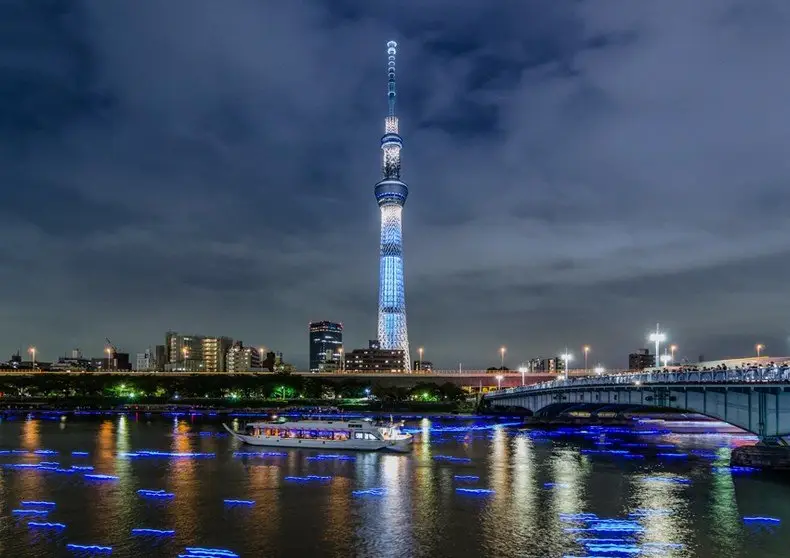
Tokyo’s skyline changes character depending on where you look. Tokyo Skytree rises far above the low streets of Sumida, Tokyo Tower still gives the city its familiar red-and-white silhouette, and newer office towers have pushed the skyline higher around Toranomon.
That is why a list of Japan’s tallest places needs one small distinction. A broadcasting tower, an observation landmark, a hotel, and an office skyscraper can all dominate a view, but they are not measured in the same way. Start with the towers people recognize, then look at the buildings that currently lead the national ranking.
Contents 5
Towers, landmarks, and skyscrapers are not the same thing
Tokyo Skytree is the tallest structure in Japan at 634 metres. It is a broadcasting tower rather than a high-rise building, which is why it sits outside a ranking of office and residential skyscrapers. From the ground, its height is the point: it changes the scale of the whole Sumida area.
The tower is also one of the city’s clearest sightseeing anchors. If you are planning a visit, our guide to Tokyo Skytree gives more context on the landmark itself.
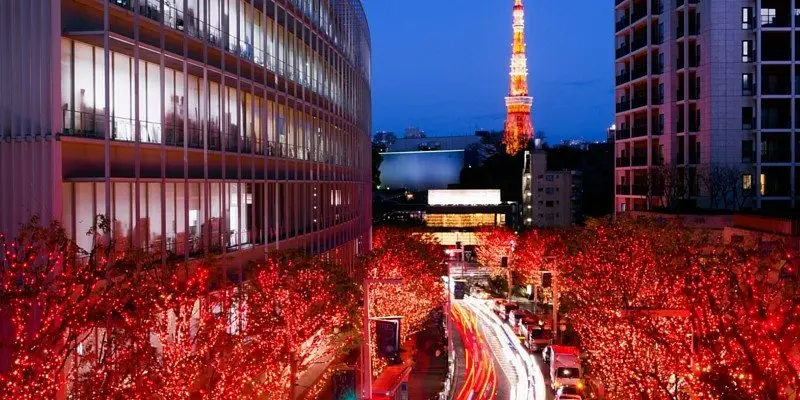
Tokyo Tower stands at 333 metres. It no longer defines Tokyo by height, but its place in the city is different: it remains one of the visual shortcuts used to signal Tokyo in manga, anime, drama, postcards, and night views.
Japan’s tallest building is now Azabudai Hills Mori JP Tower in Tokyo. Its 325-metre height does not overtake Tokyo Tower as a structure, yet it changes the skyscraper ranking that older lists often still repeat.
A current ranking of Japan’s tallest completed buildings
The table below uses architectural height and completed buildings. Towers such as Tokyo Skytree and Tokyo Tower are intentionally kept separate, so the comparison stays useful.
| Rank | Building | City | Height | Floors | Completed |
|---|---|---|---|---|---|
| 1 | Azabudai Hills Mori JP Tower | Tokyo | 325 m | 64 | 2023 |
| 2 | Abeno Harukas | Osaka | 300 m | 60 | 2014 |
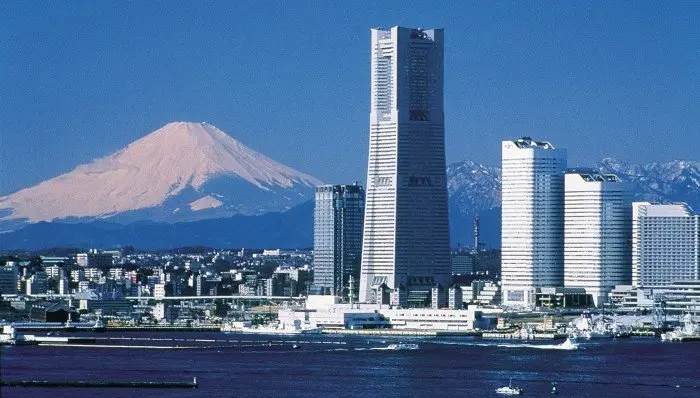
| 3 | Yokohama Landmark Tower | Yokohama | 296 m | 70 | 1993 |
| 4 | Toranomon Hills Station Tower | Tokyo | 266 m | 49 | 2023 |
| 5= | Osaka Prefectural Government Sakishima Building | Osaka | 256 m | 55 | 1995 |
| 5= | Rinku Gate Tower Building | Izumisano | 256 m | 56 | 1996 |
| 7 | Toranomon Hills Mori Tower | Tokyo | 255 m | 52 | 2014 |
| 8 | Midtown Tower | Tokyo | 248 m | 54 | 2007 |
| 9 | Midland Square | Nagoya | 247 m | 47 | 2006 |
| 10 | JR Central Office Tower | Nagoya | 245 m | 51 | 1999 |
Tokyo has most of the entries, but the list is not a Tokyo-only story. Osaka keeps Abeno Harukas and two 256-metre buildings near the top, while Yokohama Landmark Tower remains one of the country’s most recognizable high-rises. A ranking is useful for scale; the city around each building is what makes the stop worthwhile.
Tokyo skyscrapers worth recognizing
Roppongi Hills Mori Tower reaches 238 metres across 54 floors and remains one of the buildings most people recognize in the Roppongi Hills complex. It is a good example of why a familiar building does not need to lead the national ranking to matter in a Tokyo itinerary.
Tokyo Metropolitan Government Building No. 1 reaches 243 metres and has 48 floors. In Shinjuku, its twin-tower form is as much a part of the district’s identity as the height itself.
Sunshine 60 is 240 metres tall with 60 floors. When it opened, it represented a very different era of Japanese high-rise construction; today it is still an easy landmark for understanding the Ikebukuro skyline.
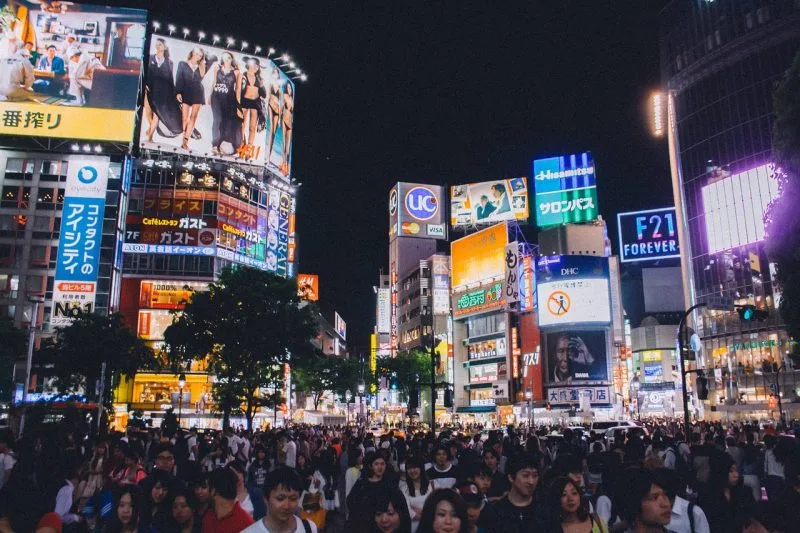
NTT Docomo Yoyogi Building is another Tokyo landmark at 240 metres. Its clock-face silhouette makes it easier to spot than many taller-looking office towers around Shinjuku and Yoyogi.
Shinjuku Park Tower rises to 235 metres, while Tokyo Opera City Tower reaches 234 metres. Together with older Shinjuku towers such as Shinjuku Mitsui Building and Shinjuku Center Building, they show how the city’s high-rise center grew in layers rather than in one single wave.
Where each skyline makes sense for a visitor
Choose Sumida when the goal is the scale of Tokyo Skytree. Choose the area around Tokyo Tower when you want the classic landmark in the frame. Shinjuku is better for a dense concentration of high-rises, while Toranomon and Roppongi show how much of Tokyo’s newer vertical growth has shifted toward Minato.
Before mentioning Tokyo, I still want to keep one special Osaka stop in the picture: Umeda Sky Building. It is not part of this top-ten table, but it was one of the most fun skyscrapers I visited in Osaka. That is a useful reminder that the best building to visit is not always the one with the biggest number beside its name.
Why older rankings become misleading
Older lists often put Abeno Harukas first and place Tokyo’s familiar towers beside office buildings as though they were one category. Newer completed buildings, especially in Toranomon, changed that order. When you compare heights, check whether the list means a tower, a building, an antenna height, or architectural height.
There are still countless buildings to notice beyond a top-ten table. Use the ranking as a starting point, then let the neighborhood decide the route: a skyline makes more sense when you can connect a height to a station, a street, a view, or a day in the city.

Community
Comments
0 comments
There are no published comments in this language yet.
Send comment