
It looks like miniature sushi, a hamburger, or a bento box — and then you taste fruit powder, not soy sauce. That is the playful trick of Popin' Cookin', the DIY candy line from Japanese company Kracie: you mix, mold, and assemble sweets that pretend to be savory food.
Kids in Japan grow up with this kind of hands-on candy. Adults who discover the kits often get hooked on the same ritual — open the pouches, add water, wait a few minutes, and build a tiny meal you can actually eat. The process is simple, but the results look almost too detailed to be candy.
Contents 8
What Popin' Cookin' actually is
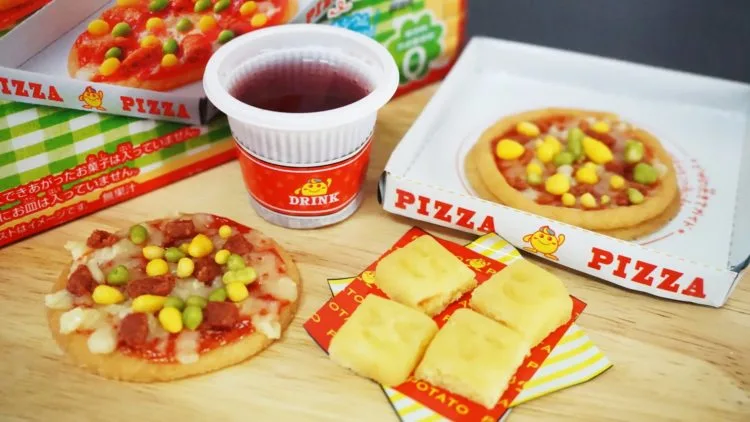
Popin' Cookin' (also written Popin Cookin!) is a series of do-it-yourself candy kits under Kracie's "DIY Candy for Kids" family. Each box is a mini project: powders, a molded tray, a spoon or fork, and sometimes a dropper or squeeze bag. You turn the powders into "rice," "nori," "egg," noodles, sauces, or toppings — then arrange them like real dishes.
Popular shapes include sushi, bento, ramen, hamburgers, donuts, cakes, waffles, and gummy scenes. The joke is visual: the piece looks salty or umami, but the flavors usually lean fruit, soda (like ramune), chocolate, or other sweets. It is less "learn to cook Japanese food" and more "learn patience, colors, and assembly while snacking."
How a kit works, step by step
The candy does not arrive ready to eat. You build it. The exact order changes by kit, but the pattern is usually the same:
- Open the colored powder pouches and match them to the tray sections printed on the package.
- Add water with the small measuring cup that comes in the tray (often a triangular or marked section).
- Mix until the texture thickens — sometimes creamy, sometimes gummy or dough-like.
- Wait a few minutes for the candy to firm up before lifting it with a fork or spoon.
- Shape, stack, or decorate: roll "egg," press "rice," pipe sauce, or place toppings.
Some kits stay fully cold-mix. A few Japanese versions may ask for a short microwave step; always follow the sheet inside that specific box. Adult help is expected for younger children — scissors, small parts, and timing matter more than "cooking skill."
Expectation check: the finished piece is candy shaped like food, not a full dessert meal. Portions are small; the fun is in the making as much as the eating.
Popular kit themes (a practical map, not a ranking)
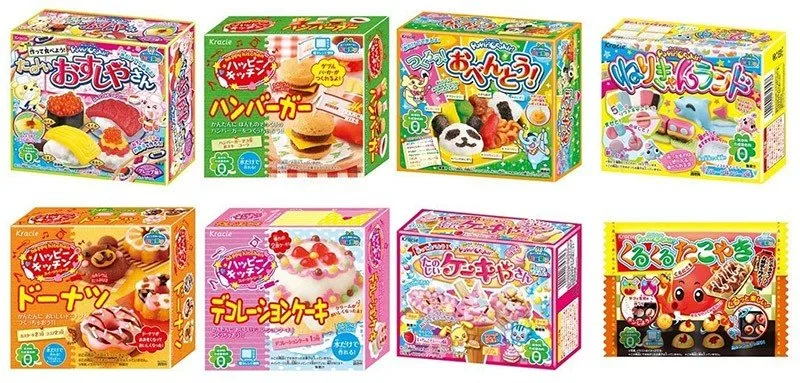
Catalogs change over the years, and Japan often carries more seasonal or regional boxes than export shelves. For English-speaking buyers, the U.S. Popin' Cookin' lineup commonly highlights themes such as:
- tanoshii SUSHI — "rice," omelette, tuna-style pieces, seaweed, and other sushi toppings in candy form
- tanoshii Bento — mini side dishes that pack into a candy lunch box (think broccoli-green pieces, egg roll, rice ball)
- tanoshii Ramen — noodle bowl look with sweet toppings and playful flavors
- tanoshii Hamburger / Donuts / Cakes / Waffle — Western-style shapes with cream, sauce, or sprinkles
- Kawaii Gummy Land — colored gummies and molds for building a tiny candy landscape
Kracie's broader Japanese DIY candy family also includes related play-candy lines such as Nerunerunerune and other mold-and-mix products. Names like Happy Kitchen, Puchitto, or older "Gummy Land" variants often appear in secondhand lists and older unboxings — useful for identification, not as a guarantee that every box is still on shelves today.
Flavors, textures, and what "savory sweets" really means
People search for "savory sweets" because the packaging shows sushi and hamburgers. In practice, the taste is usually sweet or fruity. Grape, soda, strawberry, chocolate, and mixed fruit notes show up often across kits. Texture varies: some parts set firm enough to pick up; others stay soft cream or jelly.
That gap between look and taste is the point. You get the satisfaction of plating a tiny Japanese meal — or a burger stack — without real kitchen heat or real ingredients. If you want actual Japanese sweets and snacks beyond DIY kits, that is a different rabbit hole (wagashi, dagashi, konbini candy walls).
Tips before you open the first box
- Read the sheet first: powder colors and tray icons must match.
- Use the kit's own water measure. Extra water makes mush; too little leaves dry powder.
- Give firm-up time. Many pieces need a few minutes before they hold shape.
- Work on a clean, flat surface — trays are small and spills stick.
- Check allergens on the package (milk, wheat, soy, and other ingredients appear on several kits).
- Treat it as a short craft session. Rushing is the main way to get a lopsided "sushi" that still tastes fine but looks messy.
Watch the process before you buy
If you still wonder how powder becomes a candy bento, a video is faster than any paragraph. These demos show real kits being mixed and assembled — useful for pacing, tools, and final size.
Where people usually find Popin' Cookin'
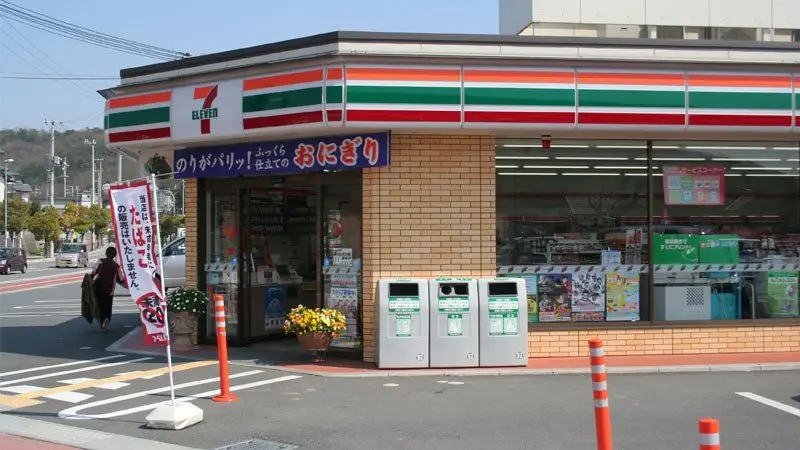
In Japan, DIY candy often sits with other play snacks in konbini, toy-adjacent aisles, specialty candy shops, and big souvenir or department-store snack floors. Outside Japan, look for Asian grocery stores, Japanese candy specialty shops, and importers that stock Kracie kits — availability rotates by region and season.
Before buying a random multipack online, check language of the instructions, best-before date, and which theme is in the box. Export packaging sometimes includes English steps; domestic Japanese boxes may not. Either way, the "recipe" is visual: match colors, mix, wait, assemble.
Why the kits stuck around
Popin' Cookin' survived trends because it combines three easy wins: cute food design, a finish line you can eat, and a shared activity that does not need a real kitchen. For Japan-culture fans, it is also a portable sample of how Japanese candy culture blurs snack and play — next to dagashi, character packaging, and limited seasonal boxes.
Open one when you want a short craft with a sweet ending. Just remember: the sushi is grape-flavored theater, and that is exactly the charm.





Community
Comments
0 comments
There are no published comments in this language yet.
Send comment