
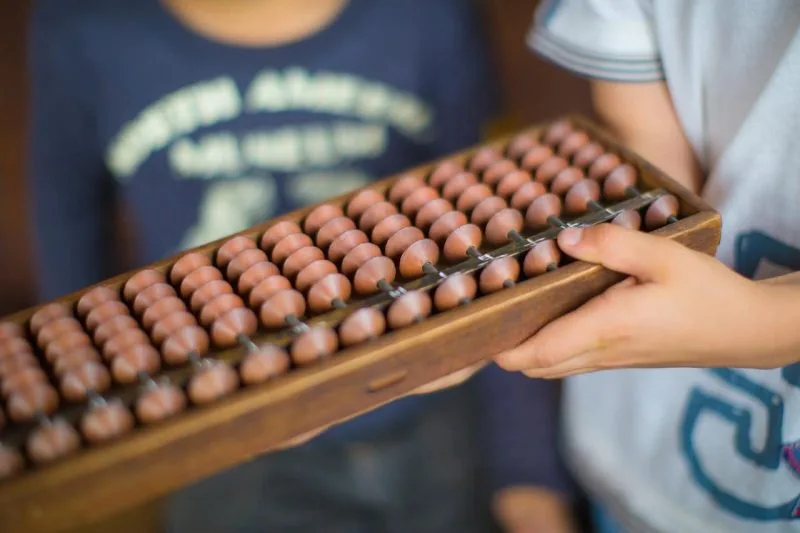
Soroban (そろばん, 算盤) is the Japanese abacus: a compact frame of rods and beads used to represent numbers and calculate by hand. It grew from the Chinese suanpan, but its familiar modern form uses one upper bead worth five and four lower beads worth one on each rod. That layout looks spare at first, yet it makes place value visible in a way a calculator screen does not.
People often meet the soroban as a children's learning tool, but it is also a disciplined way to practise arithmetic. The goal is not to reject calculators. It is to understand what a number is doing while you add, subtract, multiply, divide, estimate, or eventually picture the beads without touching the instrument.
Contents 6
Where did the Japanese soroban come from?
Abacuses existed in several ancient societies, but the direct ancestor of the soroban was the Chinese abacus. The National Federation of Soroban Education records that the Chinese instrument and its techniques reached Japan a little after the middle of the fifteenth century. Japanese practitioners then refined both the instrument and its methods for local commerce and teaching.
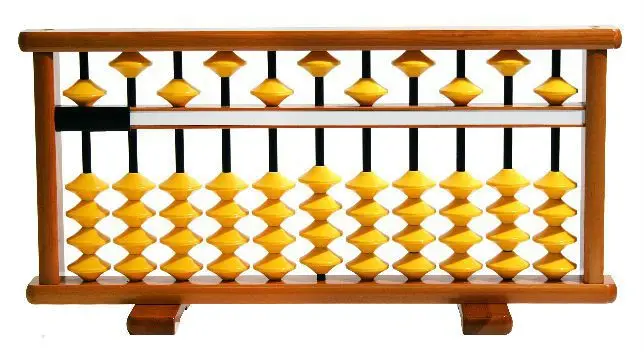
The Japanese design gradually became smaller and more streamlined. By the twentieth century, the one-plus-four arrangement had become the standard: one five-unit bead above the dividing bar and four one-unit beads below it. This is one of the clearest differences from the traditional Chinese suanpan, which commonly has two upper beads and five lower beads.
How a soroban represents numbers
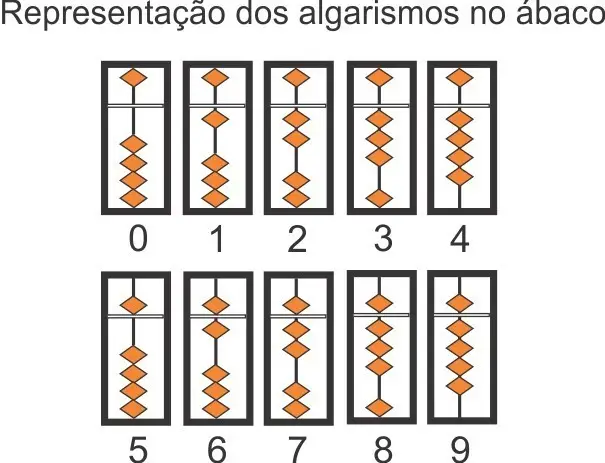
Each vertical rod is a decimal place. Read the rods from right to left: units, tens, hundreds, thousands, and so on. A bead counts only when it is moved toward the horizontal dividing bar, often called the reckoning bar. Beads away from that bar do not contribute to the value.
- Each lower bead represents 1.
- The single upper bead represents 5.
- One rod can therefore show any digit from 0 to 9.
To make 7 in the units column, bring the upper bead to the bar for five, then bring two lower beads to the bar for two more. To make 23, show two on the tens rod and three on the units rod. The same logic works for larger numbers; the rods supply the place value.
The parts of a Japanese abacus
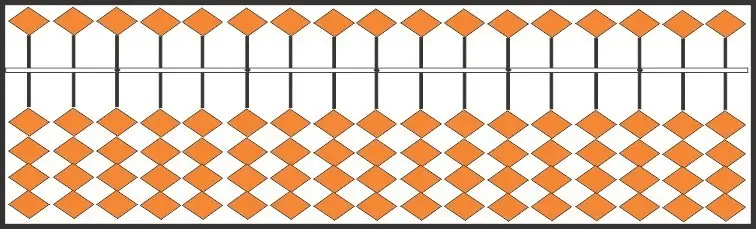
Knowing a few names helps when following a lesson. The outer frame is the waku. The horizontal bar is often called the hari, while the vertical rods are keta. The moving beads are tama.
The upper bead is known as a godama (五玉), literally a five bead. The lower beads are ichidama (一玉), one-unit beads. Names vary a little by teacher and translation, so the useful thing to remember is the value: five above, ones below.
Why the soroban still matters in Japan
The soroban became closely tied to Japanese arithmetic education and proficiency testing. The federation's historical account notes that it was introduced into national grade-school arithmetic textbooks in 1938 and that its technique has remained part of elementary-school study. Outside ordinary classes, students also learn it in dedicated lessons and prepare for graded examinations.
Its lasting value is concrete rather than mystical. Moving the beads makes carrying, borrowing, decimal places, and groups of five or ten visible. A learner can see why 8 plus 7 becomes 15: exchange the five-and-three pattern for a ten on the next rod and five in the current one. That physical step is the part worth practising.
Anzan: calculating without the instrument
With sustained practice, some learners move on to anzan (暗算), mental calculation performed by visualising a soroban. The imagined rods and beads provide a mental workspace for a sequence of numbers. It is not a shortcut that appears after a few exercises; it grows from accurate bead work and repeated patterns.
That distinction matters when reading claims about the soroban. It can support concentration, numerical fluency, and confidence through practice, but it is not a promise of instant speed or a replacement for understanding mathematics. Beginners benefit most from slowing down, naming each place value, and checking the answer with a written calculation when needed.
How to start learning soroban
- Choose a simple one-plus-four soroban with enough rods for the numbers you want to practise.
- Set the zero position: upper beads away from the bar, lower beads away from the bar.
- Practise single digits until the five-bead and one-bead combinations feel natural.
- Work through addition and subtraction before moving to multiplication or division.
- Say the place value aloud at first. It prevents a correct bead pattern from landing on the wrong rod.
For a broader look at how arithmetic is taught in Japan, see our guide to Japanese mathematics. A soroban does not make calculation effortless, but it turns an abstract number into something your hands can inspect, correct, and eventually picture.




Community
Comments
0 comments
There are no published comments in this language yet.
Send comment