
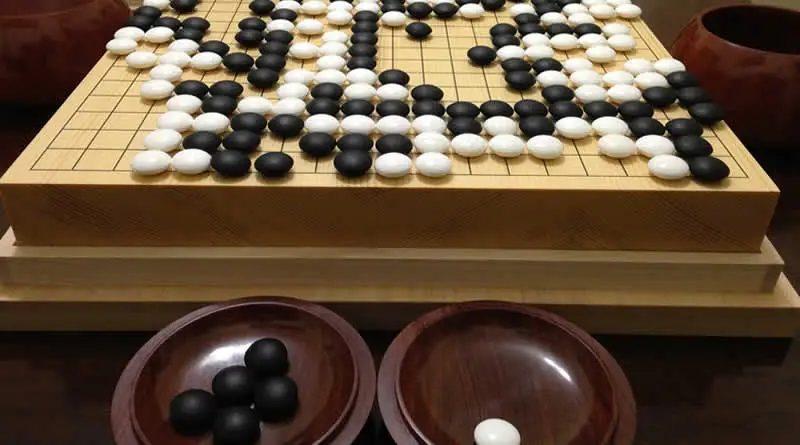
Go is one of those games that looks quiet from a distance and turns ruthless the moment you sit in front of the board. In Japan it is called igo (囲碁), and the basic goal is simple: claim more territory than your opponent by placing black and white stones on the intersections of the board. What keeps people hooked is the contrast between simple rules and long-term depth. A beginner can understand the objective in a few minutes, but a single game can still unfold like a lesson in patience, pressure, timing, and reading ahead.
If you have seen Go mentioned in anime, manga, or old Japanese cultural references, that is not accidental. The game has had a long life in Japan as both a pastime and a serious competitive discipline, and it still survives because it rewards observation rather than speed or luck. This guide explains what Go is, why it matters in Japanese culture, the rules that every beginner should know, and why Hikaru no Go brought a new generation to the board.
Contents 9
What is Go in Japan?
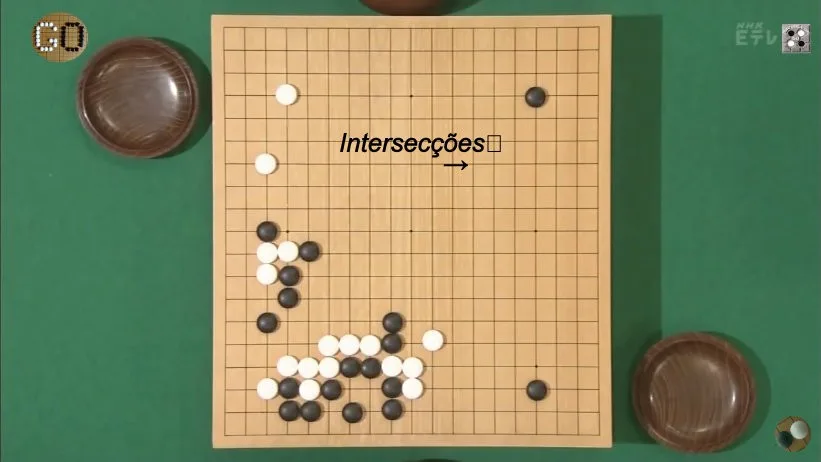
Go is a territory game for two players. The standard board has 19 horizontal lines and 19 vertical lines, creating 361 intersections where the stones are placed. Unlike chess pieces, the stones do not move after they touch the board. Their strength comes from shape, connection, and the amount of space they control.
The game started in China, then took root in Japan more than 1,300 years ago. Over time, Japan helped shape the way many players outside East Asia learned the game, including terminology such as goban for the board, komi for the points given to White, and ko for a repeating capture fight that cannot be answered immediately in the same spot.
That Japanese influence is one reason English-language writing often uses the short name “Go” instead of the Chinese weiqi or the Korean baduk. Even today, major institutions such as the Nihon Ki-in remain central references for lessons, rankings, and tournaments.
Why Go became part of Japanese culture
Go in Japan is not only a hobby for puzzle lovers. It built a reputation as a disciplined game connected to study, etiquette, concentration, and long-form thinking. The image of two players seated in silence over a wooden board still carries a certain cultural weight because the match is not decided by spectacle. It is decided by judgment.
That helps explain why Go appears so often beside other traditional Japanese arts and strategy games. If you already like games built around deliberate choices, you may also enjoy Shogi, the Japanese form of chess, but Go feels different because the board starts almost empty and the shape of the battle grows from nothing.
The professional side also matters. Japan turned Go into an organized competitive scene with schools, titles, professional players, and institutions that still anchor the game today. That formal tradition is one reason Go never became “just” an old board game. It stayed alive as a living practice.
Basic rules every beginner should know
The fastest way to understand Go is to focus on four ideas: territory, liberties, capture, and survival. Once those click, the rest starts making sense.
- Black plays first. Players alternate turns, placing one stone at a time on an empty intersection.
- Stones do not move. After a stone is placed, it stays there unless it is captured.
- Groups need liberties. A liberty is an open adjacent point. If a stone or connected group loses all liberties, it is captured and removed.
- Territory decides the game. At the end, players count the empty intersections surrounded by their stones, together with the stones they captured, depending on the ruleset in use.
Beginners often assume that Go is mostly about surrounding stones. That happens, but the larger aim is to build living groups and secure efficient territory. Sometimes the strongest move is not an attack at all, but a calm extension that keeps your own position healthy.
Important Go terms you will see again and again
Learning a few Japanese terms makes tutorials much easier to follow because many of them still appear in English-language Go material.
- Igo (囲碁): the Japanese name for Go.
- Goban (碁盤): the Go board.
- Goishi (碁石): the stones.
- Atari: a warning that a stone or group has only one liberty left.
- Komi: the compensation points given to White because Black moves first.
- Ko: a repeating capture pattern that has a special rule to prevent infinite loops.
- Sente and gote: initiative and the loss of initiative, two ideas that matter far beyond the opening.
One beginner mistake is to memorize the terms without seeing them on the board. The better approach is to play a few small-board games on 9x9, then return to the vocabulary. The words start to stick when you have felt the pressure of an atari or the annoyance of losing a local fight because you answered the wrong move.
Go is not the same as Gomoku or Renju
People who see black and white stones on a grid sometimes mix Go with Gomoku or Renju, but they are different games. In Gomoku, the usual goal is to place five stones in a row. In Go, the objective is to control territory and keep groups alive. That changes everything from pacing to strategy.
Renju is a formal variant related to Gomoku, not a branch of Go strategy itself. The board may look familiar, but the decision-making rhythm is completely different. If what interests you is long territorial planning, shape, sacrifice, and life-and-death reading, then Go is the game you want.
Hikaru no Go and the modern revival
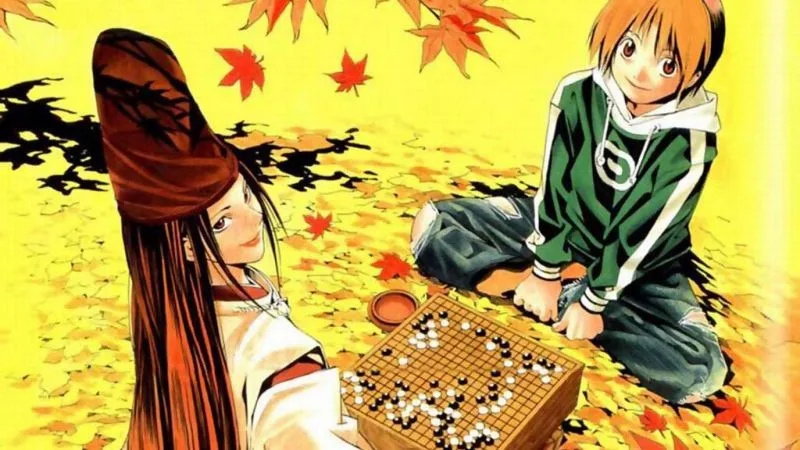
Many younger players outside Japan first heard about Go through Hikaru no Go. That was not just fan enthusiasm. The Nihon Ki-in itself noted that the manga and its anime adaptation sparked an unusual wave of interest among young people in Japan, especially children. For a game that many outsiders imagine as severe or inaccessible, that shift mattered.
The series worked because it did not present Go as homework. It treated the board as a place of rivalry, obsession, growth, frustration, and style. Even readers who never became tournament players came away with a better sense of why Go feels dramatic to the people who love it.
How to start playing Go today
The worst way to begin is to jump straight into full 19x19 strategy and expect the board to make sense. Start smaller. A 9x9 board teaches capture, connection, and shape much faster. Once you stop losing stones to obvious mistakes, moving to 13x13 and later to 19x19 feels much more natural.
If you want a structured introduction, the Nihon Ki-in beginner lessons remain useful for understanding intersections, territory, liberties, and ko. If you want a gentler English-language entry point, the American Go Association has beginner tutorials and club links. For practice, Online Go Server is one of the easiest places to play against real people without buying a physical set first.
That combination works well for most new players: one official rules guide, one beginner-friendly tutorial source, and regular games on a small board. The rhythm of Go is learned by playing, not by collecting definitions.
Why Go still feels fresh
Plenty of old games survive because they are respected. Go survives because it still feels alive. Every match creates a new landscape. The opening can look spacious and calm, the middle game can become a territorial knife fight, and the endgame can swing on details so small that one careless move changes the final count.
That is why Go keeps returning in Japanese cultural conversations. It represents tradition, but it also rewards a modern kind of focus: less noise, more clarity, more consequences for each decision. Once you play a few serious games, the appeal becomes obvious.
Where to learn more
If you want reliable next steps, start with these references:




Community
Comments
0 comments
There are no published comments in this language yet.
Send comment