
Fujigoko (富士五湖), the Fuji Five Lakes, is the best place to slow down and look at Mount Fuji from more than one angle. The lakes sit on the mountain’s northern side in Yamanashi Prefecture: Kawaguchiko, Yamanakako, Saiko, Shojiko and Motosuko. They share the same famous silhouette, but they do not offer the same kind of trip.
Start with one question: do you want easy transport and cafés, a day outdoors, a quieter shore, or a base for camping? Kawaguchiko works well for a first visit; the western lakes reward travellers with more time or a car. This guide helps you choose without trying to rush through five different places in one afternoon.
Contents 10
What makes Fujigoko different?
The five lakes were formed when lava flows from Mount Fuji blocked rivers. Saiko, Shojiko and Motosuko are still linked by underground waterways and keep the same surface level. Fujigoko also belongs to the wider cultural landscape of Fujisan, where lakes, springs and routes were part of pilgrimage practices long before the region became a modern holiday destination.
That background matters because Fujigoko is not only a viewing platform. Some visitors come for a single clear morning and a photograph; others stay for walks, fishing, paddling, museums, hot springs or a night in a ryokan. The useful choice is not the “best” lake in the abstract, but the lake that fits your time and how you want to move around.
Which Fuji Five Lake should you choose?
Lake Kawaguchi: easiest first base
Kawaguchiko (河口湖) is the most developed and easiest lake to use as a base. Kawaguchiko Station connects the area with Tokyo, and the town has the broadest choice of places to stay, eat and visit. The northern shore is especially useful when your priority is a classic Mount Fuji view; the western side usually feels less built-up.
Choose it if you are visiting for the first time, travelling without a car, or want a simple overnight stop. It is also the sensible place to check local transport information before heading farther west.
Lake Yamanaka: more space for an active day
Yamanakako (山中湖) is the largest and easternmost lake. Its shore and open water suit people who prefer an outdoor day: walking, cycling, boating and other lake activities are more natural here than museum-hopping. Small towns sit at either end, while the northern side offers broad views toward Fuji when the weather cooperates.
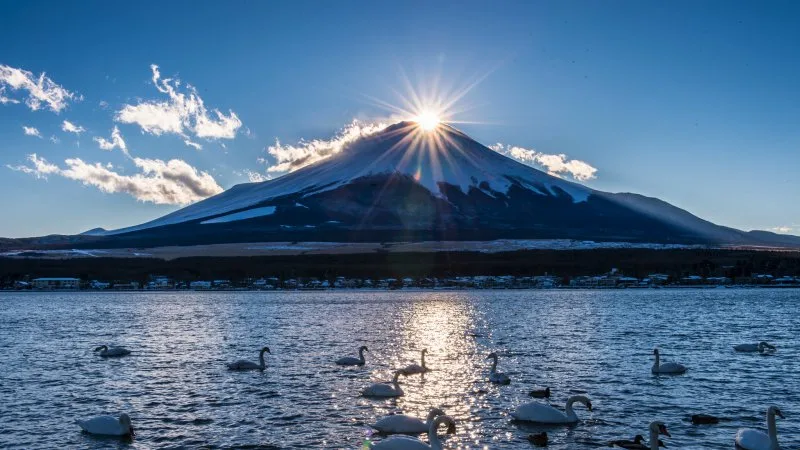
Lake Saiko: forest, campsites and a quieter pace
Saiko (西湖) is close to Kawaguchiko but feels markedly less urban. Mountains block some Fuji views, so come for the lake itself, camping, fishing or a slower walk rather than expecting the most open panorama. The area also gives access to caves shaped by volcanic activity and to the edge of Aokigahara Forest; stay on designated routes and follow local guidance.
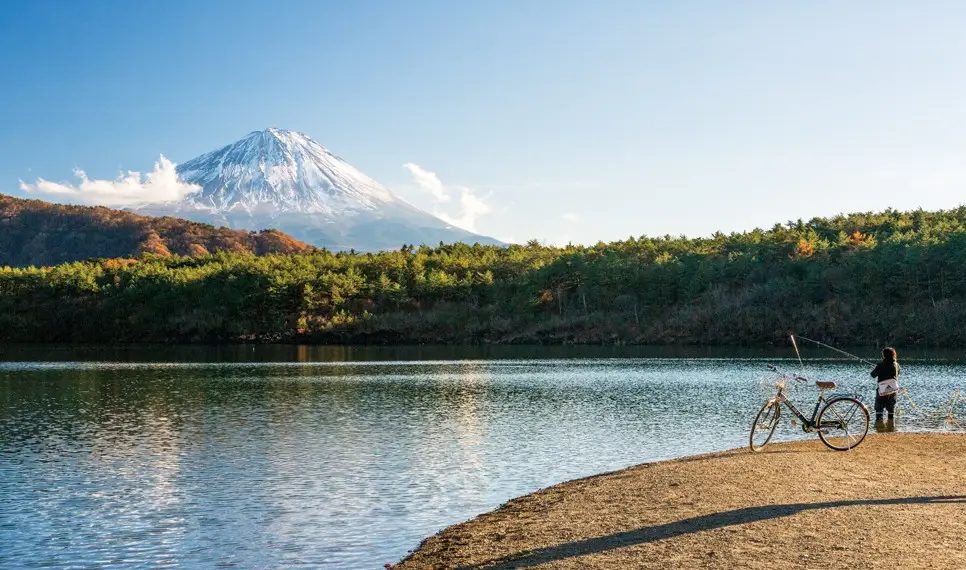
Lake Shoji: smallest lake, fewest distractions
Shojiko (精進湖) is the smallest lake and has only limited development along its shore. It suits travellers who want a modest lakeside stop, fishing, camping or time away from the busier streets around Kawaguchiko. Do not plan it as a packed sightseeing day; its appeal is the lack of urgency.
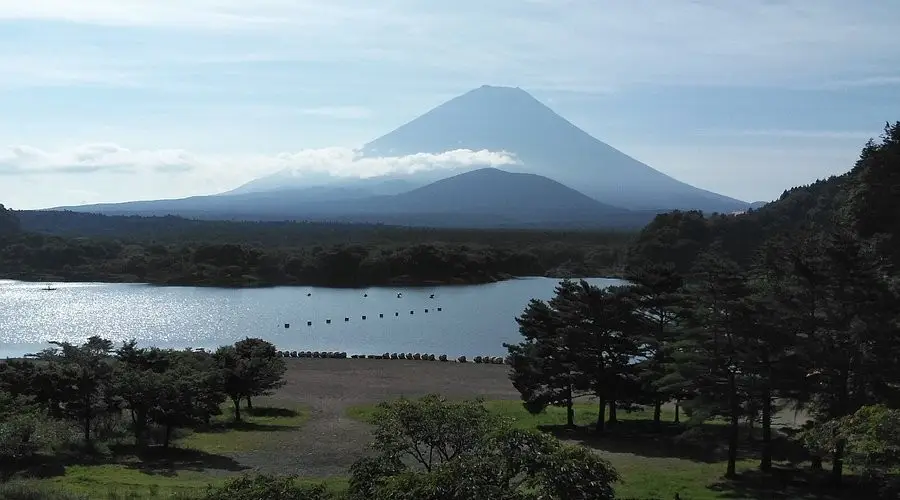
Lake Motosu: clear water and a famous Fuji composition
Motosuko (本栖湖) lies farthest west. Its shoreline remains lightly developed, with campgrounds and water activities rather than a large resort town. The lake is known for clear water and for the Fuji view used on an older 1,000-yen banknote. It is rewarding when you can give the western side of Fujigoko enough time instead of treating it as a quick detour.
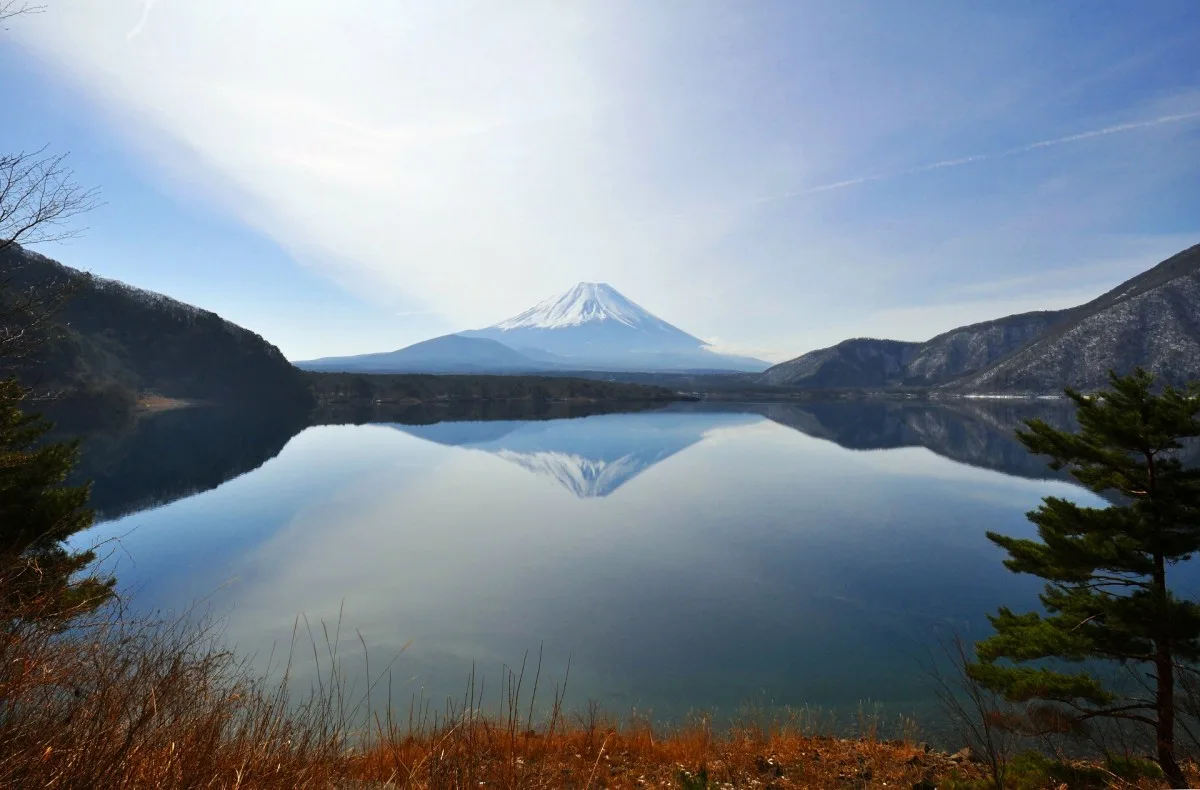
Plan the lakes around your time, not a checklist
For one day, stay around Kawaguchiko and add a single priority: Yamanakako for open-air activity, or Saiko for a quieter western outing. For two days, one day around Kawaguchiko and Yamanakako plus another for Saiko, Shojiko or Motosuko is a more relaxed plan. The western lakes are farther apart than they appear on a small map, especially when relying on buses.
Kawaguchiko Station and nearby Fujisan Station are the main transport hubs. Buses from Tokyo, trains via Otsuki, regional buses and rental cars all serve the region, but routes and timetables change. Check the operator’s current schedule before committing to a same-day connection. A car can make the western lakes easier to reach; it is not necessary for a focused Kawaguchiko visit.
When is the best time to see Mount Fuji?
A clear view depends more on weather than on a calendar. Early mornings often give you a better chance than late afternoon, but clouds can arrive quickly in any season. Build some flexibility into the trip: stay overnight if Fuji is central to your visit, and treat the lakes, local food and walks as worthwhile even on a cloudy day.
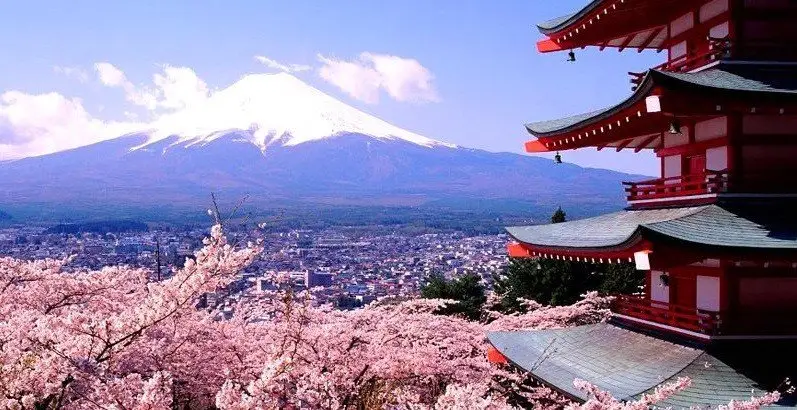
Spring brings blossom viewing around the region, summer opens up warmer-weather activities, autumn changes the lakeside foliage, and winter can deliver crisp views with colder conditions. If you book a ryokan, choose it for location and comfort rather than assuming every room has the same mountain view.
Visit with care
Fujigoko carries both natural and cultural weight. Keep to marked paths, take rubbish with you, respect quiet lakeside neighbourhoods and check conditions before water activities or hikes. A better Fujigoko trip often comes from seeing less, staying longer and leaving room for the mountain to appear on its own terms.


Community
Comments
0 comments
There are no published comments in this language yet.
Send comment