
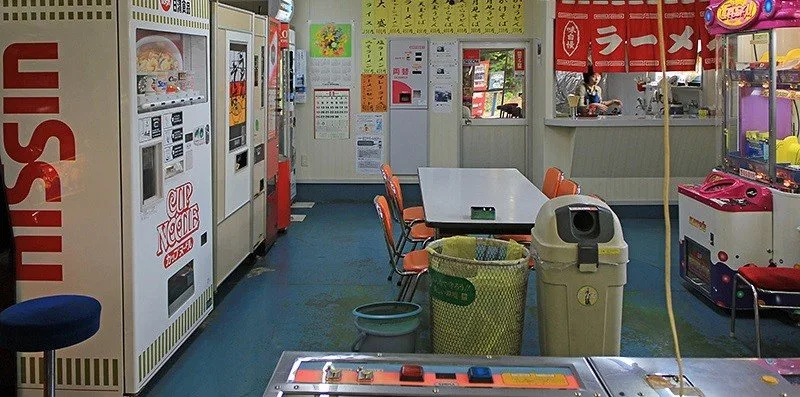
Japan is famous for its cleanliness and recycling, some expect that for the city to stay clean, every corner should have a trash can. One of the things tourists notice when visiting Japan is exactly the lack of trash cans found on the streets; the most we can find are bins for placing cans and bottles from vending machines. In this article, we will understand why there are so few trash cans on the streets of Japan.
Perhaps some think it is to save money, or because the Japanese are already conscious of their waste, or maybe because trash cans are unpleasant. The reality is that there are factors you might not be aware of. One of them is the fact that the fewer trash cans there are, the less trash there is. You might be confused by this theory, but indeed, when Japan had many trash cans on the streets, there was much more waste.

Think with me, people are prone to throw trash where there is trash. In Brazil, it is common to find an empty lot full of trash next to a clean empty lot. At the time when Japan had many trash cans scattered throughout the city, people did not take their trash home, and public trash cans filled up, making it harder to empty them due to the quantity. Not to mention that on windy days, trash cans could tip over or trash could fly out, thus dirtying the street. Currently, there are almost no public trash cans; most of the trash cans found in Japan belong to a convenience store, market, or other business.
Table of Contents
How did public trash cans disappear?
One of the reasons we already mentioned was that it was very labor-intensive to take care of public trash cans, and the city did not stay as clean. It is believed that it was a terrorist attack in 1995 that caused public trash cans to disappear. Exactly, on March 20, 1995, five members of the cult Aum Shinrikyo released deadly gas in subway trains in the city of Tokyo. They used plastic bags wrapped in newspapers. 13 people died and 5000 were injured. Japan was paralyzed with fear of further attacks.

One of the security measures taken was the removal of trash cans, as they could be possible hiding places for other terrorist weapons. Other countries also adopted this security measure, such as London. After that, trash cans never returned to the streets of Tokyo, and other cities followed this path. There are other factors that determined the permanent removal of trash cans from the streets of Japan; today, each establishment takes care of its own. From personal experience, I can say that although it is difficult to find a public trash can in Japan, it is also relatively difficult to find trash on the streets.
Where to dispose of trash in Japan?
Every city and neighborhood has a way to dispose of accumulated trash at home; this is somewhat obvious. And what if you are on the street? There are convenience stores, restaurants, and shops that have recyclable trash cans inside or outside the location. It is not difficult to find a convenience store or another similar place. At every corner, you find a vending machine for drinks, and there is always a bin for bottles next to it.

If you have difficulty disposing of your trash, the best thing to do is to take it home. Even smokers carry a portable ashtray with them to keep the city clean. This dedication to cleanliness makes trash cans unnecessary. Now that you know, there is no point in using the excuse that Brazil is dirty because of the lack of trash cans on the streets. Thank you for reading; we would appreciate and thank you for your possible sharing and comments.
Leave a Reply