
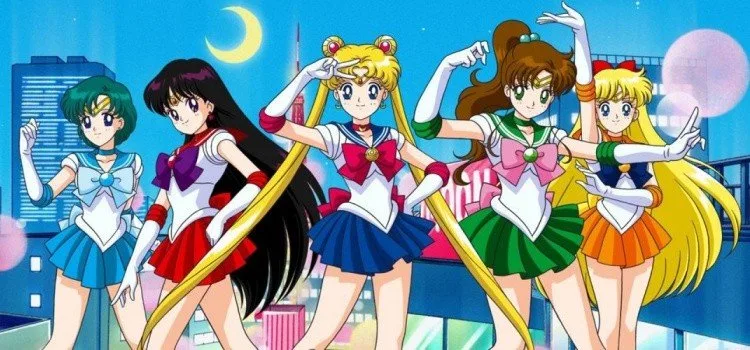
Sailor Moon was one of the first series in the Mahō Shōjo genre to show a team of magical girls fighting together instead of a lonely sorceress. Since then, many manga and anime authors have taken up that formula. Some call it inspiration, others call it copying. This article looks at seven works that Sailor Moon visibly influenced and explains where the line between genre, homage and plagiarism actually runs.
Contents 10
What Sailor Moon did first
Naoko Takeuchi's manga ran from 1991 to 1997 in the magazine Nakayoshi, and the anime series aired from 1992 to 1997 at Toei Animation. Takeuchi combined the classic magical-girl genre with elements of the Super Sentai series: a team with its own colours and weapons, a leader, recurring enemies and a transformation that was easy to sell as a toy. Friendship, first love and a prince who was more than decoration came on top.
The team behind the series mattered too. Kunihiko Ikuhara directed seasons R and S and shaped the visual vocabulary that many later works picked up. In 1997 he created Revolutionary Girl Utena, a series that deliberately quotes Sailor Moon and deconstructs it at the same time. That already shows something: what looks like a copy is often a conversation inside a genre.
Why "copy" is too simple
"Plagiarism" is a legal term, and anime has clear standards for it: characters, plot and design must be so close that an independent creation is no longer recognisable. A genre, by contrast, lives on shared forms. Transformation, team and monster of the week are conventions like Western heroes or detectives. None of the titles mentioned here has been found guilty of plagiarising Sailor Moon, and no court has classified them that way.
What does exist are visible references: similar costumes, a similar pose during the transformation, similar attacks. Describing such similarities as inspiration stays with the facts. Calling them copy and paste turns a genre tradition into a scandal that the works themselves do not need.
1. Mermaid Melody Pichi Pichi Pitch
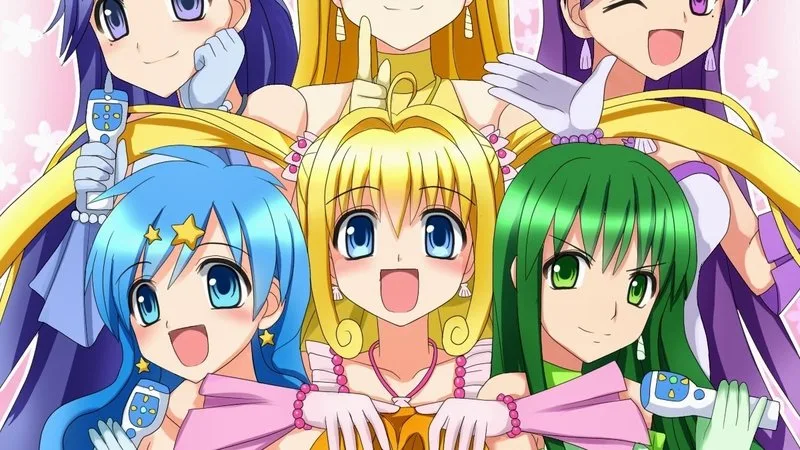
Pink Hanamori's manga ran from 2002 to 2005 in Nakayoshi, the same magazine as Sailor Moon, and the anime followed in 2003. The heroine, Lucia Nanami, is a mermaid who has to hide her identity and transforms through singing. The parallels to Sailor Moon's structure are clear: a protagonist with a secret mission, a team of allies with their own colours and an enemy who keeps coming back. Even so, the series tells its own story about music as a weapon, and its target audience was younger.
2. Pretty Cure
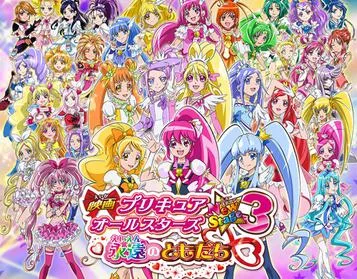
Pretty Cure started in February 2004 at Toei Animation, the same studio as Sailor Moon. The transformation scenes, the team and the fight against evil forces are similar, and individual frames show overlaps. The difference lies in the concept: Pretty Cure leans harder on physical action, close combat and a new generation of heroines every year. The influence turned into a franchise of its own with more than 1,000 episodes.
3. Wedding Peach
Sukehiro Tomita and Nao Yazawa's manga appeared in Ciao from 1994, and the anime ran from 1995 to 1996 on TV Tokyo. Momoko Hanasaki and her friends learn that they are Love Angels and must protect the world from the evil Reine Devila. The structure recalls the first season of Sailor Moon, including a magical object that triggers the transformation. The tone, however, is more romantic and comedic, and the wedding theme is a concept of its own.
4. Tokyo Mew Mew
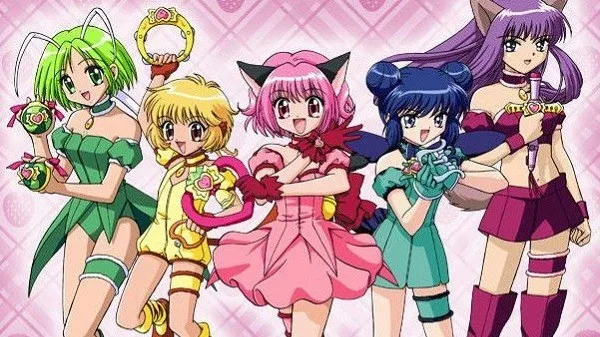
Mia Ikumi and Reiko Yoshida's manga ran from 2000 to 2003, also in Nakayoshi, and the anime followed in 2002. Five girls gain special powers through infusions of DNA from endangered animals. The team pattern is familiar, but the premise is new: environmental protection, animal motifs and an idolised heroine with cat ears. Similarities in weapons and attacks exist, yet the series has a visual language of its own.
5. Magic Knight Rayearth
CLAMP published the manga from 1993 in Nakayoshi, and the anime followed quickly in 1994. Three girls are pulled into another world, receive magical armour and fight as knights. At first glance it is a Sailor Moon pattern, but in fact it mixes fantasy, mecha and role-playing games. The key difference: Rayearth tells of a journey and a war, not of school and a double life.
6. Winx Club
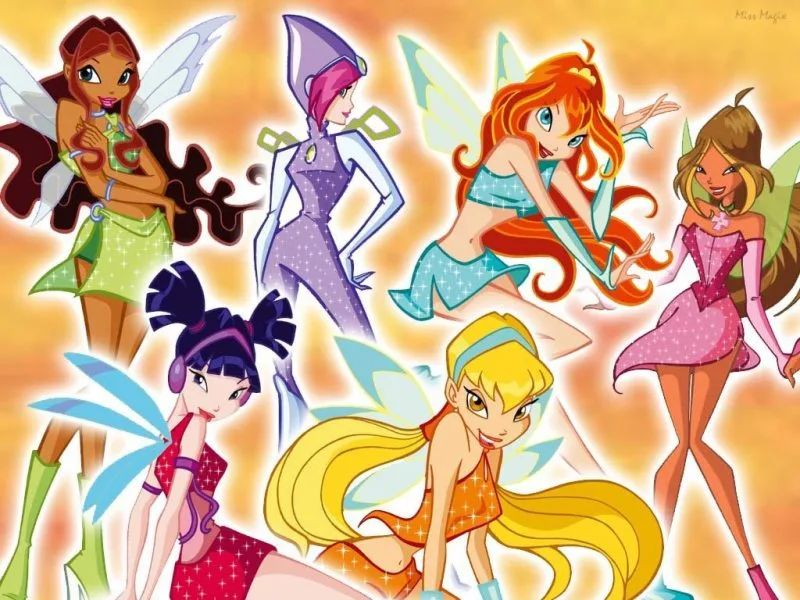
The Italian series by Iginio Straffi started in January 2004 and was sold to many countries. Five fairies fight witches and dark powers, and the similarities to Sailor Moon are obvious: a group with different elements, transformations and changing enemies. At the same time Winx Club adds something new: fashion, boarding school and a female friendship that sits closer to the centre than romance.
7. W.I.T.C.H.
W.I.T.C.H. began in 2001 as an Italian Disney comic series by Elisabetta Gnone, Alessandro Barbucci and Barbara Canepa, and the animated series followed in 2004. Five girls are Guardians of the Veil and protect the magical crystal of Kandrakar. The five elements, the team and the transformation are genre standard; the difference lies in the Disney tone, the graphic-novel aesthetic and the structure of a comic series with its own villains. One similar attack does not make it plagiarism.
Conclusion
Sailor Moon shaped the magical-girl genre like hardly any other series. Anyone who later showed a team of girls with transformations and talking companions was automatically working in its wake. Some works quote it deliberately, others develop the formula further. The seven examples show both: visible inspiration and independent stories.
Anyone who talks about plagiarism should know the difference between genre and copy. And anyone who watches those series today notices quickly that each of them had its own characters, its own conflicts and its own audience. Sailor Moon was the beginning of a tradition, not the owner of an entire genre.
For a deeper look, the site has articles on whether Sailor Moon has a continuation, on the best mahou shoujo animes and on the differences between anime and manga.

Community
Comments
0 comments
There are no published comments in this language yet.
Send comment