
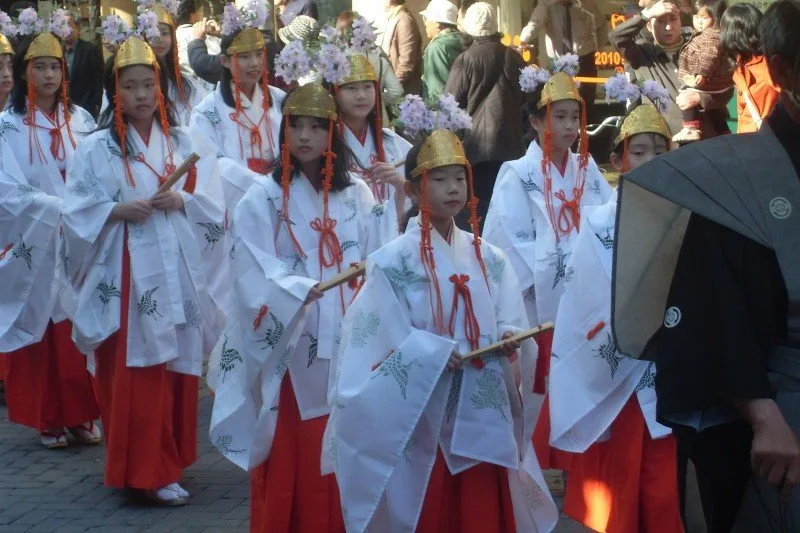
The small town of Takayama is located in the mountains, northwest of Tokyo and northeast of Kyoto. Takayama is famous for its historic district and the Takayama Matsuri, a festival that takes place twice a year, in spring (Sanno Matsuri, on April 14 and 15) and in autumn (Yahata Matsuri, on October 9 and 10).
The Takayama Matsuri (festival) is considered one of the three most beautiful in Japan, started in the 16th century, and attracts visitors from all over the country (and foreigners too).
Because of this, travelers must book hotels well in advance, as the hotel availability in this town is quite limited and they are all fully booked on the 2 days of the festival. Options for those who cannot stay in the city are the neighboring towns of Furukawa and Gero Onsen.
We also recommend reading:
- 7 onsen to visit in Japan
- Setsubun – Throwing beans at Oni to welcome spring
- List of Festivals in Japan – Matsuri in Japanese

Table of Contents
How to get to the Takayama Matsuri?
There is no direct train from Tokyo to there; travelers first have to go to Nagoya and then take a bullet train to Takayama, the journey takes between 4-5 hours in total.
From Kyoto, there is an express train to Takayama, which also takes between 4-5 hours (be careful not to take a train that stops frequently and takes much longer).
Another important point to remember: the weather! Since Takayama is in the mountains, it is much colder than other cities at sea level – in April 2006, there was still snow remaining in the fields, and the temperature was around 5 degrees.
I advise buying gloves and a hat in the city; otherwise, you might end up freezing, especially at night when the parade of floats takes place on the first day of the festival.
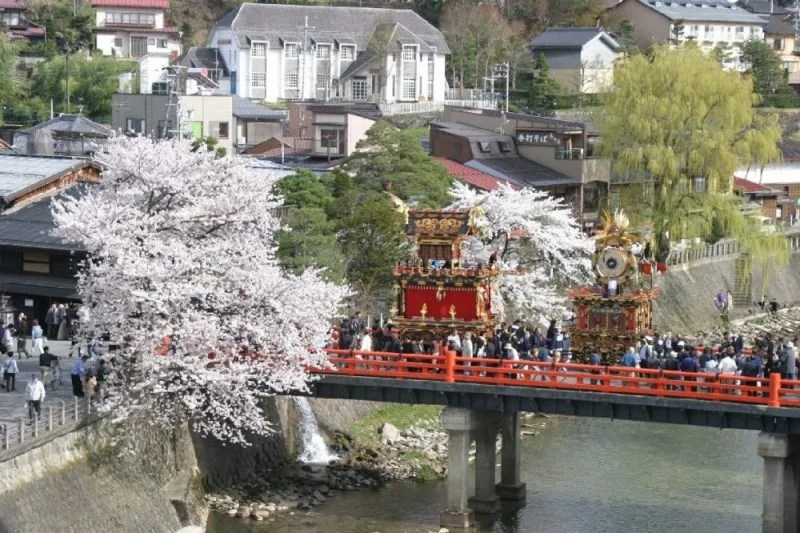
Attractions of Takayama Matsuri
The attractions of the festival are the floats (yatai), which are a cultural heritage of Japan, and during these days they are displayed on the streets of the city (in case of rain, they are displayed in their “garages” at different points in the city).
The floats on the streets are truly fantastic: all carved in wood or metal, lacquered, painted in minute detail, and adorned with gold leaf. They are indeed mobile treasures, each one is hundreds of years old and is the pride of this artisan city.
The floats of the spring festival are different from those of autumn; there are 12 in spring and 11 in autumn (according to websites and travel guides). At the end of the day, at 6:30 PM, the night procession begins, with the floats illuminated by lanterns and carried through the streets of the city, with children waving from the tops of the floats.
Some of the floats have their own music, and in others, adults and children play flutes (on top of the float or walking in front and behind). The night parade only takes place on the night of the first day of the festival if it is not raining.

On the second day, the schedule is the same, except for the night parade: the floats are displayed on the streets during the day, there are puppet shows at two different times (morning and afternoon), and the daytime procession (on the first day the altar is taken from the temple to another location, and on the second day it returns to the temple, concluding the festivities).
If you visit Takayama outside of the festival days, you can see some of the floats at the Yatai Kaikan, which is a special hall to showcase 4 of the 25 floats throughout the year (the floats are not always the same; they change sometimes during the year).

Leave a Reply