
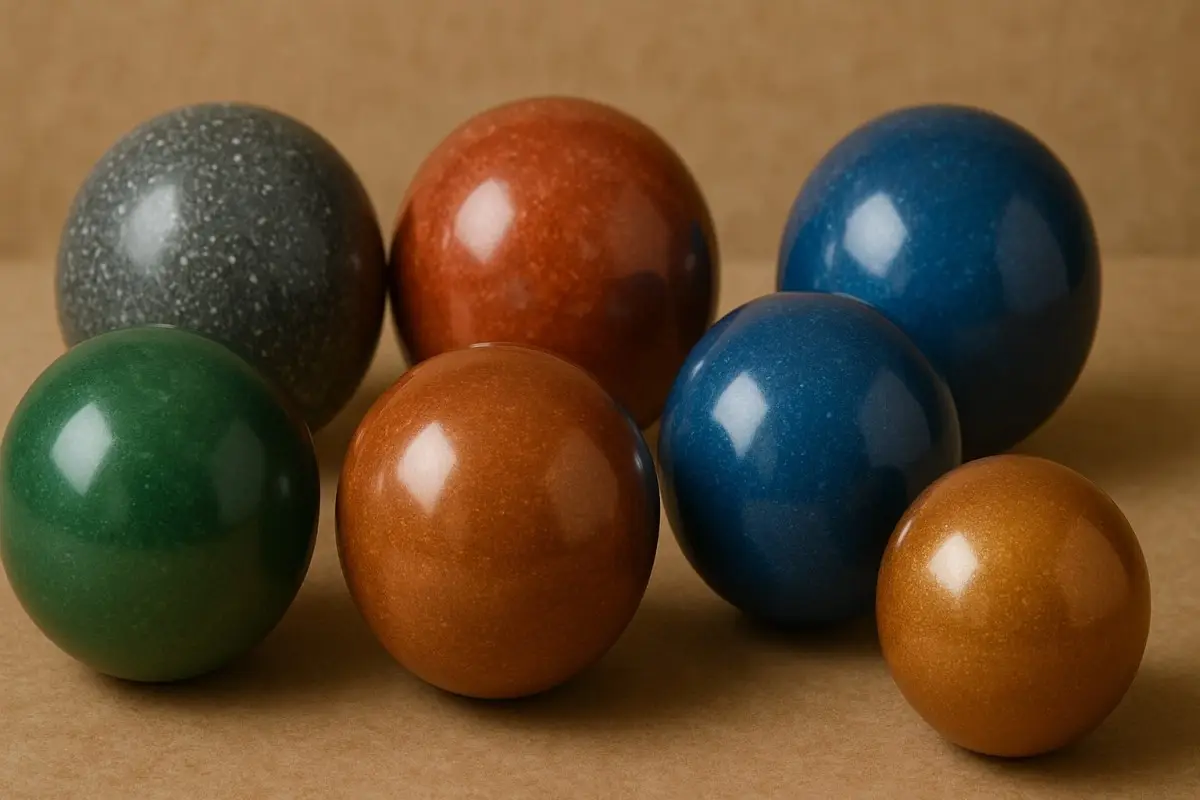
Hikaru dorodango [光る泥だんご] is one of those crafts that seem to come straight out of a story: take mud, shape it with your hands, and turn it into a sphere with a surface that catches the light. There is no paint or varnish in the traditional process. Just earth, water, fine soil, and patience.
The surprise is not only in the final shine. Each stage asks for a different kind of attention: the core must be firm, the surface must dry at the right pace, and the powdery outer layers need a gentle hand. A rushed dorodango can crack or lose its smooth finish; a careful one gradually begins to look less like mud and more like a polished stone.
Contents 7
What does hikaru dorodango mean?
The word doro [泥] means mud, while dango [だんご] is a round dumpling. Hikaru [光る] means shining. Together, hikaru dorodango describes a shiny ball of mud: an ordinary material worked until its surface becomes dense, smooth, and reflective.
Making simple mud balls has long been a familiar childhood pastime in Japan. The glossy form became more widely known after Professor Fumio Kayo of Kyoto University of Education studied the practice and developed a method that children could follow. He encountered shiny dorodango at a Kyoto nursery school in 1999, then worked to understand how the surface could keep its luster after drying.
What you need before you start
A basic dorodango does not demand a special kit. You need clean soil, water, a container, a sieve or fine strainer, a plastic bag, and a soft cloth for the last polish. Soil behaves differently from place to place, so there is no perfect amount of water that works for every batch. Add it gradually until the mixture holds together without turning runny.
Sift the soil before using it for the outer layers. Stones, roots, and coarse grains can scratch the surface or leave weak spots. Fine dry particles are what form the delicate shell that later takes the shine. Wear a mask if you are working with very dry, dusty soil, and avoid using soil from places that may be contaminated.
How to make the core of a dorodango
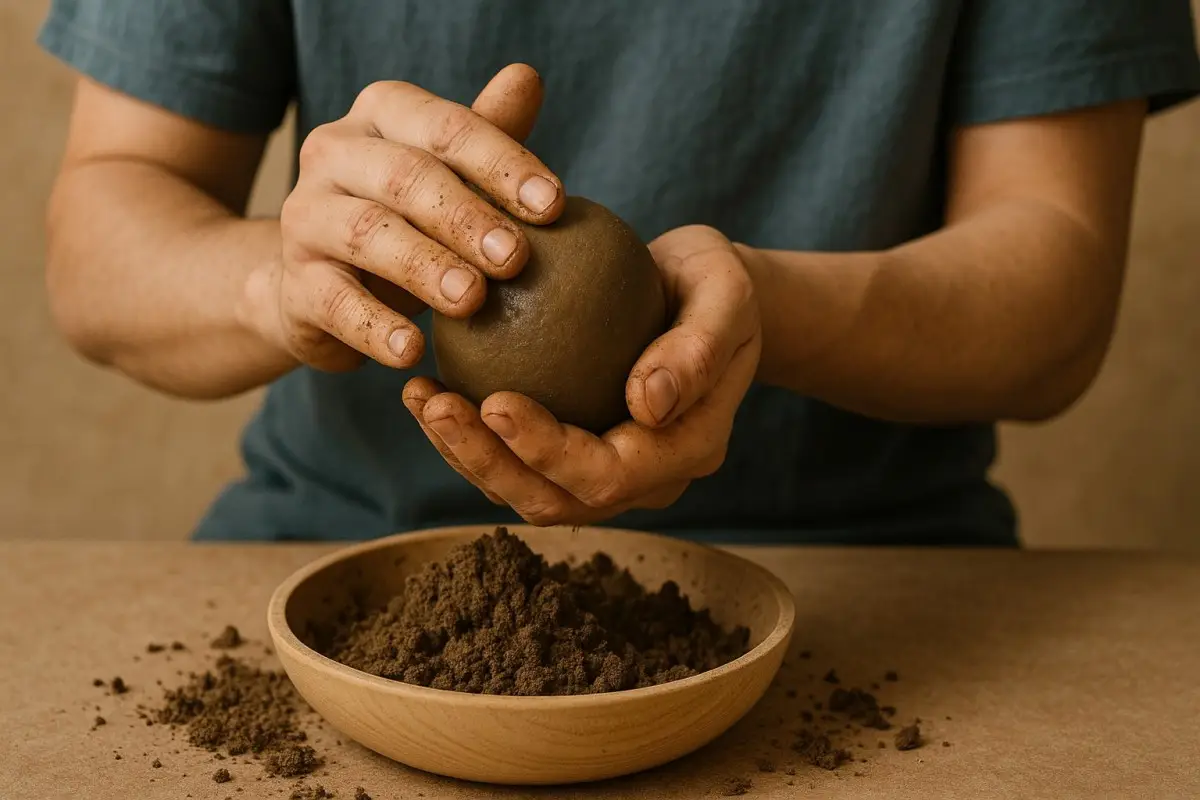
Mix soil and water into a firm mass, then compress it between your palms. The first goal is not shine; it is a compact sphere with as few air pockets and dents as possible. Turn it often, press lightly, and correct obvious bumps before the surface begins to dry.
As the ball firms up, it should feel tacky rather than wet. A glass bowl or jar can help smooth the curve, but use it gently: hard pressure can tear the soft surface instead of refining it. If a small crack appears, fill it with a little of the damp mixture and reshape that area before moving on.
Drying and building the fine-soil shell
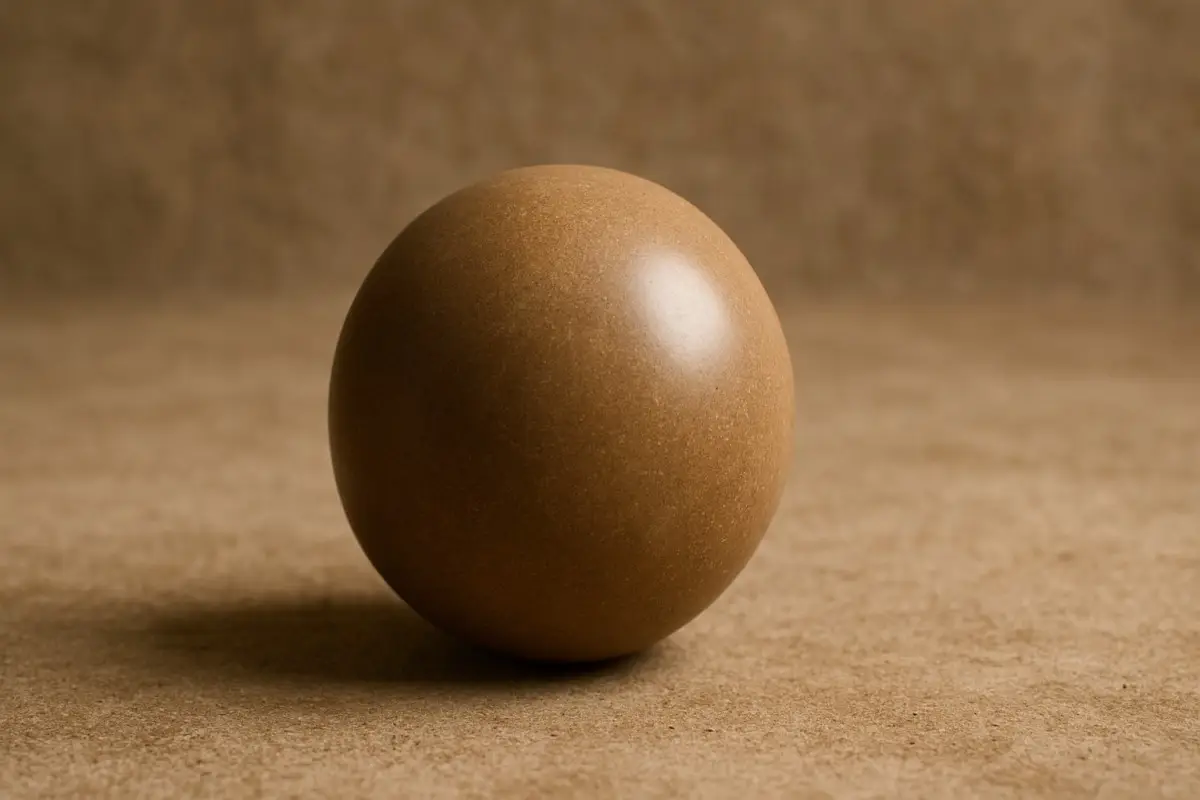
Drying is where the process becomes less obvious. Let the sphere rest in a plastic bag or another protected place so moisture can leave slowly instead of pulling the surface apart. Check it from time to time; the ball should keep its shape, but it must not become bone-dry before the fine soil can still adhere.
Hold the ball in one hand and sprinkle sifted dry soil over it with the other. Rotate it as you sweep away the excess with your thumb. The powder absorbs surface moisture and creates a new layer. Repeat with increasingly fine soil, stopping if the surface starts to crack. This quiet cycle of drying, dusting, and turning is what gives a hikaru dorodango its even skin.
How to polish it without ruining the surface
Wait until the outer layer is dry to the touch before using a soft cloth. Begin with light strokes. A cloth used too early can leave marks, while pressing too hard can lift the fragile skin you have been building. Once the sphere is drier, polish more firmly in small movements and inspect it under the light.
Some makers use a smooth glass bowl to compress the surface before the final cloth polish. It can help create an even gloss, but it is not a shortcut around the earlier stages. The shine comes from a carefully prepared surface, not from coating the ball with something that hides the soil beneath it.
Common dorodango problems
Cracks usually mean the ball dried too fast or the core was still uneven. Repair small marks while the surface is pliable; if the ball is already dry and splitting, forcing another layer over it rarely produces a clean finish.
A dull surface often needs finer soil, not more force. Coarse grains leave texture behind, and a wet outer layer will smear when polished. Return to a fine, dry powder, let the sphere settle, and polish only after the surface has hardened enough to resist a gentle touch.
Different colors are normal. Soil composition, moisture, particle size, and the way each layer is handled all influence the final appearance. That is part of the appeal: a dorodango made from local earth carries the character of that soil rather than aiming for factory-perfect sameness.
Why make a hikaru dorodango?
The appeal is not that it turns dirt into a luxury object. It is that the material remains recognizable even after hours of work. Earth, water, hands, and a stubborn little sphere are enough to make the result feel personal. Whether you start with a backyard soil sample or a simple craft session, the final object records every layer of care that brought it to the light.





Community
Comments
0 comments
There are no published comments in this language yet.
Send comment