
The Sanya neighborhood, located in the northeastern part of Tokyo, represents a lesser-known and underexplored side of the Japanese capital. Known as the poorest neighborhood in Tokyo, Sanya has a history that dates back to social exclusion and the manual labor of the “burakumin,” a class historically marginalized in Japan.
Today, the neighborhood is home to a population made up of temporary workers, homeless individuals, and low-income elderly people, challenging the image of a modern, technological, and economically prosperous Tokyo. In this article, we will explore the history, current living conditions, and social issues surrounding Sanya, offering a comprehensive look at a Japan often invisible to tourists and society at large.
We also recommend reading: The Invisible Homeless in Japan
Contents 6
The History of Sanya: Exclusion and Marginalization
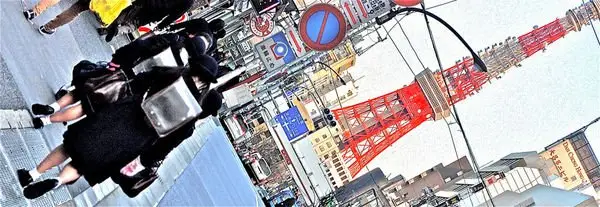
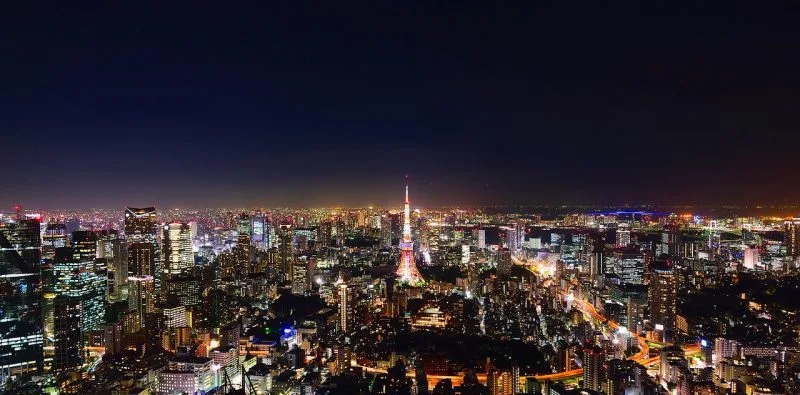
The name "Sanya" was officially removed from Tokyo maps in 1966, as part of a policy of invisibilization of poverty and social problems. After the war, the neighborhood became a meeting point for temporary workers and day laborers who participated in the reconstruction of Japan, erecting landmarks such as the Tokyo Tower and the facilities for the 1964 Olympics. These men, responsible for the physical reconstruction of Tokyo, were relegated to areas like Sanya, where they lived in simple accommodations known as “doya,” which offered tiny rooms at low prices. This historical past of exclusion and hard labor shaped the neighborhood, creating a marginalized community within one of the richest cities in the world.
Furthermore, the workers who built modern Japan eventually became helpless and without social support, surviving on small pensions and lacking family structure. Over the years, the neighborhood was forgotten by the government, which stopped investing in infrastructure and assistance programs for its residents, further increasing the social and economic isolation of Sanya.
Living Conditions in Sanya: Reality and Daily Challenges
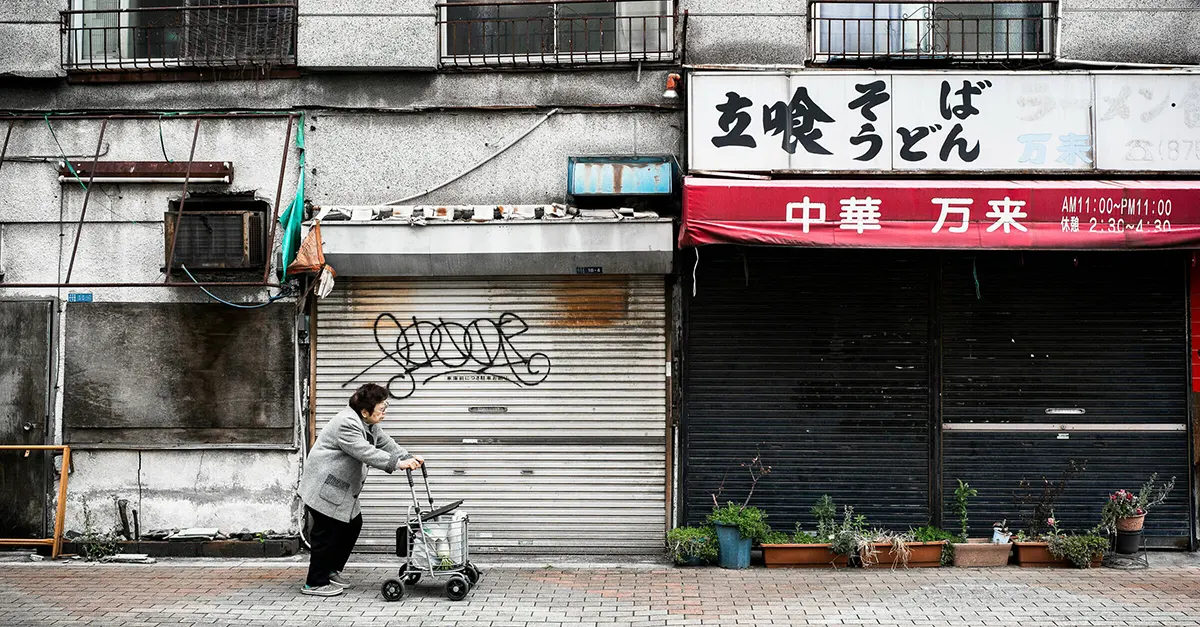
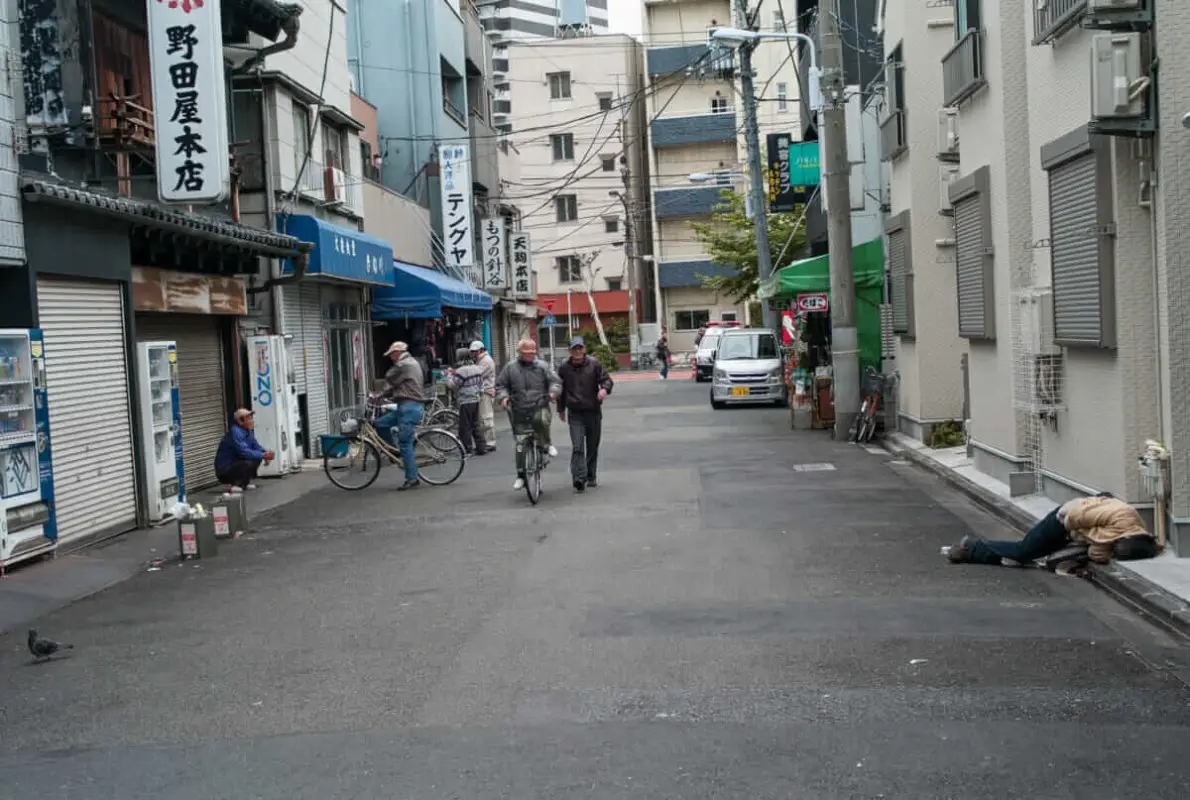
Sanya consists of small accommodations, where daily rates can cost less than 2,000 yen (about 10 dollars), something unthinkable in any other part of Tokyo. These accommodations offer rooms of just a few square meters, and residents face precarious living conditions, with a lack of hygiene and often deteriorated infrastructure. Many of the residents are older men, living on minimal government benefits, supplementing their expenses with temporary jobs or odd jobs when they can. The situation of poverty and exclusion is exacerbated by the presence of garbage in the streets and the absence of any luxury or comfort common in other regions of Tokyo.
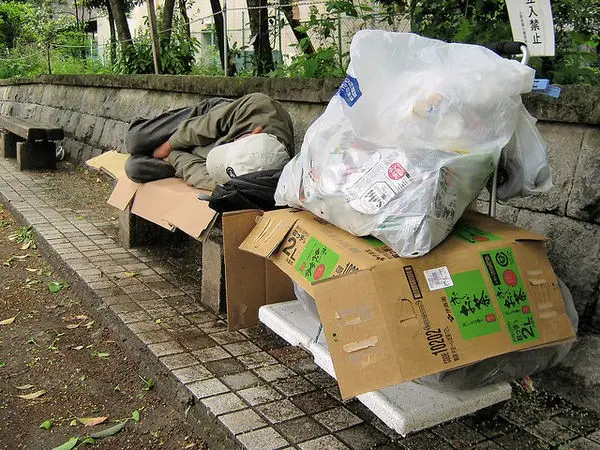
The few social services available in Sanya are mainly supported by NGOs and volunteers who provide food and clothing to residents. In local parks, it is common to see groups of men playing shogi (a traditional Japanese board game) while drinking beer. This routine of inactivity and alcohol consumption reflects the lack of opportunities and the resignation of a population that has lived for decades in adverse conditions, with little expectation of change.
Attracting Alternative Tourists: A Neighborhood of Contrasts
Although not a conventional tourist area, Sanya has attracted the curiosity of alternative travelers who wish to see a different side of Japan. These tourists, mostly backpackers and budget travelers, seek authentic and less idealized experiences of Tokyo. Staying in Sanya is a way to explore a realistic side of the city and interact with the local community, although the reception is not always warm, as many residents view tourists with suspicion. The presence of hostels that charge very low rates, compared to the rest of Tokyo, has made the neighborhood a point of interest for those looking to save money and explore the capital in a different way.
Despite the growing interest, tourism in Sanya raises questions about gentrification and cultural sensitivity. Many wonder if the foreign presence could affect the authenticity of the neighborhood, which still struggles to preserve its identity and space. For tourists visiting Sanya, it is essential to adopt an attitude of respect and understanding, remembering that this is a place where daily life is marked by struggle and overcoming financial difficulties.
Sanya and Relations with Organized Crime
Sanya also carries a complex history of ties with organized crime, having long been an area of influence for the Yakuza, the notorious Japanese mafia. In past decades, the Yakuza had a strong presence in the neighborhood, taking advantage of the residents' vulnerability to recruit labor and control parallel economic activities. Today, although the presence of the Yakuza in Sanya has diminished, remnants of their influence can still be seen, especially in the informal support networks that still help some residents survive amid poverty.
This relationship with organized crime, although less visible, still contributes to the social stigma of the neighborhood. For many Japanese people, Sanya is a place to be avoided, associated with extreme poverty and a history of violence. This social isolation further complicates the reintegration of the neighborhood into the rest of the city and limits residents' access to job opportunities and improved living conditions.
The Future of Sanya: Preservation or Renewal?
The future of Sanya is uncertain and raises important debates about urbanization, social justice, and the right to the city. Some advocacy groups argue for the preservation of the neighborhood as a historical area that witnessed an important era of development in Japan. However, real estate pressure and urban renewal interests threaten the permanence of Sanya, as many construction companies see the neighborhood as an area for potential expansion.
For many residents and activists, the ideal would be for Sanya to receive investments in infrastructure and social assistance, without losing its identity. The neighborhood could be revitalized while maintaining its accessible character and its role as a refuge for those who need it most. In a Japan that constantly seeks to advance and modernize, Sanya reminds us that progress must also include those who have been left behind.
Conclusion
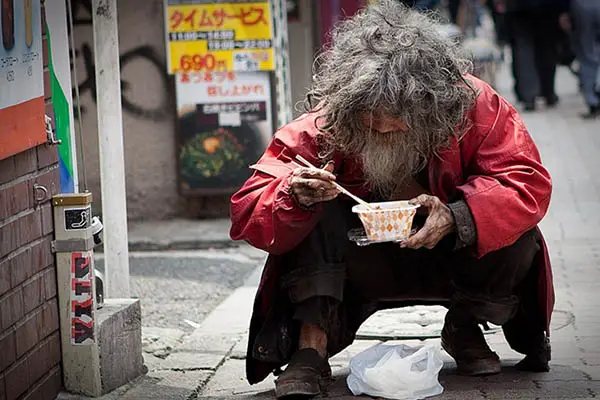
Sanya, the poorest neighborhood in Tokyo, offers a rare and valuable perspective on the social complexities of one of the largest and most developed metropolises in the world. Amid a city of neon lights and technological advances, Sanya represents a contrast: a space of struggle, resistance, and exclusion. With an aging population, lacking opportunities and living in difficult conditions, the neighborhood is a reminder that even the most prosperous societies have their forgotten faces.
In considering the future of Sanya, it is essential that Japanese society and the government find a balance between urban development and social inclusion. Sanya is not just a neighborhood, but a symbol of the need for justice and equity in the distribution of opportunities and quality of life.



Community
Comments
0 comments
There are no published comments in this language yet.
Send comment