
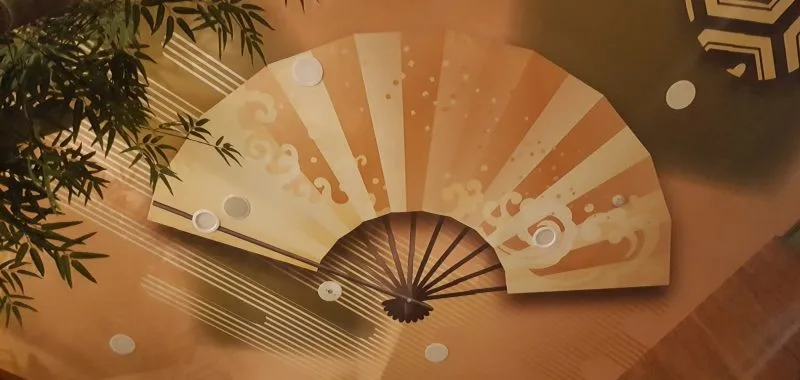
Japanese fans are cultural symbols rich in history and meaning, playing essential roles in ceremonies, dances, and daily life in Japan. There are various types of fans, each with unique characteristics that reflect the diversity and depth of Japanese culture. In this article, we will look at some Japanese fans such as Uchiwa, Ougi, and Sensu.
Contents 20
The history of Japanese fans
Fans were introduced to Japan over a thousand years ago, between the 6th and 9th centuries, inspired by Chinese prototypes. However, it was in Japan that these items gained unique forms, such as the folding fans (sensu or ougi), which did not exist in other cultures.
The evolution of fans throughout historical periods
- Heian Period (794–1185): It was during this time that folding fans became popular among the aristocracy. Used as a status symbol, fans were often decorated with elaborate patterns that reflected high society. The Hiogi, made from thin strips of cypress, was exclusive to the imperial court.
- Kamakura Period (1185–1333): Fans began to have practical applications beyond their beauty. Fans such as the Gunsen emerged, used by samurai for communication in battles.
- Edo Period (1603–1868): The artisanal production of fans reached its peak. With advanced techniques, Japan surpassed China in the production and export of fans. They became popular not only in Japan but also in Europe.
Historical curiosities
Fans were often exchanged as gifts between countries. For example, in 1543, when the first Portuguese arrived in Japan, they brought folding fans, which became popular in Europe. These Japanese fans inspired Western variations but always maintained their cultural roots in the East.
Ougi or Sensu (扇)
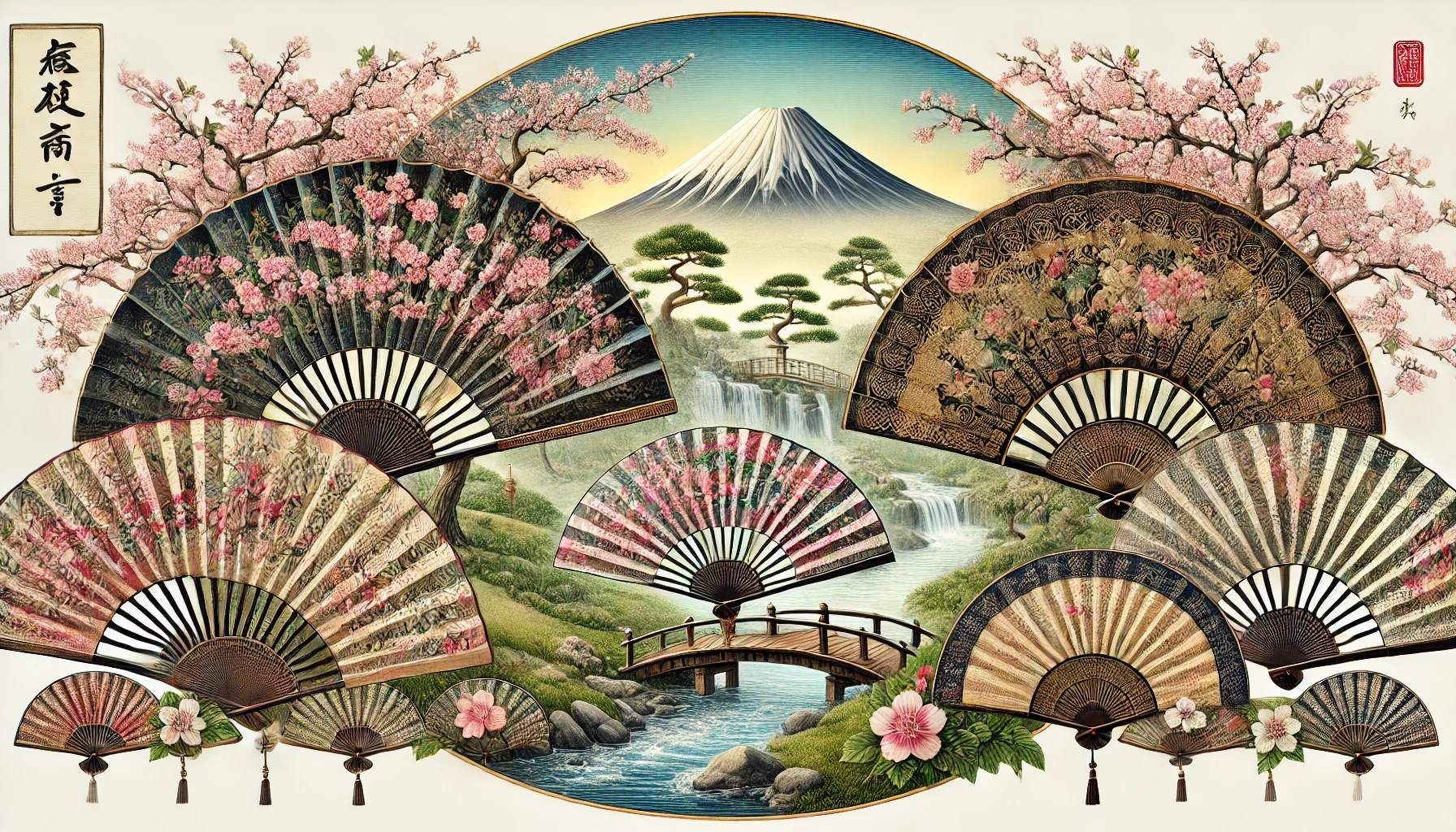
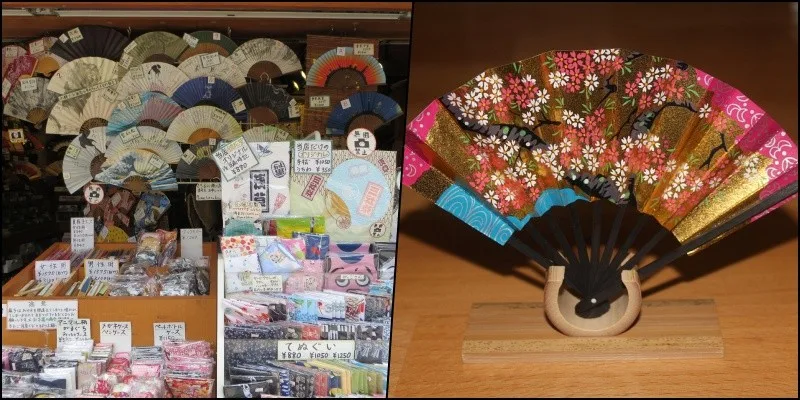
The Ougi, also called Sensu, is the most well-known traditional folding fan. Made of wooden or bamboo slats joined by washi paper or silk, it is lightweight and portable.
Uses and symbolism
Widely used in traditional dances, such as kabuki and noh, the ougi is also a symbol of prosperity and growth. The movement of opening and closing the fan is associated with the expansion of wealth.
Common designs
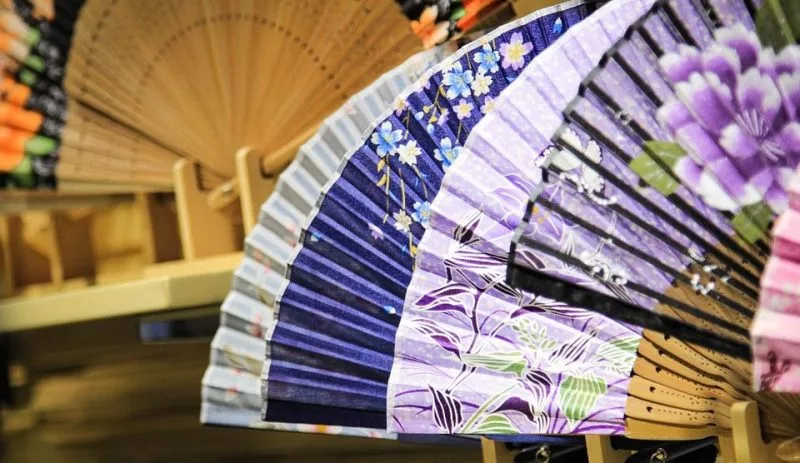
Common motifs include cherry blossoms, mountains, carp, and dragons. Some feature calligraphed messages or elaborate paintings.
Sizes and variations
Smaller sensu (20 cm) are popular among women, while larger ones (23 cm or more) are preferred by men.
Uchiwa (団扇)
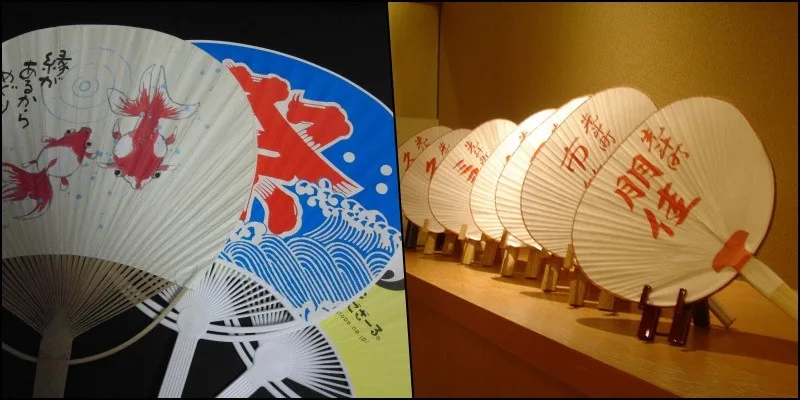
The Uchiwa is a rigid, non-foldable fan, with a flat, circular structure. Its manufacturing includes bamboo strips covered with decorative paper or fabric.
Practical function
Widely used in summer, the uchiwa is a popular item at festivals and seasonal events. Companies often distribute them for free with advertisements, increasing their accessibility.
Appearance
Typically, it has a simple design, but there are sophisticated versions that are decorated with gold paint or traditional images.
Culturally significant
Despite its practicality, the uchiwa also has a symbolic role. It is widely associated with Japanese hospitality, being used to gift tourists at festivals.
Gunsen (軍扇)
The Gunsen is a military fan created to serve as a communication tool on the battlefield. Made from durable materials like metal and wood, it combines utility and symbolism.
Historical use of the Gunsen
Generals used the gunsen to signal orders during battles. Additionally, it could serve as an improvised weapon.
Design of the Gunsen
Many gunsen feature gold and silver patterns, reinforcing the authority and importance of the bearer.
Hiogi (檜扇)
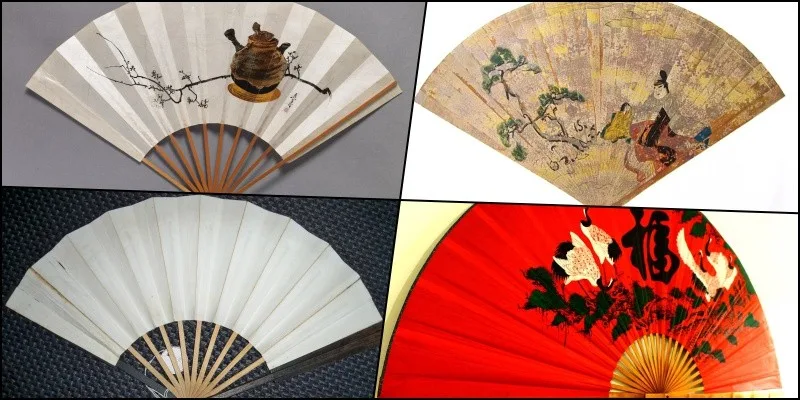
The Hiogi is a fan exclusive to Japanese royalty and nobility. Made from cypress strips, it is decorated with delicate paintings and often complemented with silk and gold details.
Ceremonial uses of the Hiogi
The hiogi is used in formal events, such as weddings and imperial ceremonies, symbolizing purity and high status.
Art and meaning of the Hiogi
Its complex construction and refined aesthetics make it a true work of art, preserving the traditions of the Heian era.
Symbolism and traditions associated with fans
Japanese fans are rich in symbolism, often conveying messages of good luck, longevity, and prosperity. These meanings can vary according to:
- Designs:
- Plum blossoms: new beginning.
- Cherry blossoms: love for the country and fortune.
- Carp: luck and perseverance.
- Dragons and lions: strength and protection.
- Colors:
- Red and white: happiness and celebration.
- Gold: wealth and prosperity.
Fans as gifts
Giving a fan as a gift is considered a gesture of goodwill and a wish for success. It is common to offer them at weddings and birthdays, symbolizing protection and good wishes.
Conclusion
Japanese fans are more than functional objects; they represent the soul of a rich and diverse culture. Each type of fan – from the practical uchiwa to the sophisticated hiogi – carries stories and symbolisms that transcend generations. Whether for decoration, gifting, or everyday use, these fans continue to enchant people around the world, keeping the essence of Japan alive.



Community
Comments
0 comments
There are no published comments in this language yet.
Send comment