
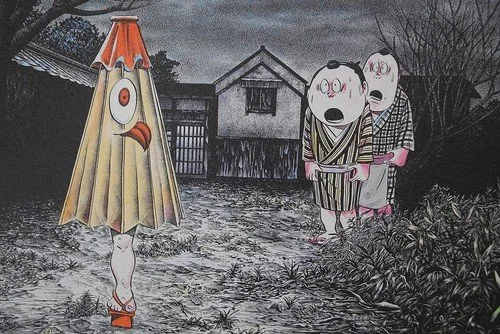
A monster with one leg, an umbrella for a head, one red eye, a long tongue, and a wooden sandal on the only foot it has left to hop on. That is the Karakasa-obake — and once you see it drawn, you never quite look at a discarded paper umbrella the same way.
The name sits behind a small family of labels. Japanese speakers may say からかさ小僧 (karakasa kozō), から傘おばけ (karakasa-obake), 傘おばけ (kasa-obake), or simply 傘化け (kasa-bake). English write-ups often settle on “paper umbrella monster” or “umbrella yōkai.” The image they share is oddly gentle for a ghost: less demon than rainy-day prankster.
Contents 4
What does a Karakasa-obake look like?
The form that stuck in popular culture is almost a cartoon: a worn Chinese-style oil-paper umbrella with a single large eye, a tongue hanging out, and one leg for hopping. Arms may sprout from the canopy or be missing entirely. The handle often becomes that lone leg, finished with a geta — the traditional Japanese wooden sandal.
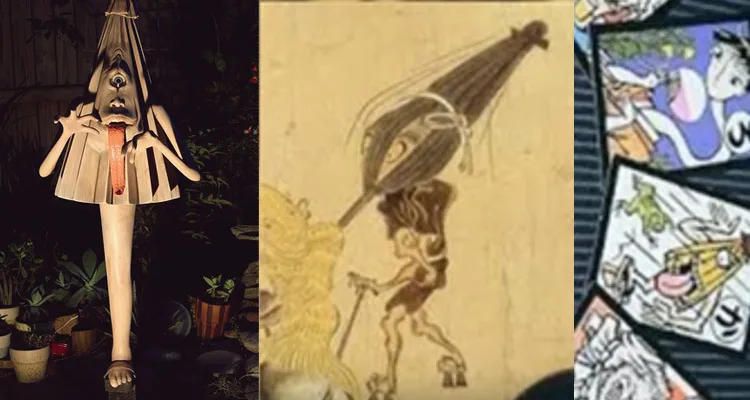
Older pictures do not always agree. Some scrolls show two legs; some give the creature two eyes; some drop the sandal. In the Muromachi-period Hyakki Yagyō (“Night Parade of One Hundred Demons”) picture scrolls, umbrella spirits appear more often as humanoid figures with a closed umbrella on the head — a different silhouette from the one-eyed hopper people recognize today. The one-eye, one-foot design becomes common from the Edo period onward and shows up often on obake karuta, the yōkai picture cards used from the Edo era into the Taishō period.
Is it a tsukumogami?
Many modern guides slot the Karakasa-obake among the tsukumogami: household tools and objects said to gain a spirit after long years of use — classically imagined as a century or so of existence, though the “99 years” motif is also told as a symbolic stretch of neglect. In that telling, an abandoned umbrella wakes up as a bakemono, a shape-shifting yōkai of Japanese folklore.
That reading is popular, and it fits the emotional logic of the design: something you tossed in a corner finally hops back for attention. Scholars still note a gap, though. Classical essays that firmly document this particular umbrella as a verified tsukumogami are hard to pin down. Folk belief about tools “coming alive” is real; the tidy encyclopedia entry that makes every Karakasa a textbook tsukumogami is partly later convenience.
The same caution applies to regional ghost stories. Despite being one of the most recognizable object yōkai, the Karakasa-obake almost never turns up in eyewitness-style local legends. Folklore writers often classify it as a creature that lives mainly in pictures, toys, theater, and later media — famous on paper, scarce on the village path. A few place-names and odd mentions exist (for example a “karakasa bakemon” tradition in parts of Niigata), but they are thin compared with the fame of the drawing.
That fame still carries a practical moral in popular culture: treat worn objects with care, or at least dispose of them properly rather than leaving them to sulk. In shrine culture, people still take unneeded personal items for respectful disposal so they do not “haunt” the household later — a custom that pairs neatly with tsukumogami stories even when the paperwork of any single yōkai is fuzzy.
What does it do?
Stories that assign the Karakasa a job usually cast it as a trickster, not a killer. One favorite prank is to sneak up on a person and deliver a big, oily lick with that oversized tongue. The shock is the point; the damage is mostly to dignity. Other umbrella spirits in local tales can freeze a walker in a rainy valley or, in Tottori lore about a related “ghost umbrella,” fling people into the wind — but those are cousins, not the same postcard character.
If you already know Japanese card games, the word karuta (かるた) will sound familiar. The hop-and-stare design of the modern Karakasa rode popular print and obake karuta more than any single medieval oral epic. For a broader look at poem cards and competitive play, see Karuta: the game of 100 poems.
Karakasa-obake in anime, film, and modern media
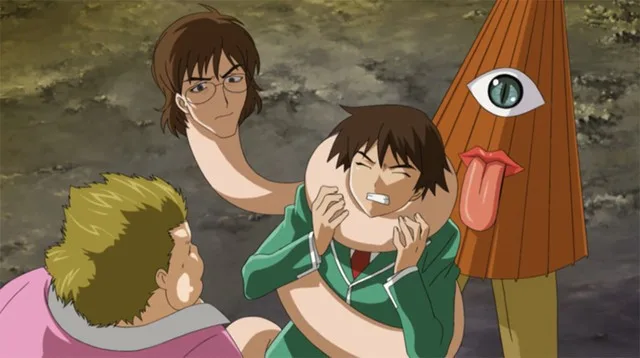
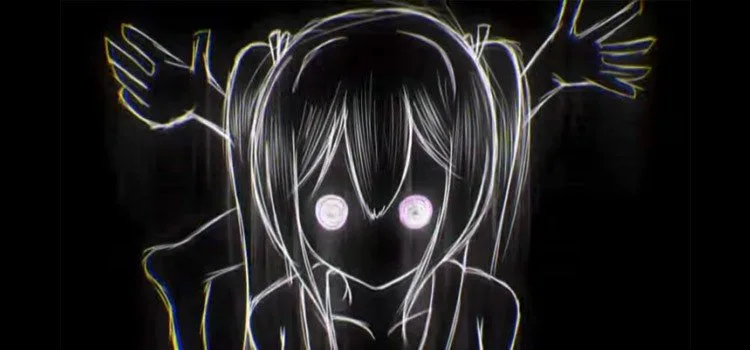
Karakasa-style design in the anime Rosario + Vampire
In modern films, anime, and haunted-house décor, the Karakasa almost always plays the silly innocent. When it startles someone, the fright usually comes from the sudden hop into frame, not from gore. After the war it became a stock image for “obake” displays and yōkai-themed entertainment — easy to costume, easy to recognize, hard to hate.
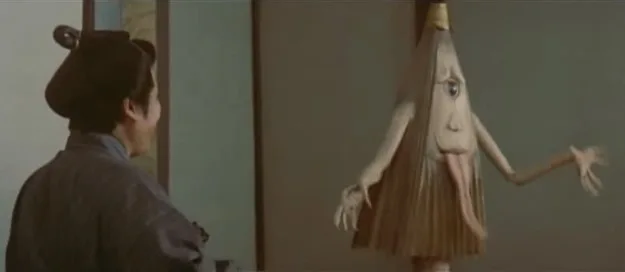
Yōkai hyaku monogatari (1968), also known abroad as Yokai Monsters: One Hundred Monsters
Let’s agree it is not that scary. Still, I would not want one hopping around the genkan after midnight.
If you are mapping the wider bestiary, the Karakasa sits beside other household oddities and classic yōkai — from list pieces on Japanese yōkai and legendary creatures to quieter cousins like paper lanterns and old sandals. The umbrella just happens to be the one that still greets you with a single eye and a grin of rain-warped paper.


Community
Comments
0 comments
There are no published comments in this language yet.
Send comment