
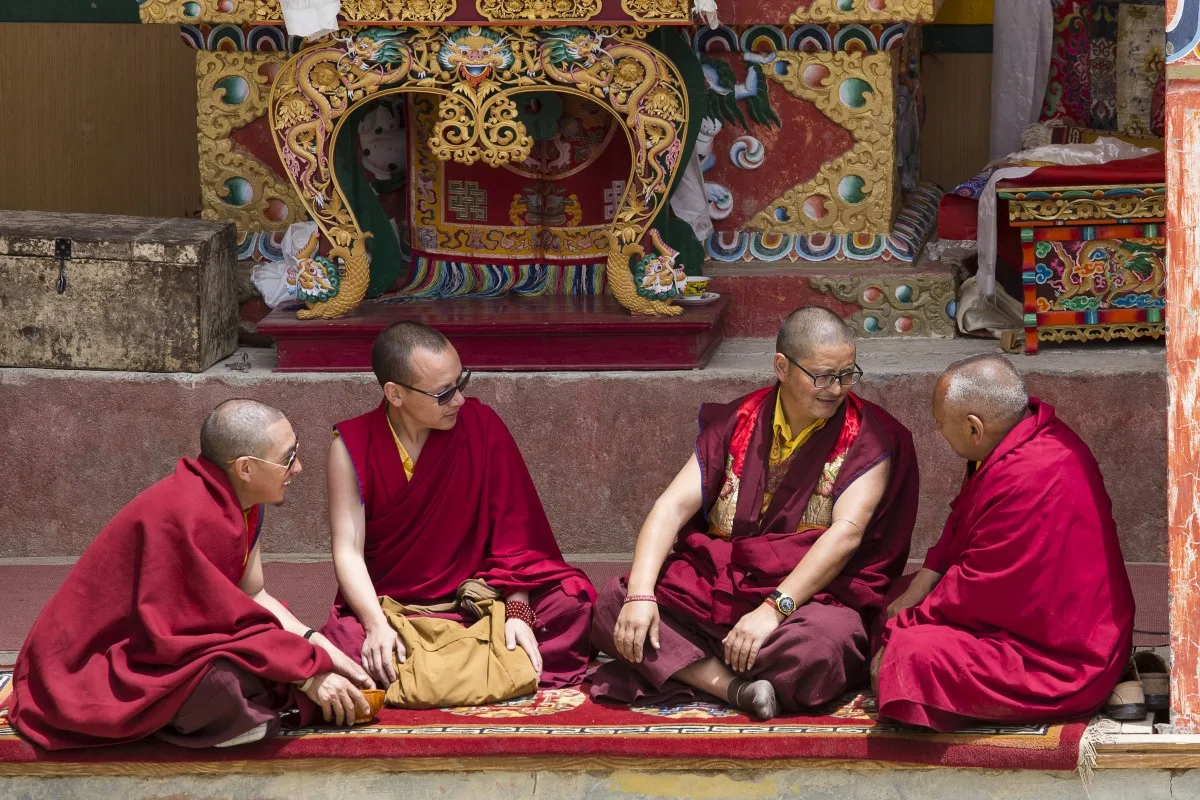
The Kasaya or Kesa is a ceremonial garment worn by Buddhist monks as a symbol of renunciation of worldly pleasures and as a constant reminder of their commitment to monastic life.
The word Kasaya comes from the Sanskrit “Kashaya,” which means “color” or “dye.” The original color of the garment was brown, but nowadays it can be found in various colors, such as yellow, orange, and red.
We also recommend reading:
- Kimono – Everything about traditional Japanese clothing
- Clothes in Japanese – Clothing and Accessories
- Buddhism in Japan – Japanese Religions
Table of Contents
Origin of Kasaya and Kesa
The origin of the Kasaya dates back to the time of Buddha Gautama, when his disciples wore old rags to cover themselves. However, as the number of followers increased, a more organized method of dressing the monks became necessary.
It was then that the Buddha established the Kasaya as the standard garment for monks, which should be made from discarded fabric and sewn by themselves.
The origin of the Kesa garment dates back to the early days of Buddhism, when itinerant monks wore clothes collected from dumps and crematoriums. These clothes were sewn together to form a single garment, which was worn as a symbol of their commitment to monastic life.
Over time, this practice of using recycled clothing evolved into the making of ceremonial garments specifically for Buddhist monks and nuns. It is believed that the Buddha himself instructed his disciples to wear simple clothes made from discarded fabrics as a way to practice modesty and renunciation.
The current form of the Japanese Kesa can be traced back to the Tang China (618-907 AD), where the garment was known as “kasaya.” Japanese monks studying in China during this time brought the tradition of the Kasaya to Japan, where it evolved into the Kesa that is used today.

Kesa – Japanese Version of Kasaya
The Kasaya is a sacred garment worn by Buddhist monks, not only in Japan but throughout the Buddhist world. In the Japanese language, the Kasaya is called “kesa” (袈裟).
The meaning of “kesa” in Japan is the same as in other Buddhist traditions, that is, it is a symbol of renunciation of worldly pleasures and commitment to monastic life. Additionally, the “kesa” is also seen as a symbol of respect and reverence for the teachings of the Buddha.
In Japan, monks wear the “kesa” on all ceremonial and ritual occasions, such as ordination ceremonies, meditation, and teachings. The color of the “kesa” may vary among different temples and Buddhist schools, but it is generally red or brown.
In Japanese tradition, the making of the “kesa” is an important practice, and many monks learn to sew and make their own “kesa.” The process of making it is considered a meditative practice, which helps develop patience, concentration, and manual skill.
Meaning of Kasaya and Kesa
The Kasaya is an important symbol for Buddhist monks, as it represents their renunciation of worldly pleasures and commitment to monastic life.
By wearing it, monks remind themselves and others that they have abandoned secular life and are in search of spiritual enlightenment. The color of the Kasaya also has symbolic meaning, with different colors representing different stages of spiritual development.
In Japanese Kesa, the first character, “ke” (袈), can be translated as “coat” or “mantle,” while the second character, “sa” (裟), means “tunic” or “long garment.”

The process of making the Kasaya
The making of the Kesa is a meditative and ritualistic practice in itself, where the monk follows a sequence of precise and ceremonial steps while sewing the strips of fabric together. This practice is seen as a way to develop concentration, patience, and manual skill, as well as an expression of respect for the Buddha and the teachings of the Dharma.
The Kasaya is made from discarded fabric and sewn by the monks themselves. The fabric is washed and cut into strips, which are then sewn together to form the garment. The Kasaya is a simple piece of clothing, without many adornments or details, reflecting the simplicity and humility that are core values in monastic life.
Wearing the Kesa is a practice that reminds them of the importance of following the spiritual path and remaining committed to their monastic vows.
How to wear the Kasaya
The Kasaya is worn by Buddhist monks on all ceremonial and ritual occasions, such as ordination ceremonies, meditation, and teachings.
It is worn as an outer garment, covering the entire body, except for the head and hands. Monks typically carry the Kasaya folded over their right arm or shoulder, using it as a constant reminder of their monastic vows.
Leave a Reply