
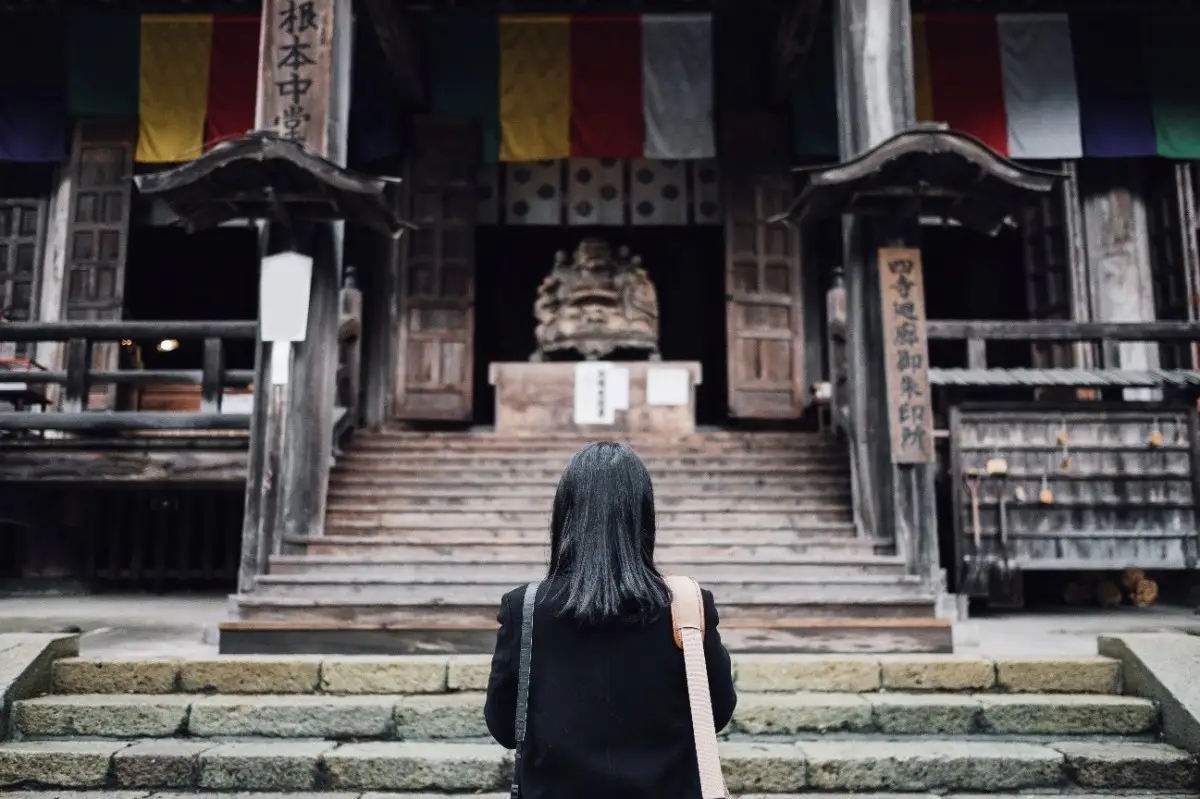
Japan is a nation that allows free worship; however, there are two religions that have more followers than the rest, and today you will get to know them.
The Japanese are not governed by a specific religious culture but by the composition of several of them. However, Buddhism and Shintoism are popular because they are the most practiced religions in this country.
According to studies, about 80% of people have practiced Buddhism and Shintoism at some point in their lives. In fact, both religious activities are often practiced together.
According to studies, Shintoism has more believers, followed by Buddhism and, in third place, Christianity. However, today we will focus on the first two.

Table of Contents
Buddhism and Shintoism
Buddhism and Shintoism are so practiced in Japan and are so intertwined that there is a very popular phrase: the Japanese “are born Shintoists and die Buddhists.”
But, let’s talk a little about each of them.
Buddhism
Buddhism is based on the wisdom of Siddhartha Gautama, born in 563 BC in Nepal. He later came to be known as Buddha (the Enlightened One).
It originated centuries ago in India, then transcended to Korea and China, eventually reaching Japan by the 6th century. It also began in the city known as Nara, which was the capital of the country at that time. From there, it spread throughout the Japanese territory thanks to the construction of Buddhist temples.
This religion is practiced through continuous meditation, in other words, through observation and understanding of the mind.
It should be noted that, for the Japanese, religion is part of their culture and tradition. However, Buddhism can be seen in three different ways:
- Mahāyāna: It is established in northern India, Tibet, China, Japan, and Korea. Known as the most personal.
- Theravāda: More common in India, Japan, and the Southeast Asian area. Here, Buddhism is more orthodox.
- Vajrayāna: Extends through Tibet, East Asia, and Japan. Also popular by the name tantric or esoteric, it symbolizes spiritual authority.

Shintoism
Also known as Shintoism, and whose literal meaning is the way of the deities. The religion is native to Japan and must be thousands of years old. Shintoism is based on devotion to nature.
In addition, it worships sacred objects, places, and animals. For example, the deities called Kami: the sun, trees, the sea, sounds, and even death.
Shintoism is a very open religion and can be interpreted in various ways; therefore, it is in accordance with different philosophies. In this way, it has become a way of life and not a belief. For those who are governed by this religion, they will know that there is no absolutism. Well, not everything is completely good or bad.
Their faith is optimistic.
This is due to their belief that people are good by nature and that malice derives from the influences of others.
On the other hand, over the centuries, these two religions have created a religious syncretism. For many followers place their faith in both.
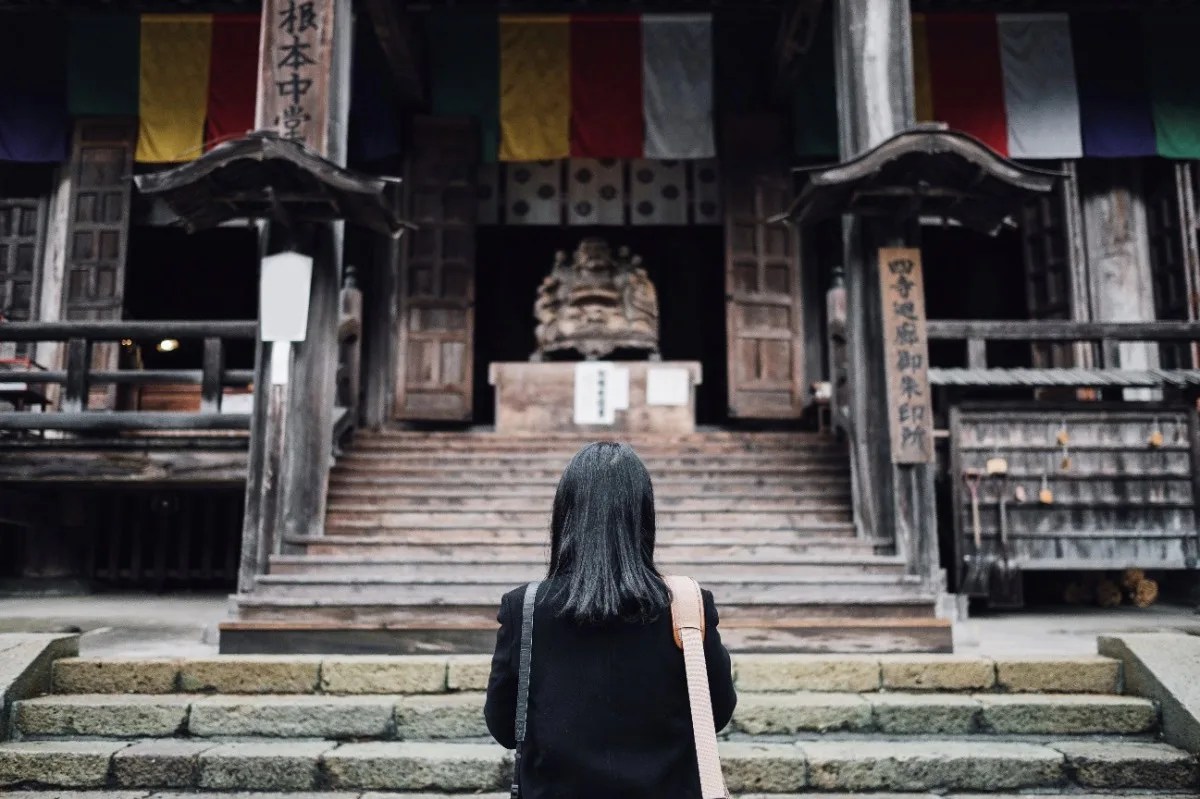
Differences between Buddhism and Shintoism
The most practiced religions have noticeable differences for those who follow them. Some of them are:
Veneration
Shintoism venerates the Kamis. Those deities inspired by nature, such as atmospheric phenomena and abstract conceptions. While in Buddhism, believers worship their precursor Buddha.
The protectors of the temples
Shintoists protect their entrances with legendary animals, better known as Komainu. These take the form of lions, dogs, or foxes.
In contrast, in Buddhism, they have four Buddhist deities to safeguard the four cardinal points.
Purification
People who come to Shinto shrines are purified with sources indicated at the entrance. In contrast, in Buddhist temples, it works with incense burners.
But for the Japanese, these differences do not seem to be a problem, as a large part of the population considers themselves both Buddhists and Shintoists.
Leave a Reply