
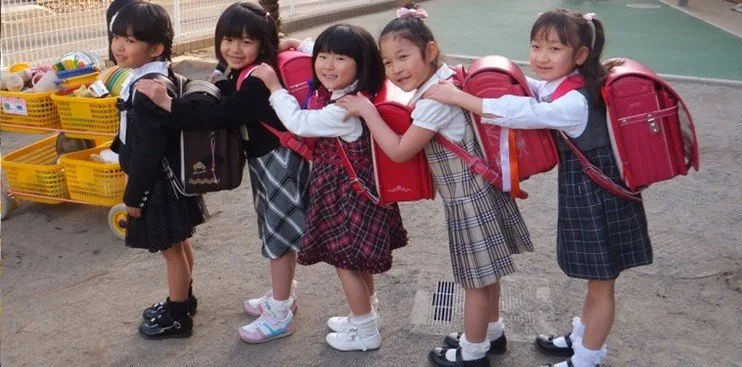
Have you ever thought that the way we walk can vary depending on where we live? A study published in the journal Scientific Reports found something more specific than a loose cultural stereotype: Japanese elementary school children show age-related gait patterns that do not line up neatly with reference data collected in other countries.
Researchers from Nagoya University and the Aichi Prefectural Mikawa Aoitori Medical and Rehabilitation Center for Developmental Disabilities analyzed 424 children aged 6 to 12 with three-dimensional motion capture. The children still walked “like children” — hip, knee, and foot moving in familiar ranges — yet the way those parameters changed with age pointed to lifestyle, body build, and daily movement habits more than to any medical problem.
Contents 4
The 4 factors that stand out in Japanese children's gait
The team led by researchers such as Tadashi Ito and Hideshi Sugiura identified four biomechanical patterns that make the Japanese sample particularly interesting for clinicians and parents who follow childhood motor development:
- Higher cadence in older grades: Children aged 11 to 12 took more steps per minute than children aged 6 to 8. In practical terms, the older group walked with a quicker rhythm of steps.
- Shorter steps after mid-elementary age: Between the 9–10 and 11–12 groups, step and stride lengths were shorter — a trajectory that does not match every international dataset used as a “normal” reference.
- Smaller knee range of motion: Pre-adolescents aged 11 to 12 moved their knees less through the gait cycle, a more contained pattern at the joint.
- Stronger plantarflexion moment: As age increased, researchers recorded a greater force when the toes point downward at the start of the step — the push often compared to a “ballerina” motion — a sign of a more mature ankle contribution to walking.
Those differences do not mean Japanese children walk “wrong.” The authors stress that the pattern is unlikely to harm health. It simply shows that what counts as a typical developmental curve can shift with culture and environment. The study also notes that raw and body-size-normalized numbers can tell slightly different stories, which is exactly why Japan needed its own reference charts instead of borrowing foreign norms alone.
What cultural and daily habits may shape the walk
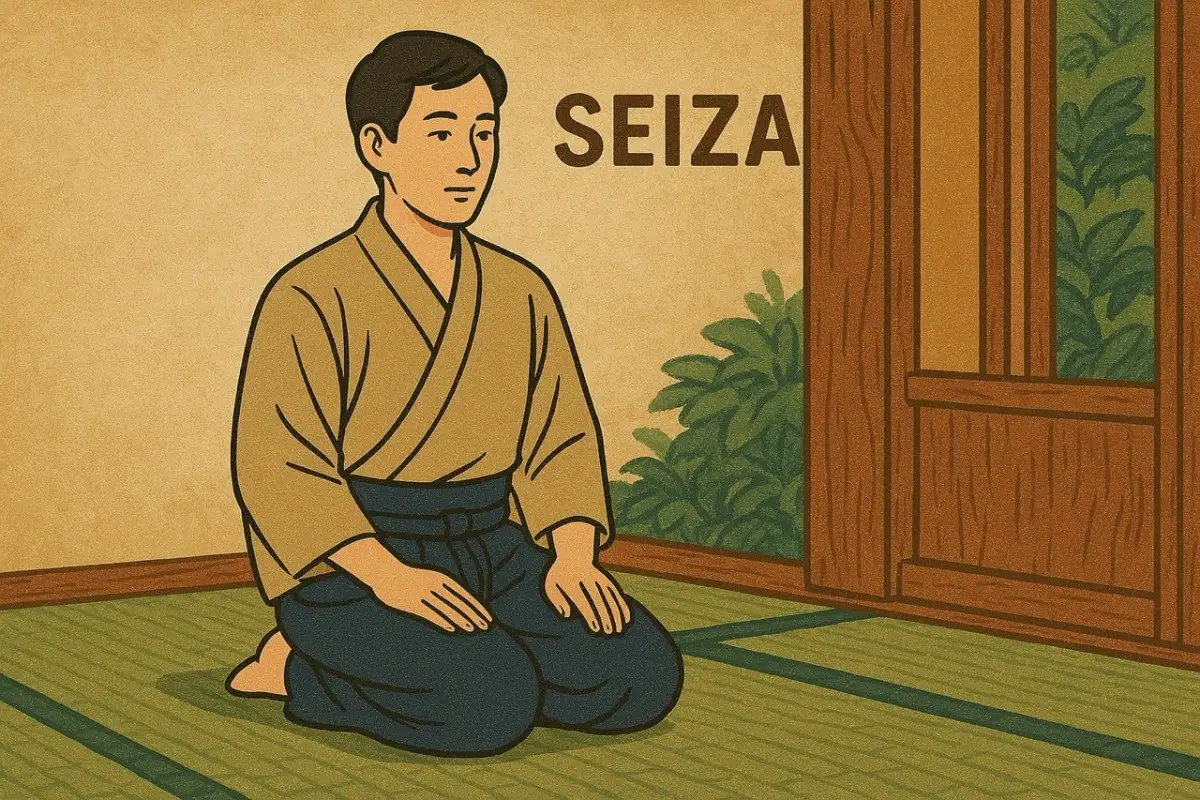
How much of this is “Japan,” and how much is ordinary childhood growth? The researchers answer carefully: lifestyle, body build, and cultural factors likely all play a role. Ito has pointed to habits such as sitting on the floor in the traditional seiza posture as one possible influence on lower-limb mechanics, though that link is still a working hypothesis rather than a proven cause for every child.
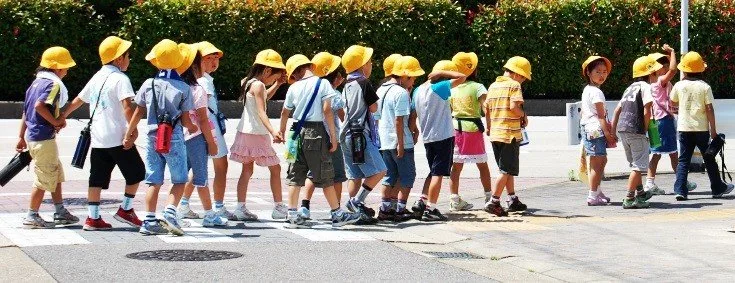
Everyday school life matters too. In many neighborhoods, children walk routes to school from a young age — sometimes with older classmates setting the pace — which can encourage different step strategies at different ages. Footwear, floor-based home routines, and dense urban walking all sit in the same background picture. What the study does not do is declare a single “Japanese secret” such as diet or school uniforms as the exclusive explanation; those are popular guesses, not the measured variables of the 3D analysis.
Why the data matters for medicine and rehabilitation
Beyond curiosity, the Japanese norms give pediatric orthopedics and physiotherapy a sharper tool. Local reference values help specialists:
- Spot motor abnormalities against a Japan-specific baseline instead of a foreign average alone;
- Track typical development across elementary school ages with centile-style charts;
- Adjust rehabilitation plans for children with movement disorders;
- Widen the definition of “normal gait” so a cultural pattern is not misread as pathology.
In short, context protects children from misdiagnosis. A knee range or foot progression that looks unusual on a chart from another country may sit inside the expected band for Japanese kids of the same age — and the reverse can also be true when Japanese data are used carelessly outside Japan.
Does this change how we see childhood movement worldwide?
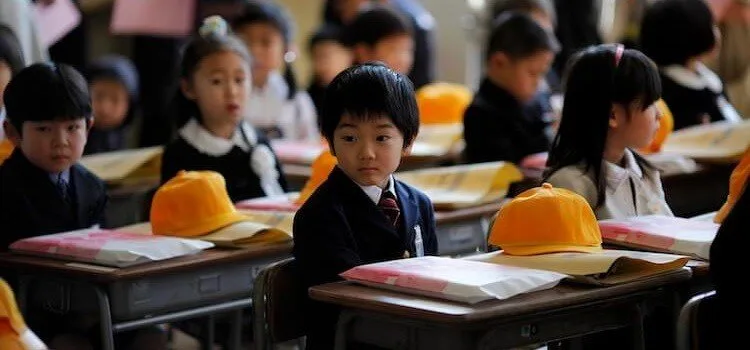
Yes, in a quiet but useful way. The study reminds educators, pediatricians, and anyone who watches kids move that children are not miniature adults, and that “normal” is not a single global template. Walking remains a near-universal skill; the fine print of cadence, step length, knee motion, and ankle push still carries the fingerprint of where and how a child grows up.
If you work with physical education, pediatrics, or physiotherapy — or you simply enjoy the small details of daily life in Japan — this research offers a clearer lens on something we usually ignore: the ordinary steps between home and school.
For more on how Japanese schools shape childhood routines, see how young children often walk to school on their own and how public schools in Japan are organized.






Community
Comments
0 comments
There are no published comments in this language yet.
Send comment