
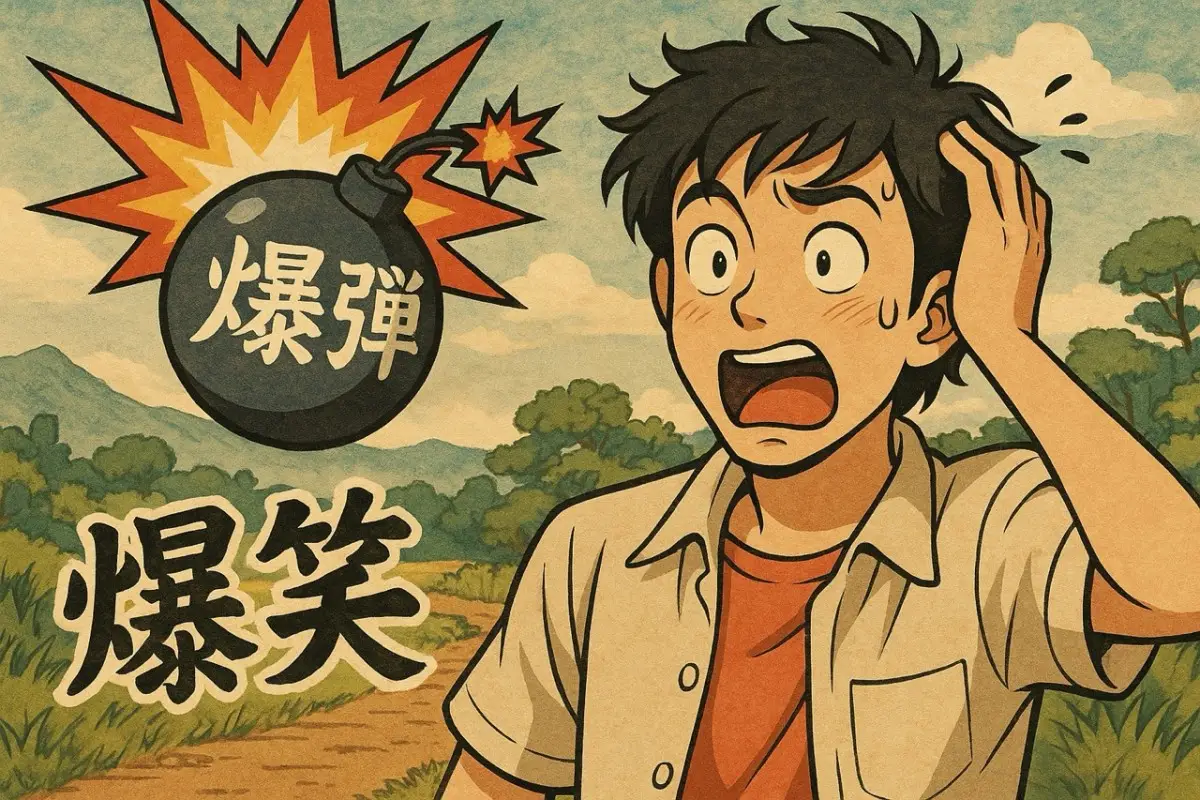
The Japanese language is full of curious expressions, but some literally explode — not in a figurative sense, but with the intensity and impact that certain terms carry. One of these words is 爆弾 (bakudan), which means “bomb,” but goes far beyond its literal use. Just like in Portuguese, Japanese uses terms related to explosions to express shocks, revelations, humor, and even slang.
If you have ever watched an anime and saw someone saying “bakudan 発言 (bakudan hatsugen)” or heard “爆笑 (bakushou),” know that you are facing an “explosive” vocabulary. In this article, we will explore the meaning, use, and the most interesting variations of this category of words in Japanese — always with that touch of surprise and fun that only the language can provide.
Get ready, because this content may... blow your mind (linguistically, of course).
Contents 9
What does 爆弾 (Bakudan) mean?
The word 爆弾 (bakudan) is written with the kanjis:
- 爆 (baku) – to explode
- 弾 (dan) – projectile, bullet
In other words, bakudan is literally a bomb — whether military, homemade, or even a “time bomb.” In serious contexts, such as news or documents, its use is direct and literal:
爆弾が爆発した。
(Bakudan ga bakuhatsu shita)
“The bomb exploded.”
But Japanese, with its semantic richness, also uses bakudan in much less lethal and much more expressive situations. Let’s see how this word transforms in different contexts.
Variations and combinations with 爆弾
The richness of Japanese lies in its ability to combine kanjis to create new meanings. Here are some common compositions with 爆弾:
- 爆弾低気圧 (bakudan teikiatsu) – bomb cyclone
- 自爆弾 (jibakudan) – suicide bomb
- 核爆弾 (kakubakudan) – nuclear bomb
- 手製爆弾 (shusei bakudan) – homemade bomb
- 時限爆弾 (jigen bakudan) – time bomb
- 爆弾魔 (bakudan-ma) – bomb planter (person who plants bombs)
These variations are more common in formal contexts, such as news, security reports, or police literature.
Words with 爆 (baku) – The kanji of explosion
The kanji 爆 by itself already suggests something that is out of control, propagates violently, or causes immediate impact. When used as a prefix, it adds explosive intensity to the following word. Here are common examples:
- 爆発 (bakuhatsu) – physical or emotional explosion
- 爆音 (bakuon) – explosive sound, extreme noise (often used with motorcycles or action movies)
- 爆笑 (bakushou) – explosive laughter
- 爆走 (bakusou) – out-of-control running
- 爆撃 (bakugeki) – air bombing
- 爆風 (bakufuu) – shock wave of the explosion
- 爆光 (bakukou) – flash of the explosion (also used in animes)
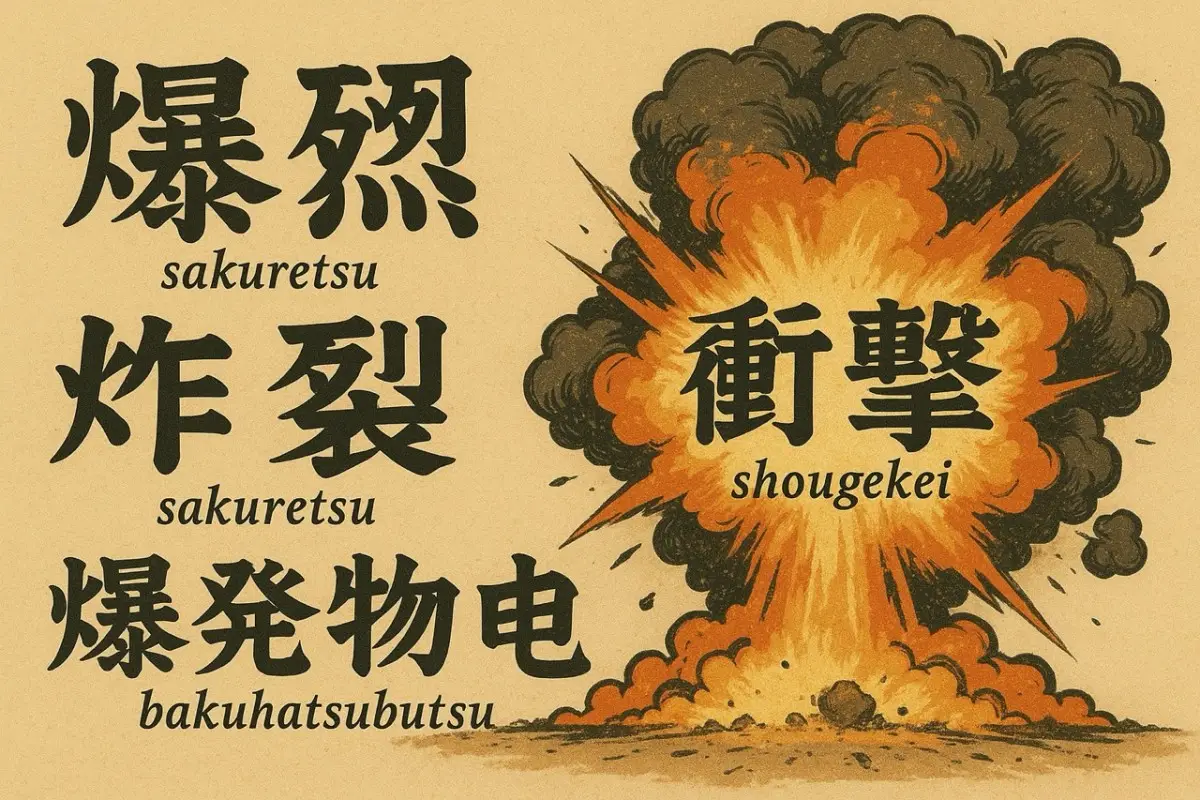
- 爆裂 (bakuretsu) – violent rupture, detonation
These words appear in both serious contexts and in pop culture products, such as anime titles, manga, special effects, and slogans.
Synonyms and related terms
In addition to words with the kanji 爆, Japanese offers various synonyms and variations to express the concept of explosion, detonation, or shock, with different nuances:
Explosives and artifacts
- 爆薬 (bakuyaku) – chemical explosive
- 火薬 (kayaku) – gunpowder
- 導火線 (doukasen) – bomb fuse
- 起爆装置 (kibaku souchi) – detonation device
- 爆発物 (bakuhatsubutsu) – explosive material
- 爆弾装置 (bakudan souchi) – explosive device
These terms are recurrent in technical texts, military contexts, news, and espionage games.
Related verbs and adjectives
- 爆破する (bakuha suru) – to detonate, to explode something
- 炸裂する (sakuretsu suru) – to burst, to rupture violently
- 炎上する (enjou suru) – to catch fire or “to go viral with controversy” (in online use)
- 崩壊する (houkai suru) – to collapse, to crumble
- 壊滅的 (kaimetsuteki) – devastating, catastrophic
Figurative terms of impact
- 衝撃 (shougeki) – impact (physical or emotional)
- 強烈 (kyouretsu) – intense, powerful
- 破壊力 (hakai ryoku) – destructive power (also used in a figurative sense)
- 大打撃 (daidageki) – great blow, damage
- 地雷 (jirai) – landmine, but used as slang for something or someone “problematic”
These terms often go beyond the literal and are applied to dramatic situations, revelations, impactful speeches, or shocking actions.
Presence in pop culture and everyday life
It is not uncommon to find the use of these terms in light or humorous contexts:
- In cooking, names like 爆弾おにぎり (bakudan onigiri) or 爆弾ラーメン refer to exaggerated size, strong flavor, or surprise ingredient.
- In video games, attacks like 爆裂拳 (bakuretsuken – explosive fist) are common.
- On Japanese social media, 爆笑 has become a symbol of spot-on humor — just like the W in warau.
- In animes and mangas, bakuhatsu and bakudan are part of the standard vocabulary of explosive characters, both literally and emotionally.
Conclusion
The “explosive” vocabulary of Japanese is more than a collection of intense words — it is a sample of how the language treats emotions, action, shock, and humor with expressive richness. The word 爆弾 (bakudan) is the gateway to a vibrant semantic universe, blending technical precision with everyday metaphors and creative exaggerations typical of Japanese culture.
Whether describing a real explosion, a joke that makes you cry with laughter, or a situation that could “detonate” at any moment, Japanese has the right word — and it probably starts with 爆.






Community
Comments
0 comments
There are no published comments in this language yet.
Send comment