
Tokyo has aquariums with light shows and hotel lobbies full of tourists. Shinagawa Aquarium (しながわ水族館 — Shinagawa Suizokukan) is a quieter bet: a neighborhood tank inside Shinagawa Kumin Park, a short walk from Omorikaigan Station, where sea turtles glide over a tunnel and dolphin shows still fill a modest stadium.
Locals nickname it Shinasui. It is smaller than the flashy spots near Shinagawa Station, and that is the point — an easy half-day with kids, park paths, and marine life without the downtown rush.
Contents 10
What to Expect at the Shinagawa Aquarium
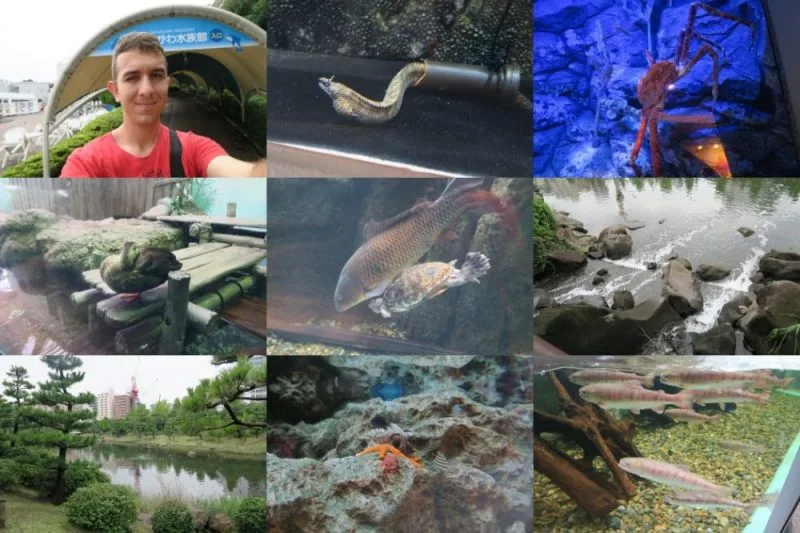
The aquarium sits inside a large public park with a lake, so the visit often starts outdoors: soft ice cream, a stroller-friendly path, then the ticket machines and the two-floor building. Inside, the theme leans toward rivers, bays, and the ocean that shape the Shinagawa waterfront, not only tropical showpieces.
You will usually find:
- Rays, turtles, and reef fish in the big tunnel tank
- Sharks and jellyfish in dedicated halls
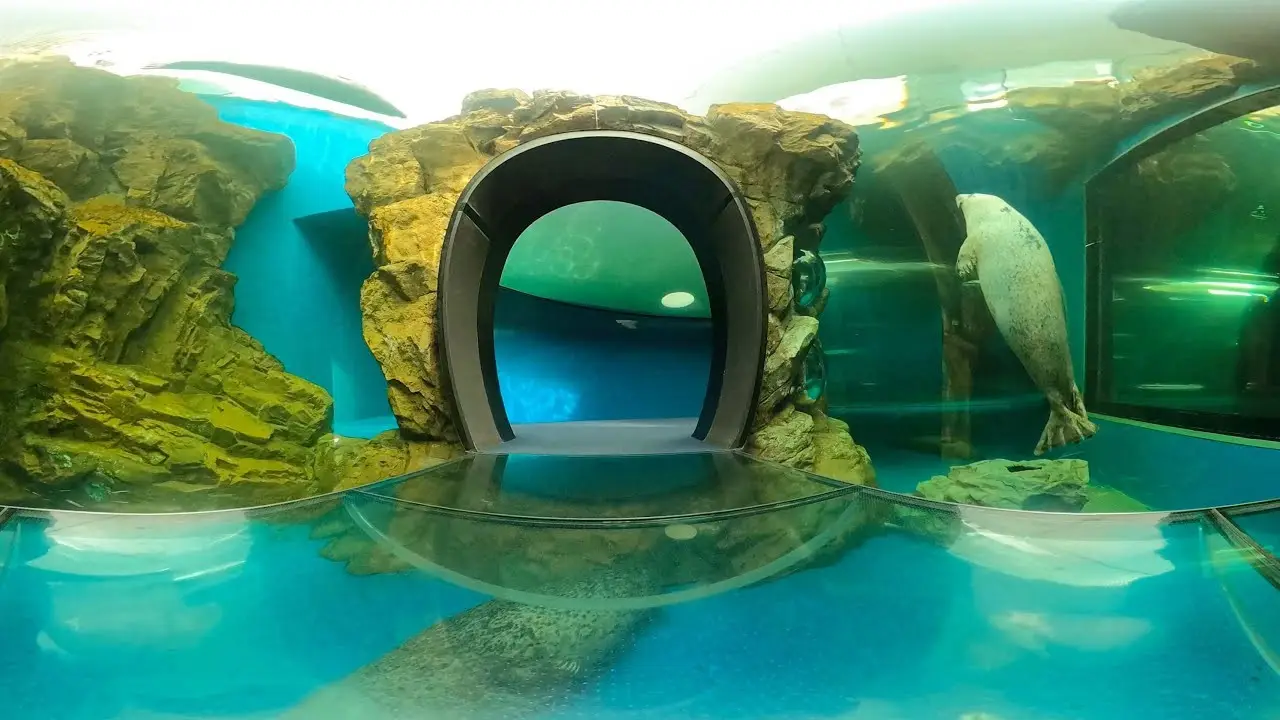
- Dolphins, sea lions, and seals in the show stadium
- Penguins in a habitat built for close viewing
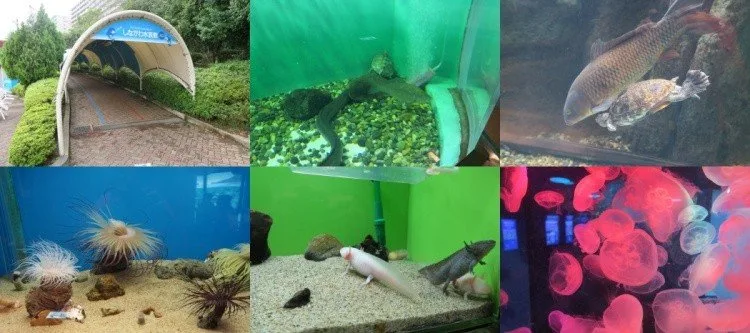
- Freshwater species tied to Japanese rivers, plus coral and deep-sea displays
Go Tokyo lists more than 450 species here. The scale is manageable: most people spend one to three hours if they catch a show and walk the park afterward.
How to Get to the Shinagawa Aquarium
Do not confuse this place with the aquarium attached to the Shinagawa Prince Hotel. Shinagawa Aquarium is in Katsushima, farther south toward Omori.
- Keikyu Omorikaigan Station: about an 8-minute walk, with clear outdoor signs toward the park
- JR Omori Station (north exit): about a 15-minute walk
- JR Oimachi Station: free shuttle bus service is often available (about 15 minutes); confirm the timetable on the day
- From central Tokyo: ride the Yamanote Line to Shinagawa, switch to the Keikyu Line toward Haneda, and alight at Omorikaigan or Tachiaigawa for a park-side walk
Address listed by travel guides: 3-2-1 Katsushima, Shinagawa-ku, Tokyo. Pairing the aquarium with a broader Tokyo neighborhoods guide helps if you are still mapping wards beyond the station hub.
Hours and Prices
Figures below match common listings from Tokyo tourism and aquarium guides. Always recheck the official calendar before you go — Tuesdays and seasonal hours can change.
- Hours: usually 10:00–17:00 (last entry 16:30)
- Closed: many Tuesdays and January 1 (often open if Tuesday falls on a public holiday or during long holiday periods)
- Adults (high school and up): about ¥1,350
- Elementary / junior high: about ¥600
- Children (about 4–12): about ¥300
- Seniors (65+): about ¥1,200 on many rate boards
- Under 3: free on typical boards
Tickets are sold at the counter and vending machines past the garden. Cards and e-wallets are accepted according to GO TOKYO’s facility notes, but cash still works if machines are busy.
Main Attractions
Underwater Tunnel
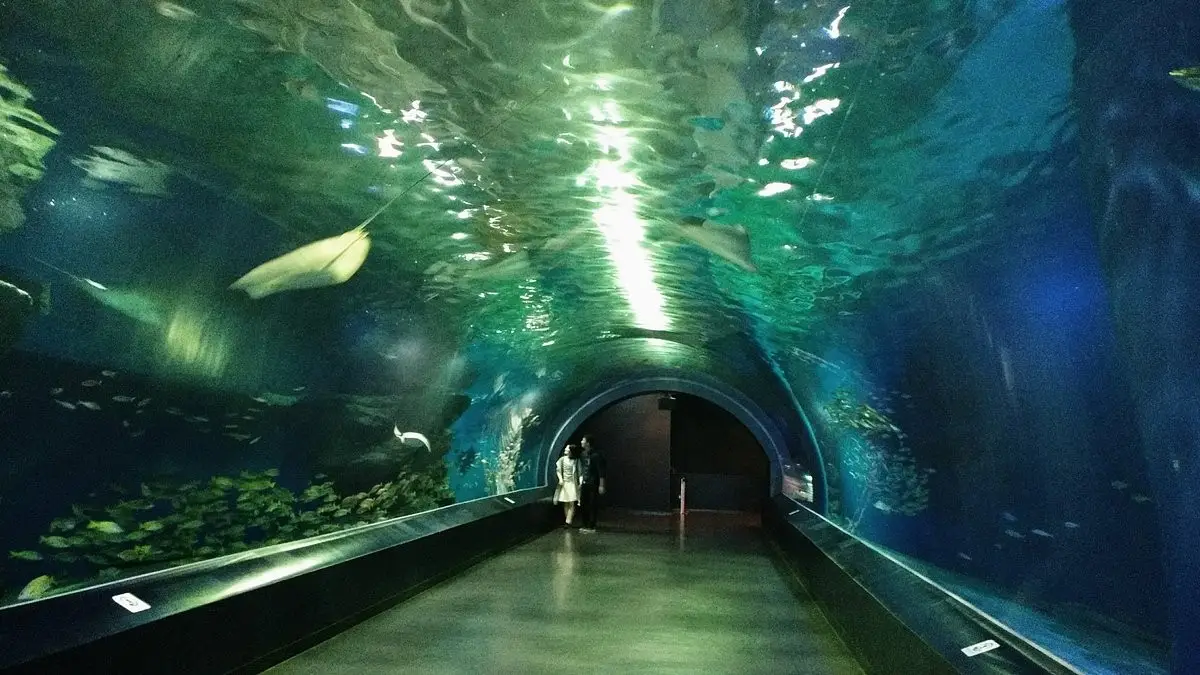
The flagship is a tunnel tank often described as about 22 meters long, with a large water volume and a 180-degree view of green sea turtles, rays, and schools of fish overhead. Divers sometimes feed animals while explaining what you are seeing — a practical reason to slow down instead of rushing through for a single photo.
Dolphin, Sea Lion, and Seal Shows
Shows run several times a day on the first floor. Free pamphlets at the entrance list the day’s schedule. Arrive early: seats fill on weekends, and standing room can disappear once the stadium is full. Staff often share short notes on animal behavior before the performance starts.
Penguin Area
Penguins remain a favorite for families. Feeding times, when offered, are a good moment to hear keepers talk about the birds without hunting for English signs on every tank.
Themed Tanks and Other Halls
- Japanese river and bay life: freshwater and coastal species tied to the local water cycle
- Tropical coral displays: colorful reef fish and invertebrates
- Shark Hall and jellyfish: classic close-up tanks that close the route for many visitors
- Sea Jewel Box and seal viewing: smaller highlights called out on current aquarium guides
Next door, Restaurant Dolphin sits over the water with wide windows — a simple place to pause after the exhibits if you want a meal without leaving the park grounds.
Maxell Aqua Park Shinagawa (Not the Same Place)
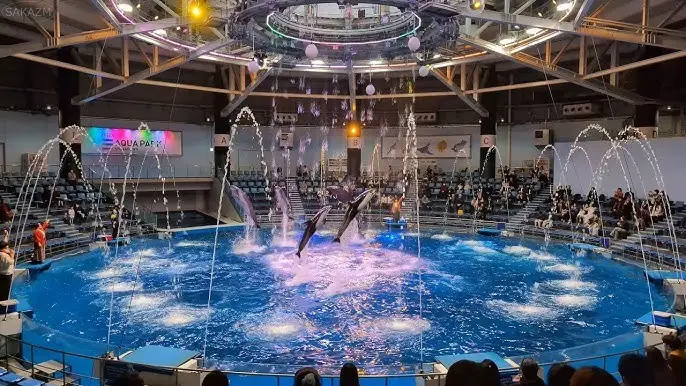
Maxell Aqua Park Shinagawa (not “Maxwell”) is a different aquarium inside the Shinagawa Prince Hotel, minutes from JR Shinagawa Station. It leans on LED lighting, projection mapping, a circular dolphin stadium, and evening hours that often run later than the park aquarium.
Adult admission there is typically higher (commonly listed around ¥2,500–¥2,800 depending on ticket type and season). Choose Maxell if you want a high-tech show near the Shinkansen hub; choose Shinagawa Aquarium if you want a calmer park day with a classic tunnel and lower ticket prices. Travelers often mix them up because both carry “Shinagawa” in the name.
Why Visit Shinagawa Aquarium?
It is a practical Tokyo stop when you want marine life without a full-day commitment: clear access from the Keikyu line toward Haneda, exhibits low enough for small children to see, and a park that softens the city noise. If you are planning more of the capital after the tanks, a complete Tokyo guide helps connect southern wards with the rest of the itinerary.
Check the calendar for Tuesday closures, aim for a show time on arrival, and leave a little time for the lake path — that mix of tunnel, stadium, and park is what makes Shinasui worth the short detour from the station maze.



Community
Comments
0 comments
There are no published comments in this language yet.
Send comment