
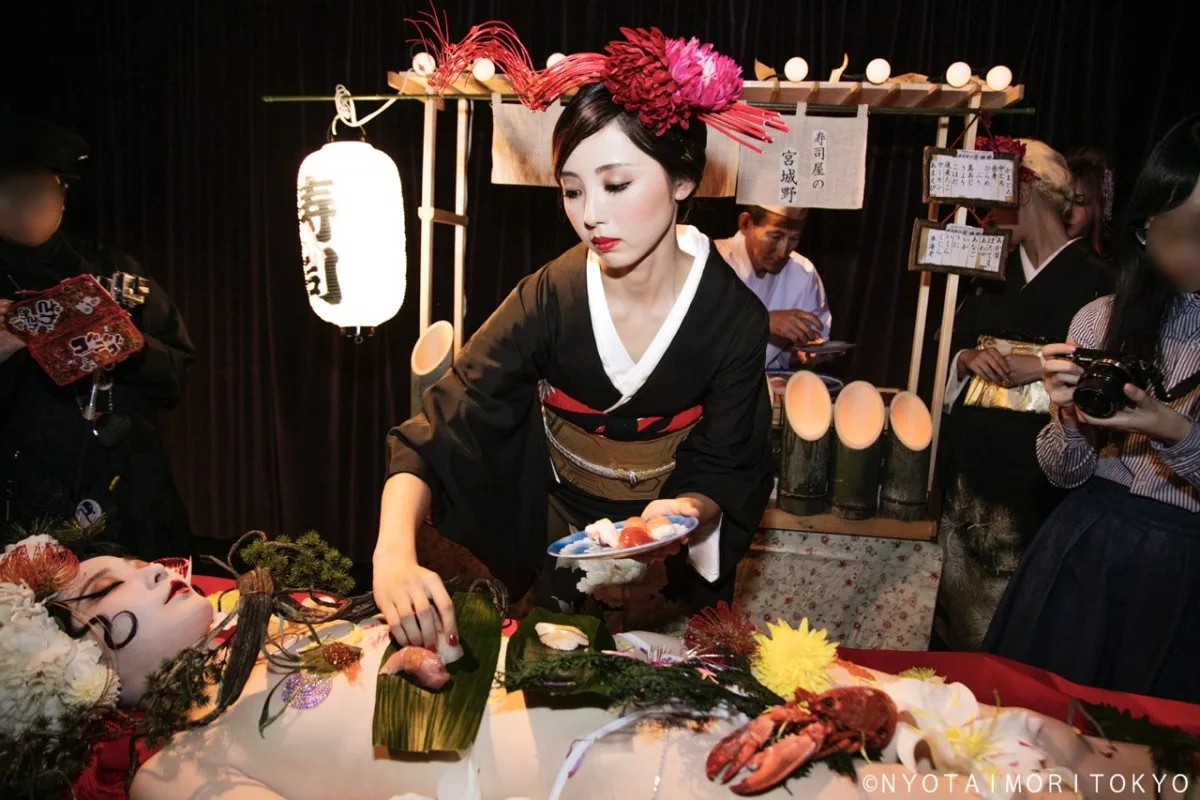
Nyotaimori, better known as “body sushi,” is a Japanese culinary practice in which sushi is served on the naked body of a woman. This form of gastronomic presentation is both a visual art and a sensory experience.
The word “nyotaimori” [女体盛り] comes from the Japanese terms “nyo” (woman), “tai” (body), and “mori” (presentation). The practice, although controversial, is rich in history and tradition. Let’s explore its origins, development over time, and where you can experience this practice today.
Table of Contents
Origins and History
Edo Period: Samurai Roots
Nyotaimori dates back to the Edo period (1603-1868) in Japan, an era known for its rigid social hierarchies and samurai culture. The samurai were noble warriors who followed a code of honor known as bushido. Celebrations after victories in battles often involved extravagant banquets, and it is said that Nyotaimori emerged in these contexts. The practice was seen as a demonstration of power, wealth, and sophistication.
Tradition and Sensuality
The idea of eating sushi from a woman’s body was linked to an aesthetic and sensory appreciation of food. The samurai believed that the proximity of food to the human body enhanced the dining experience, adding a layer of eroticism and exclusivity to the event.

Hygiene and Preparation
The practice of Nyotaimori involves rigorous hygiene procedures. The person whose body will be used undergoes a thorough cleaning process and often lies on a plastic sheet or similar material to avoid direct contact between the food and the skin. The sushi is carefully prepared and arranged on the body in an artistic manner, usually in areas such as the abdomen, legs, and arms.
Rituals and Presentation
Before the start of Nyotaimori, there are a series of rituals that may include spiritual purification and meditation for those participating. The presentation is carefully planned to be aesthetically pleasing, with the sushi arranged in a symmetrical and harmonious way.

Controversies and Criticism
Ethical and Moral Issues
Nyotaimori is a controversial practice, both in Japan and internationally. Critics argue that the practice is degrading and objectifies the human body, treating it as a plate or accessory. Additionally, there are concerns about hygiene and food safety, despite the rigorous procedures adopted.
Cultural Perspectives
Some people see Nyotaimori as a form of art and a unique cultural expression. Others, however, consider the practice offensive and inappropriate. Public perception of Nyotaimori varies widely, and the practice continues to be a topic of debate.

Nyotaimori in Modernity
Private Events and Themed Restaurants
Today, Nyotaimori is more common at private events, luxury parties, and some themed restaurants. These events are often promoted as exclusive, high-end experiences, attracting those seeking a unique and exotic dining experience.
Legality and Regulation
The legality of Nyotaimori varies by location. In some countries, the practice may be considered a violation of health codes or public morality laws. Restaurants and event organizers wishing to offer Nyotaimori must be aware of local laws and health regulations to avoid legal issues.

Where to Experience Nyotaimori?
Japan
In Japan, Nyotaimori can be found in some larger cities like Tokyo and Osaka. Restaurants and event organizers offering this experience are usually discreet and exclusive, often requiring advance reservations and accepting only trusted clients.
International
Outside of Japan, Nyotaimori is less common but can still be found in cosmopolitan cities like New York, Los Angeles, and London. These events are often promoted by luxury catering companies and occur in private contexts or during special events.
Even on television shows, Nyotaimori has appeared in Brazil on the “Domingão do Faustão” program. Probably several other programs wanted to highlight this type of art as it is something that draws attention.

Conclusion
Nyotaimori is a cultural practice that combines cuisine, art, and controversy. Its rich history and rigorous procedures reflect a tradition that is both revered and criticized. Regardless of perspective, Nyotaimori remains a fascinating curiosity in the world of gastronomy and pop culture.
If you wish to experience Nyotaimori, it is important to be aware of the ethical and legal implications, as well as the cultural expectations involved. Be prepared for a unique experience that challenges conventional norms of how food should be enjoyed.
Leave a Reply