
The addresses in Japan follow a unique system that is different from what we are used to in the West. While many countries organize addresses in streets with sequential numbers, the Japanese use a method based on areas, blocks, and building numbers. This can be confusing for those who are not familiar, but it is extremely efficient within the Japanese logic.
Understanding how this system works is essential for anyone planning to visit or live in Japan. From the way cities are divided to the details of postal codes, each part of the address has a specific meaning. Let’s explore in detail how Japanese addresses are structured and how to find them more easily.
Contents 5
Structure of Japanese Addresses
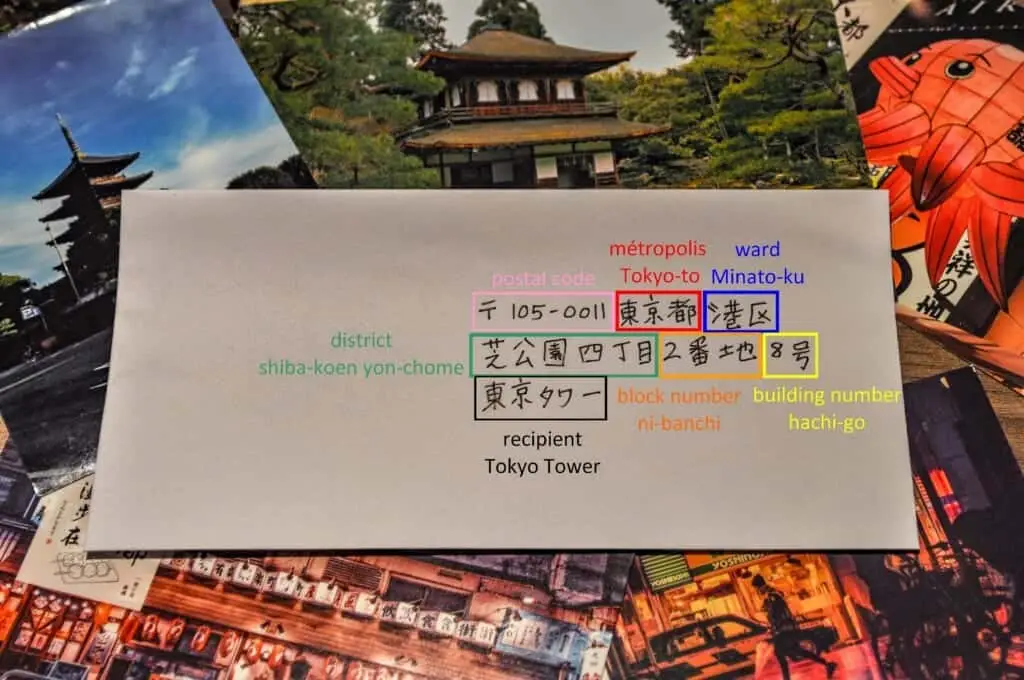
Addresses in Japan follow a hierarchy from the largest to the smallest, starting from the prefecture and ending with the building number. A typical Japanese address can be represented as follows:
Prefecture (都道府県) → City/District (市・区・町) → Area/Smaller District (丁目) → Block (番) → Building Number (号)
For example, a fictional address would be:
東京都新宿区西新宿2丁目8番1号
(Tokyo, Shinjuku Ward, Nishishinjuku 2-chome, Block 8, Building 1)
In contrast to Western addresses, where a street number indicates a sequence, buildings in Japan are numbered according to their order of construction within the block. This means that neighboring numbers may not be physically close.
Difference Between Cities and Smaller Areas
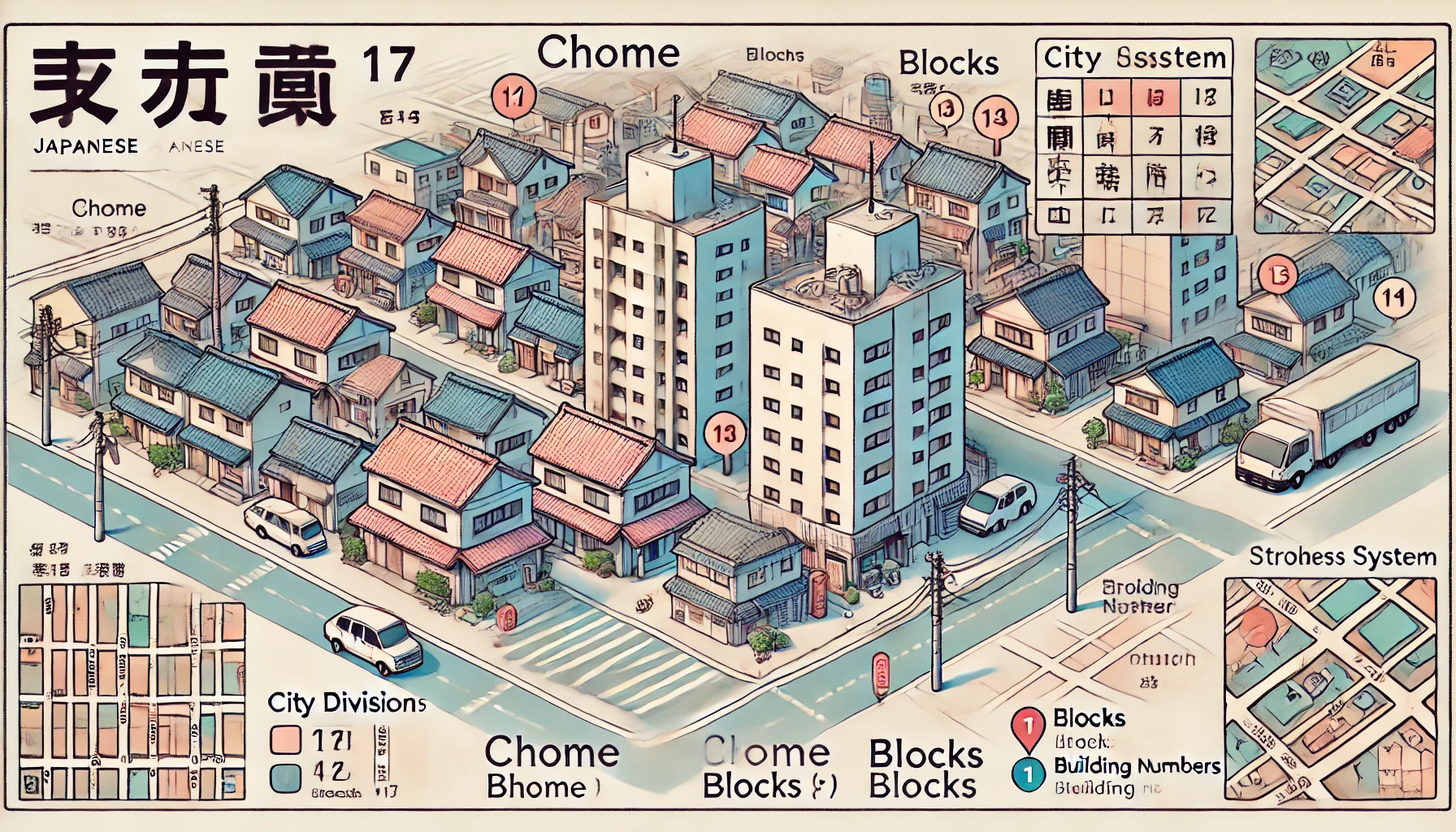
Large cities like Tokyo, Osaka, and Kyoto are divided into administrative districts called "ku" (区). Within these districts, there are subdivisions known as "chome" (丁目), which are smaller sectors within the district.
In rural areas, the system may vary a bit. Small towns and villages do not have the chome division but use village or district numbers.
How Do Japanese People Locate Addresses?
Although the system seems complicated, the Japanese have effective methods for finding locations. Instead of relying on street numbers, navigation in Japan is based on landmarks and maps.
- Post offices and police stations: There are often detailed maps on the streets or in public places.
- Tables at building entrances: Many buildings have signs indicating the companies or residents present there.
- Navigation apps: Today, services like Google Maps have made it much easier to find addresses in Japan.
The Role of Postal Codes
Postal codes in Japan follow a seven-digit format (XXX-XXXX). Each code covers a specific area and can be very useful for finding places more accurately. In large cities, a single district may have several different postal codes.
Tips for Understanding and Using Addresses in Japan
If you are traveling to Japan or need to send mail, it is important to follow some tips to avoid confusion:
- Learn the basic kanji: The address characters such as 区 (ku), 町 (cho), and 丁目 (chome) help identify the divisions of the address.
- Use maps whenever possible: Do not rely solely on the numerical order, as buildings may be numbered randomly.
- Ask for information: Japanese people are used to helping lost foreigners and usually point out nearby landmarks.
I hope this article helps you understand how addresses work in Japan!



Community
Comments
0 comments
There are no published comments in this language yet.
Send comment