
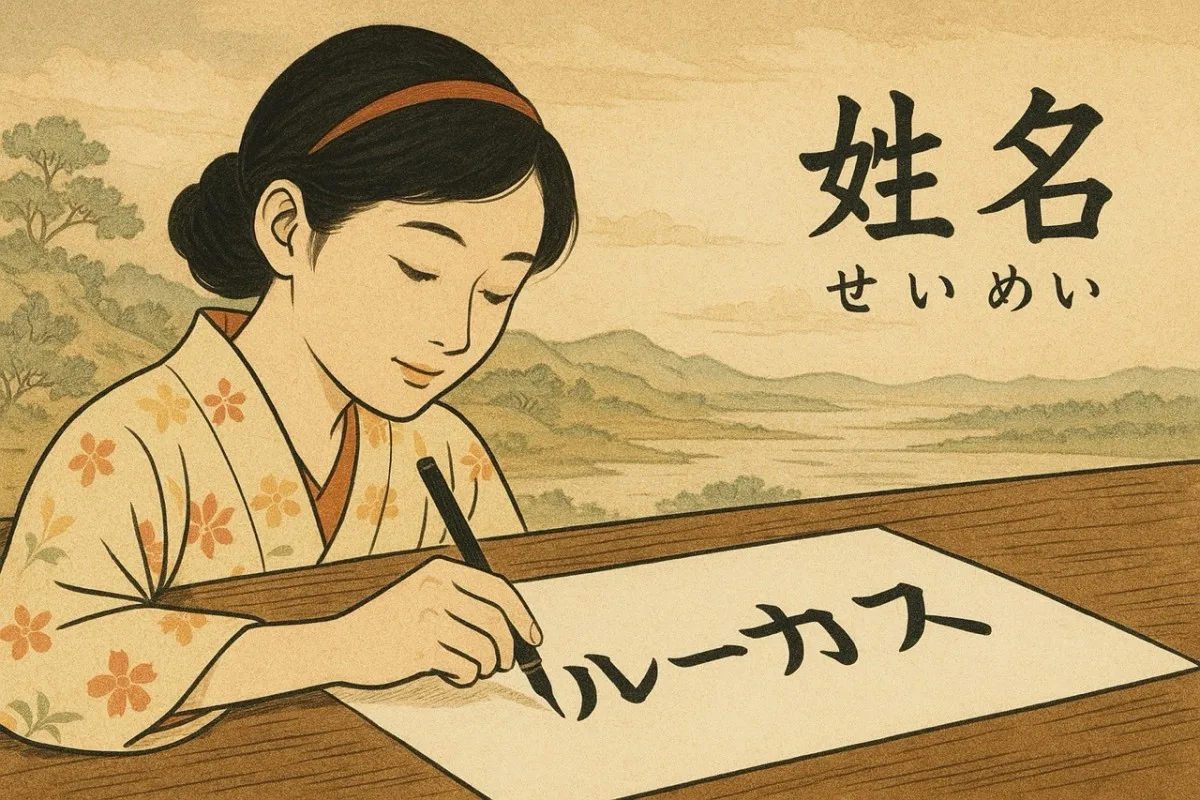
เมื่อเริ่มเรียนภาษาญี่ปุ่น หนึ่งในความสงสัยแรกที่เกิดขึ้นคือการเขียนชื่อตัวเองในภาษาน่าทึ่งนี้อย่างไร ในท้ายที่สุด ชื่อต่างๆ นั้น携带ความเป็นตัวตน ประวัติศาสตร์และวัฒนธรรม — และกับภาษาญี่ปุ่น ความหมายนี้ยิ่งลึกซึ้งขึ้นไปอีก ท่ามกลางคำศัพท์ที่โดดเด่นในบริบทนี้คือ 姓名 (seimei) คำที่ประกอบขึ้นซึ่งหมายถึง ชื่อเต็ม ของบุคคล รวมนามสกุล (姓 – sei) เข้ากับชื่อตัว (名 – mei)
แต่คำว่า 姓名 หมายถึงอะไรกันแน่? มันใช้ในชีวิตประจำวันของญี่ปุ่นอย่างไร? และชาวต่างชาติจะเขียนชื่อตัวเองเป็นภาษาญี่ปุ่นได้อย่างถูกต้องได้อย่างไร? เราจะสำรวจประเด็นเหล่านี้ด้วยความลึกและชัดเจน สำหรับผู้ที่เรียนหรือทำงานกับภาษานี้ การเข้าใจแนวคิดนี้เป็นสิ่งจำเป็นเพื่อสื่อสารด้วยความเคารพและความแม่นยำ — และแม้แต่เพื่อกรอกเอกสารทางการอย่างถูกต้อง
หากคุณเคยสงสัยว่าควรใช้คันจิ คาตากานะ หรือฮิรากานะเพื่อถ่ายทอดชื่อของคุณ หรือหากคุณลังเลเกี่ยวกับลำดับที่ถูกต้องของชื่อ บทความนี้จะช่วยชี้แจงทุกอย่าง พร้อมตัวอย่างที่เป็นประโยชน์และข้อเท็จจริงทางวัฒนธรรมที่ช่วยให้จดจำเนื้อหา
เราแนะนำให้อ่านเพิ่มเติม:
สารบัญ
What does 姓名 (Seimei) mean?
In Japanese, the term 姓名 is composed of two characters with distinct but complementary meanings:
- 姓 (sei): refers to the surname or family name. Traditionally, this character represents lineage, clan, or family origin. It is equivalent to the “last name” in Western culture.
- 名 (mei): is the baptismal name or personal name, given at birth. It can have various meanings depending on the kanji chosen.
The complete term 姓名 is often used in formal contexts, such as in registrations, certificates, forms, and legal documents. In informal situations, it is common to use only the name or surname, depending on the level of intimacy.
Different from Western custom, in Japan the order of names is: surname (姓) first, then given name (名). For example, if someone is called Maria Silva, when adapting their name to the Japanese style, it would be presented as Silva Maria.
How to write foreign names in Japanese?
This is a very common doubt among students and enthusiasts of the Japanese language. After all, Western names do not always have a direct equivalent in kanji, which leads to the use of phonetic syllabaries.
Katakana: the standard form
For foreign names, katakana is the most appropriate form. It is used for words of non-Japanese origin, and this includes proper names. For example:
- Lucas → ルーカス (Rūkasu)
- Fernanda → フェルナンダ (Ferunanda)
This system focuses on pronunciation and not on meaning. It is important to try to approximate the way the name is spoken in the original language, but with the sounds available in Japanese, which may require adaptations.

Hiragana: a softer alternative
Although uncommon, some foreigners prefer to write their names in hiragana, seeking a cuter or more traditional appearance. However, this usage can cause confusion, because names written in hiragana often sound like real Japanese names, especially feminine ones. For example:
- Ana → あな (Ana)
This method is not recommended for official contexts, but can be interesting in artistic or playful situations.
Is it possible to use kanji in foreign names?
This is one of the most fascinating doubts. Although kanji are generally reserved for native Japanese names, some foreigners choose to adapt their names with ideograms that mimic the sound and convey a symbolic meaning. However, this practice requires care and linguistic knowledge, since kanji can have multiple readings and connotations.
For example, someone named Daniel could adapt as:
- 大仁得 (Da-ni-e-ru): where each kanji represents a part of the pronunciation and carries a positive meaning, such as “great”, “benevolent”, and “obtain”.
However, such names are not legally recognized in Japan for foreigners and are more common in artistic, literary environments, or as pseudonyms.
How to find the best way to write your name?
If you want to know how to adapt your name correctly to Japanese, consider the following steps:
- Transcribe the pronunciation to katakana, respecting the sounds available in the Japanese language.
- Avoid literal translations: instead of trying to translate the meaning of the name, focus on the phonetics.
- Consult native Japanese speakers or teachers to validate the choice.
- Use reliable katakana generators or dictionaries with pronunciation to ensure accuracy.
In official or academic contexts, the use of katakana is the most appropriate and safe. For online profiles, artistic names, or tattoos, exploring kanji can be a creative experience — as long as it is well-guided.
Curiosities about names in Japan
- In Japan, it is common for people to change the kanji of their name throughout their lives, especially after marriage or for spiritual reasons.
- Some Japanese names have an exclusive reading, making them unique. The same kanji can be read in various ways depending on the name.
- During the Edo period, only samurai had surnames. Commoners only officially adopted surnames after the Meiji Restoration in the 19th century.
Practical examples
- João da Silva → シルバ・ジョアン (Shiruba Joan)
- Camila Andrade → アンドラーデ・カミラ (Andorāde Kamira)
Notice how the order is reversed in the Japanese pattern, and how the names are adapted phonetically with katakana.
Leave a Reply