
In “Solo Leveling”, the universe is shaped by a unique system that divides hunters into well-defined levels. This system of hunter ranking is much more than a simple hierarchy of strength — it dictates social status, access to resources, and even the degree of risk faced in dungeons. But what does it really mean to be an S-rank hunter, or how is someone ranked in the first place? Let’s explore this clearly and engagingly.
For those who have just started venturing into the world of Solo Leveling, you might wonder why so many characters are obsessed with climbing the ranks. After all, the protagonist, Sung Jin-Woo, started as the weakest of all — an E-rank hunter — yet still faced deadly dangers. It is precisely in this disparity between rank and the reality of challenges that the system begins to show its flaws and complexities.
This level structure, while seemingly objective, has a series of nuances. Understanding this classification is fundamental to diving deeper into the plot and appreciating the moments when Jin-Woo challenges the rules of the system itself. Hunter ranking goes far beyond a power chart — it is a veiled critique of meritocracy and one of the narrative engines of the story.
Read also: Everything we know about the Third Season of Solo Leveling
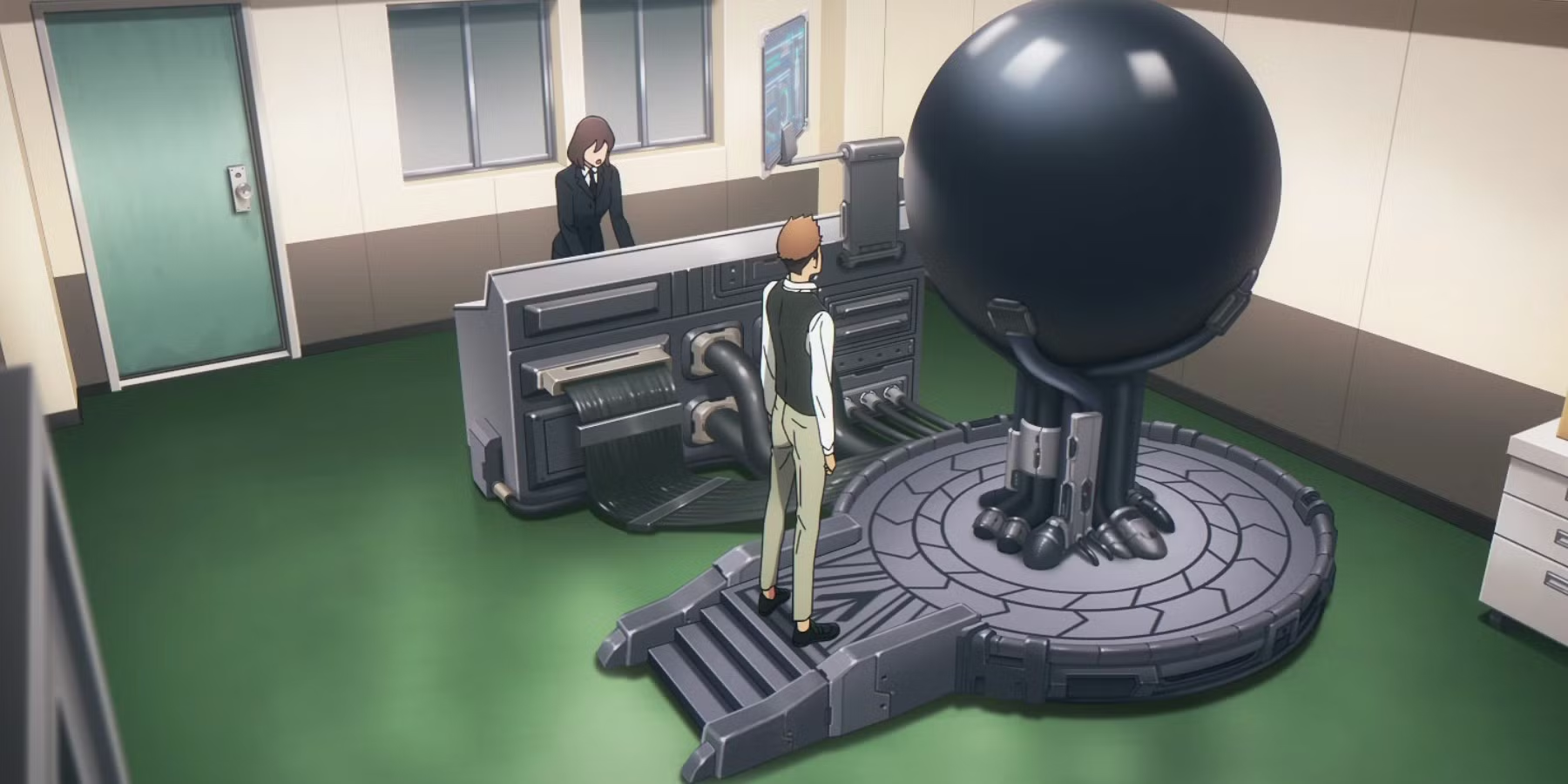
Table of Contents
What is the hunter ranking?
In a world where interdimensional portals have opened and monstrous creatures have begun to invade Earth, some people awakened special abilities and were classified as “hunters.” These individuals are responsible for fighting the monsters and closing the portals.
To organize and control these people with powers, a ranking system was created that goes from rank E (the weakest) to rank S (the most powerful). This division is based on a test conducted after awakening, which measures attributes such as strength, agility, endurance, and mana.
However, this test presents a major problem: it only measures initial potential. In other words, if the hunter evolves after the test, their rank does not change automatically. This was the case for Jin-Woo, who had a second awakening and became a living exception to the system.
Existing ranks:
- Rank E: Extremely weak hunters, often unable to deal with simple monsters.
- Rank D: A bit stronger, but still limited to low-level dungeons.
- Rank C: Considered average, they have a certain professional stability, but are not stars.
- Rank B: They already possess good skills and begin to gain recognition.
- Rank A: Rare, powerful, with great influence within guilds.
- Rank S: Extremely rare. The elite. Their abilities defy any human logic.
There are also the so-called National Hunters, who are like the “rank S plus,” designated directly by governments, with capabilities capable of altering the balance of power between nations.

Ranking based on mana
In the work, there is no official ranking solely by mana, like a public table with defined numerical limits. However, there is a direct relationship between the amount of mana and the rank obtained in the evaluation test. In other words:
- The greater the amount of mana detected at awakening,
- The higher the rank assigned to the hunter.
Therefore, most S-rank hunters have extremely high mana levels, while those of rank E or D have almost no significant mana reserves.
How does mana influence rank?
The measurement of mana occurs through technological devices developed after the emergence of the portals. These devices can estimate the volume of magical energy flowing in the individual’s body. However, this process is not perfect:
- It only measures the potential at the moment of awakening.
- It does not consider subsequent growth or evolution.
- Hunters with physical abilities may be underestimated, even with high mana control.
For example, Jin-Woo, even possessing a growing reservoir of mana after his second awakening, did not have his rank changed automatically, as the system did not recognize his internal growth.
General estimate (unofficial, based on dialogues and contexts from the work):
| Mana | Rank |
|---|---|
| < 500 | Rank E/D |
| 500 – 1000 | Rank C |
| 1000 – 3000 | Rank B |
| 3000 – 5000 | Rank A |
| > 5000 | Rank S |
| > 10.000 | National Rank / Monarch |
These numbers are based on estimates made by fans of the work, analyzing dialogues and measurements described in the chapters. For example, when Jin-Woo is examined by magical detection artifacts, the equipment even explodes, indicating that his mana level exceeds measurable limits for ordinary humans.

The role of ranking in the society of Solo Leveling
The ranking does not only serve to define a hunter’s strength — it defines their entire life. The higher the rank, the more privileges: better contracts, richer guilds, access to advanced equipment, and of course, fame and prestige.
But there is a dark side to this system. Low-rank hunters are often sent to dangerous dungeons with little support, often dying without even understanding what they faced. This social chasm between ranks is a grim portrait of inequalities, even in a world where everyone has “awakened.”
The ranking is also used as a justification for abuses of power. Guilds exploit weaker hunters, manipulate rankings to maintain dominance, and engage in politics about who can or cannot be promoted. The story shows that the system is far from fair — and Jin-Woo, as he silently grows in power, exposes every structural flaw of it.
Jin-Woo and the collapse of the system
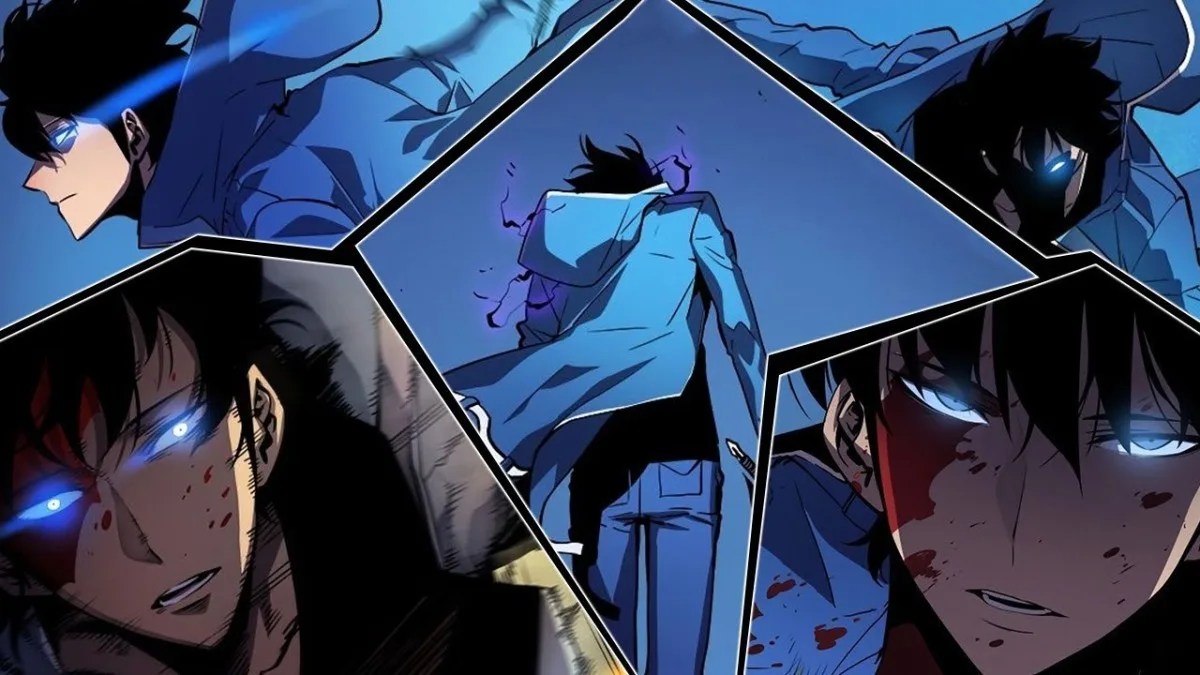
Sung Jin-Woo is the personification of a systemic error. Ranked as E, he barely survives until his “second awakening,” an event that breaks the logic of the system and completely transforms his trajectory. He begins to level up on his own, something theoretically impossible for other hunters.
This phenomenon calls into question the entire structure of the world. If an E-rank can become stronger than all the S-ranks, the evaluation system loses its meaning. The narrative takes advantage of this to raise a larger discussion: can real power be measured? Or are we too dependent on labels?
Furthermore, as Jin-Woo evolves, he begins to deal with threats that are far beyond human comprehension — Monarchs, Rulers, and primordial forces that are not even on the radar of common hunters. The ranking system simply becomes irrelevant.
Cultural curiosity
The concept of “rank” in Solo Leveling closely resembles the ranking system of Asian martial arts, such as the kyū and dan in judo and karate. In these systems, the practitioner goes through tests and challenges until reaching higher levels, but there is always the possibility for someone to transcend their position if they have dedication and discipline. This creates an interesting parallel with Jin-Woo’s journey, who breaks barriers through effort and difficult choices.
Conclusion
The ranking of hunters in Solo Leveling is more than a narrative tool — it is a mirror of the social structures of our own world. It defines who deserves respect, who receives support, and who is discarded. But, as Jin-Woo proves, a person’s worth cannot be measured solely by a system.
In the end, the reader understands that every system can fail — and that the true heroes are those who, even when classified as weak, continue to fight until they change the rules of the game.

Leave a Reply