

The Kaichou wa Maid-sama! anime aired 26 episodes in 2010 and stopped near the end of the manga's seventh volume. The final episode closes with Misaki Ayuzawa and Takumi Usui admitting their feelings during a fireworks display, while the manga continues for more than fifty chapters after that point. Those chapters cover Usui's family, his forced move to England, the main cast's graduation and a wedding that takes place ten years later.
The manga spends several volumes on the Walker family before it reaches the wedding, and the extra volume continues past the final chapter.
Contents 9
Where the Maid Sama anime ends
The anime ran in Japan from April to September 2010, with 26 episodes produced by J.C.Staff. A short OVA followed in May 2011. Episode 26 gives Misaki and Usui a confession scene during a fireworks festival, and the final shot suggests that their relationship will continue.
That stopping point is usually placed around chapter 32 of the manga, near the end of volume 7. The adaptation condensed and rearranged several earlier chapters to reach that scene, so readers who move to the manga will notice different pacing and a few scenes that the anime skipped. Our guide to anime and manga differences explains why this happens in adaptations.
What the manga covers after the anime
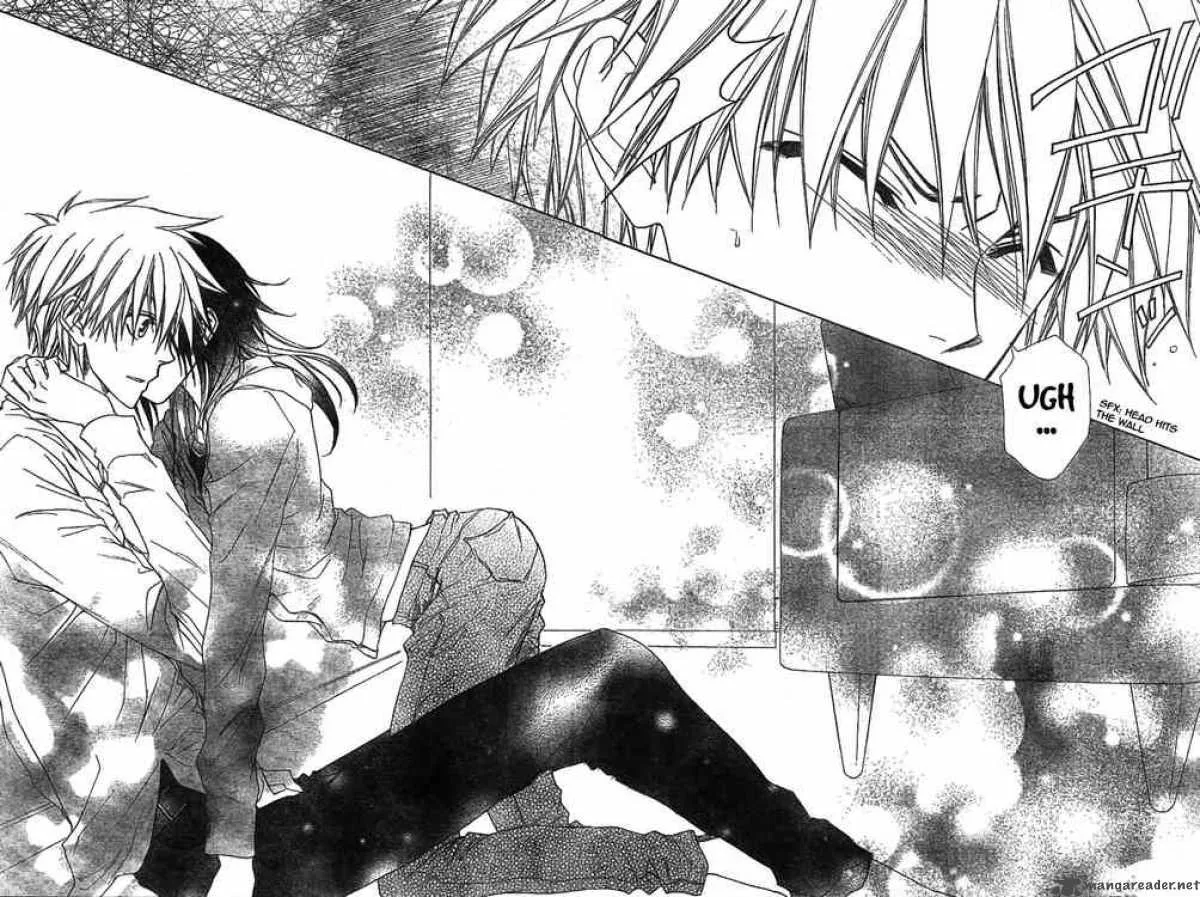
The manga ran in Hakusensha's LaLa magazine from 2006 to 2013. It reached 85 chapters, collected in 18 volumes. After the material adapted by the anime, the story moves through several arcs: the student council election, the arrival of a new teacher who knows Usui's background, a hot spring trip, a Christmas date and the couple's official confession in chapter 57.
The later chapters also introduce the Walker family in person and take Usui to England. The final volumes follow his return to Japan, the graduation of the main cast and a time skip that shows where the characters end up.
Usui's family secret
Takumi Usui was born in England to Patricia Walker and Yū Hirose. Patricia belonged to a wealthy British family, and Yū was a Japanese butler who worked for the Walkers. Their relationship was kept secret because the family did not accept it. Patricia died shortly after giving birth, and Yū was sent back to Japan.
Usui grew up with relatives of his mother and was treated as an illegitimate child. His grandfather never fully accepted him, and his older half-brother Gerald blamed him for their mother's death. Usui was educated by tutors and trained to behave like a proper member of the household, but he left England at 14 and settled in Japan with the Usui family.
That background explains both his independence and his reluctance to talk about his past. It also sets up the central conflict of the later manga: the Walkers want him back, and Usui has to decide how much of their world he is willing to accept.
The England arc
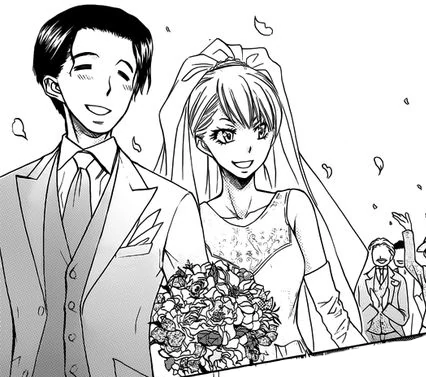
Usui's third year brings the first forced move. The Walker family arranges for him to transfer to Miyabigaoka High School, a prestigious school in Japan, and he spends part of the year there while still finding ways to see Misaki. The separation becomes much longer when his family takes him to England.
Communication breaks down after Gerald takes his phone, and Misaki turns to Tora Igarashi, the Miyabigaoka student council president, for help. Tora arranges her trip to England, where she reunites with Usui and meets the family that has controlled his life. Usui returns to Japan with her and finishes high school at Seika.
The arc matters because it changes the balance of the relationship. Misaki sees the world Usui comes from, and Usui decides that he wants a life in Japan with her. The Walkers do not disappear from the story after this point, but their hold on him weakens.
How the Maid Sama manga ends
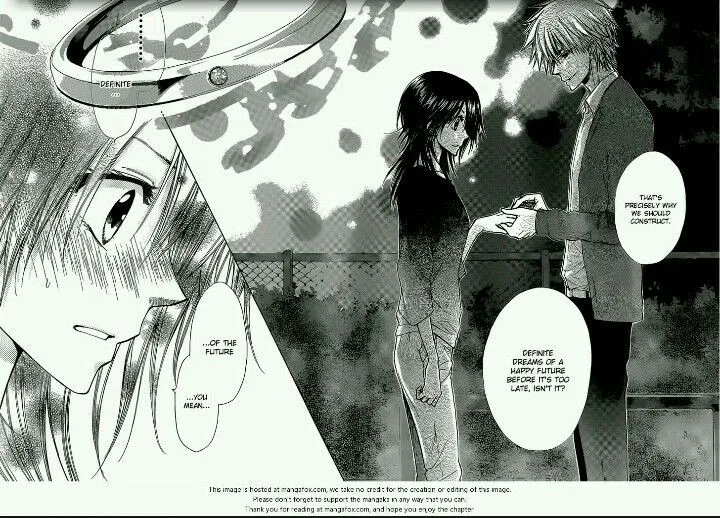
The main story ends after graduation. The final chapters show Misaki and Usui finishing high school, and the epilogue jumps forward ten years. By then Misaki has become a diplomat, and Usui works as a doctor for the Walker family. They marry in the chapel of the Walker family's castle, with their friends and families present.
The time skip also settles the supporting cast. Hinata Shintani marries Misaki's younger sister, Suzuna, before the wedding. Sakura Hanazono is married to Kuuga and pregnant with their second child by the time of the ceremony. Tora Igarashi eventually marries Chiyo, the fiancée arranged by his family. These details appear in the final chapters and in the extra material that followed the main series.
A crossover chapter with Hiro Fujiwara's Yuki wa Jigoku ni Ochiru no ka, set twelve years after the marriage, reveals that Misaki and Usui have two children, a daughter named Sara and a son named Rui. That chapter confirms that the couple's life continues well beyond the final page of the main story.
What Maid Sama! Marriage adds
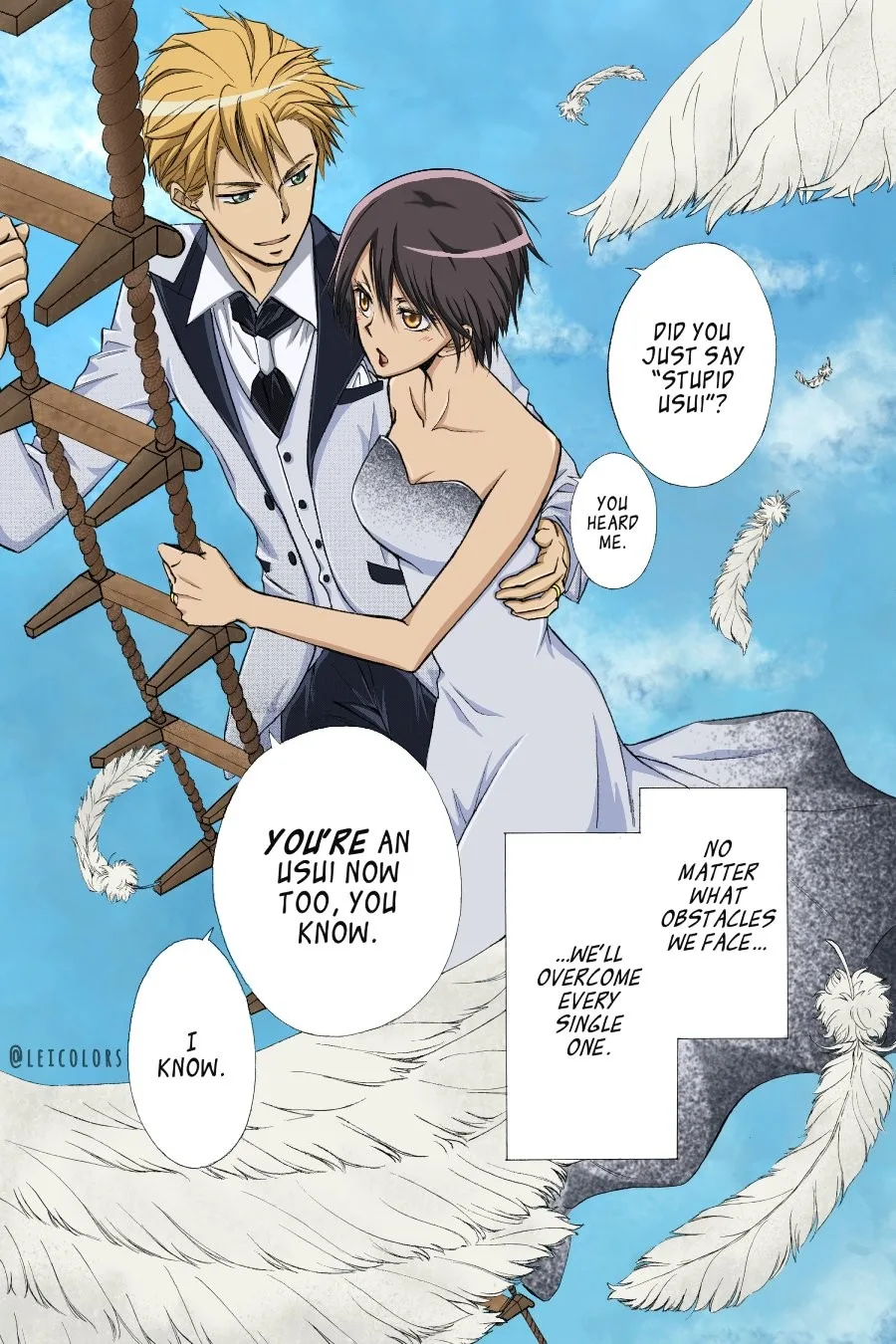
Hakusensha released an extra volume titled Maid Sama! Marriage on August 3, 2018. It collects seven chapters, including special chapters that had appeared in LaLa DX and LaLa, and follows Misaki and Usui after the wedding. The volume focuses on their married life rather than on a new crisis, and it gives several supporting characters a chance to appear again.
The franchise has continued with short specials. A new chapter appeared in LaLa DX in 2025, and a 50th-anniversary chapter ran in LaLa in 2026. These are short returns to the characters rather than a new serialized story, so readers who want a complete ending can finish with the main manga and the Marriage volume.
Is there a new Maid Sama anime season?
No new season has been announced. The 2010 series adapts the early part of the manga and ends with the confession, and the OVA from 2011 is a side story rather than a continuation. The manga finished in 2013, and the later volumes have not been adapted into a second anime series.
That leaves the manga as the only way to see Usui's family arc, the England trip and the wedding. The complete English edition is available from Viz Media in nine 2-in-1 volumes, and the extra volume is a separate release from the 18-volume main series. If you want more romance in the same vein, our list of shoujo anime is a good place to start.
Where to start reading after the anime
Readers who want to continue from the anime can start around chapter 33, at the beginning of volume 8. Starting there skips some scenes that the anime changed, so a reader who wants the full context may prefer to begin with volume 1 or re-read the chapters adapted by the final episodes.
For a quick overview, this table summarizes the main dates and formats:
| Item | Details |
|---|---|
| Manga serialization | LaLa, 2006 to 2013 |
| Chapters and volumes | 85 chapters in 18 volumes |
| Anime | 26 episodes, April to September 2010 |
| OVA | May 2011 |
| Anime coverage | Around chapter 32, near the end of volume 7 |
| Main ending | Wedding ten years after graduation |
| Extra volume | Maid Sama! Marriage, August 3, 2018 |
If you prefer watching to reading, our selection of romantic anime movies covers stories with a similar focus on the couple.
Where the story leaves Misaki and Usui
If you came for the romance, the confession in episode 26 is the midpoint. The later volumes show what happens when the couple has to choose between the life they want and the family Usui was born into. The final answer is in chapters 81 to 85, with the Marriage volume as an epilogue.






Community
Comments
0 comments
There are no published comments in this language yet.
Send comment